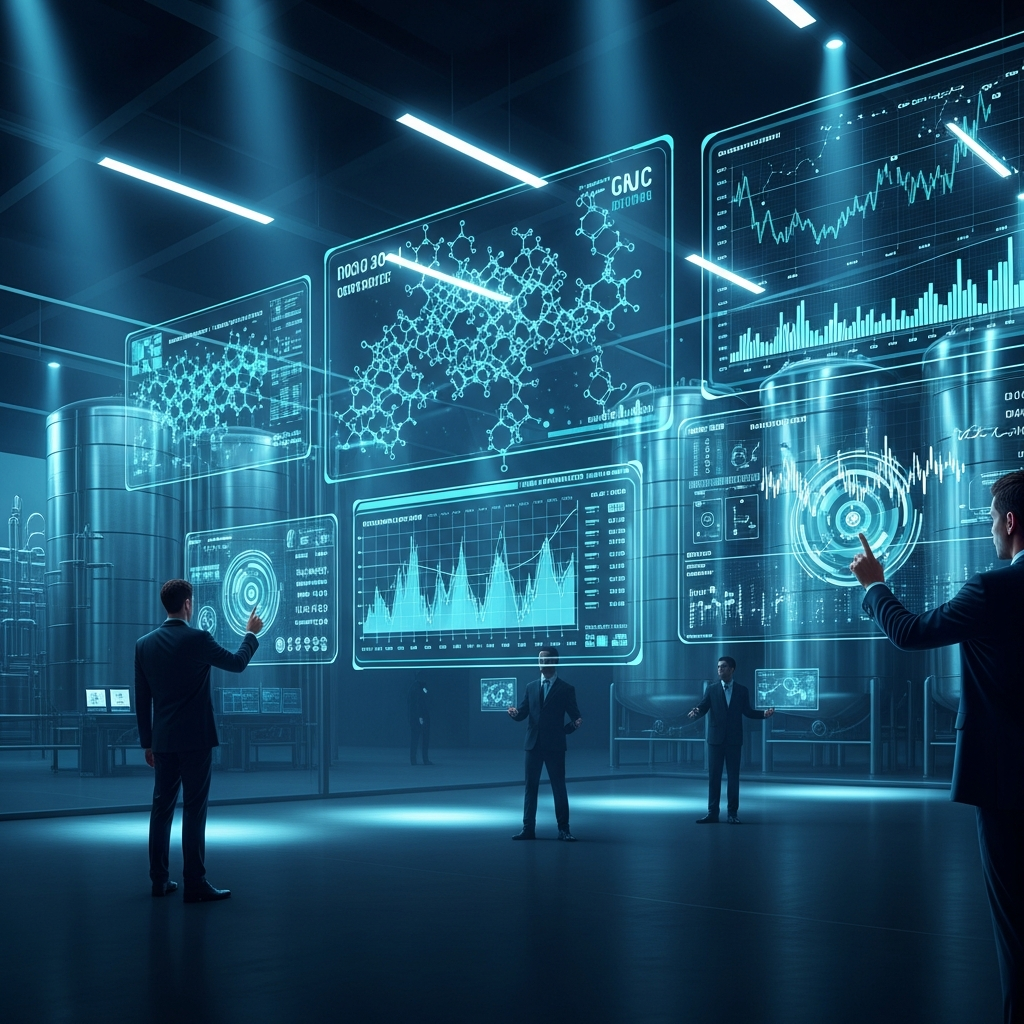
Chemical Trading
Updated
Real-time
Cargo tracking and counterparty exposure marked-to-market continuously
Multi-hub
Coverage across Rotterdam, Houston, Singapore, Jubail, Antwerp
Sanctions-aware
Automated screening against OFAC, EU, and UK sanctions lists
What does ColdAI do for Chemical Trading?
Chemical trading houses and distributors buy, store, move and sell many grades under formula prices, quality specifications and hazardous-cargo rules. ColdAI builds the data and AI layer around that work: price views, deal capture, credit and position checks, logistics and demurrage tracking, contract extraction and sanctions screening, connected to the trading system you already run. Traders keep authority over every commitment; the systems make sure each decision is taken with the full picture in front of them.
“Chemical trading runs on relationships, but margins are won on data latency. The desks that price counterparty exposure in seconds beat the desks that price it in days.”
In depth
Go deeper into chemical trading operations
Three practical guides to the problems chemical desks raise most often: recovering demurrage, screening cargoes before confirmation and choosing the system of record.
- 01Deep diveDemurrage and laytime claims on chemical tankersHow laytime and demurrage accrue on chemical tanker voyages, and where AI helps: statement-of-facts extraction, exposure estimates and time-bar tracking.
- 02ChecklistSanctions and dual-use screening for chemical cargoesA deal-by-deal checklist for chemical traders: product classification, counterparty ownership, vessel and voyage red flags, end use and the evidence to keep.
- 03Buyer's guideChoosing CTRM software for a chemical trading deskA vendor-neutral guide to CTRM selection for chemical traders and distributors: weighted requirements, replace-augment-build criteria and integration questions.
Intelligent Infrastructure for Global Chemical Commodity Markets
Chemical trading is one of the most complex commodity markets on earth. Thousands of distinct products — from base petrochemicals like ethylene and methanol to specialty intermediates, polymers, solvents, and fertilisers — are traded across fragmented global markets with opaque pricing, volatile feedstock costs, intricate logistics, and a web of regulatory constraints spanning REACH, TSCA, GHS, and evolving sanctions regimes. Traditional chemical trading houses still rely on spreadsheets, phone calls, and relationship networks. ColdAI builds the AI-native trading infrastructure that transforms chemical commodity operations — from market intelligence and price discovery through execution, logistics orchestration, risk management, and regulatory compliance.
Core Capabilities We Deliver
AI-Powered Price Intelligence
Machine learning models that aggregate and analyse pricing signals from assessed benchmarks (ICIS, Platts, Argus), spot transactions, futures curves, feedstock indices, and freight rates to produce proprietary forward price views for hundreds of chemical commodities across global regions.
Autonomous Trade Execution
Agentic AI systems that monitor market conditions, identify arbitrage opportunities across geographies, execute trades against pre-defined risk parameters, and manage order flow across multiple counterparties and electronic trading platforms simultaneously.
Real-Time Risk Management
Integrated market risk, credit risk, and operational risk platforms that calculate Value-at-Risk, mark-to-market positions in real-time, monitor counterparty credit exposure limits, and generate automated margin calls and hedge recommendations.
Supply Chain & Logistics Orchestration
End-to-end cargo management spanning vessel chartering, tank farm allocation, pipeline scheduling, rail and truck logistics, and port operations — optimised by AI to minimise demurrage, reduce transit times, and balance inventory across global storage locations.
Regulatory & Sanctions Compliance
Automated screening of every trade against global sanctions lists (OFAC, EU, UK), REACH/TSCA substance registrations, export control classifications, and hazardous materials transportation regulations with full audit trail documentation.
Contract & Position Management
Intelligent contract lifecycle management covering term deals, spot contracts, formula-based pricing, index-linked settlements, quality specifications, and tolerance management — with real-time position books that reconcile physical and paper exposures.
Trading Segments We Serve
| Segment | Products | Key Challenges | ColdAI Solution |
|---|---|---|---|
| Base Petrochemicals | Ethylene, propylene, methanol, benzene, toluene, xylene | Feedstock volatility, cracker margin optimisation, regional arbitrage | Integrated naphtha-to-derivatives margin models, real-time arbitrage detection, automated hedge execution |
| Polymers & Plastics | Polyethylene, polypropylene, PVC, PET, polystyrene | Demand cyclicality, grade switching, recycled content mandates | Demand sensing across end-markets, grade substitution analytics, circular economy compliance tracking |
| Specialty & Fine Chemicals | Solvents, catalysts, surfactants, electronic chemicals, pharma intermediates | Small lot sizes, quality specifications, long lead times | Specification matching engines, lead time prediction, supplier qualification automation |
| Fertilisers & Agrochemicals | Urea, ammonia, phosphates, potash, crop protection agents | Seasonal demand spikes, geopolitical supply risk, environmental regulation | Seasonal demand forecasting, geopolitical risk scoring, environmental reporting automation |
| Industrial Gases | Nitrogen, oxygen, hydrogen, carbon dioxide, argon | On-site vs merchant supply, contract structures, energy cost exposure | Supply mode optimisation, contract analytics, energy price hedging integration |
| Oleochemicals & Bio-Based | Palm oil derivatives, glycerine, bio-solvents, bio-polymers | Sustainability certification, deforestation-free sourcing, price vs fossil alternatives | Sustainability chain-of-custody tracking, certification management, green premium analytics |
Our Chemical Trading Technology Delivery Process
Trading Operations Assessment
Deep analysis of current trading workflows, technology stack, data sources, risk management practices, and regulatory obligations across all trading desks and product lines.
Data Infrastructure & Integration
Connect to market data providers (ICIS, Platts, Argus, CME, ICE), ERP/ETRM systems, logistics platforms, banking/credit systems, and regulatory databases into a unified data layer.
AI Model Development & Backtesting
Build and validate proprietary pricing models, execution algorithms, risk analytics, and logistics optimisation engines using historical trade data with rigorous out-of-sample backtesting.
Pilot Trading Desk Deployment
Deploy AI-assisted trading on a single desk or product line with shadow-mode execution, parallel risk calculations, and trader feedback loops before expanding.
Enterprise-Wide Rollout
Scale across all trading desks, product lines, and geographies with centralised risk aggregation, unified compliance screening, and executive dashboards.
Advanced Trading Analytics
Spread & Arbitrage Analytics
Real-time monitoring of inter-product spreads (naphtha-ethylene, propane-propylene), geographic arbitrage (US-Europe-Asia), and time spreads (prompt vs forward) with automated alerting when opportunities exceed transaction cost thresholds.
Demand Forecasting Engines
Multi-factor demand models incorporating macroeconomic indicators, downstream industry production data, seasonal patterns, inventory levels, and trade flow statistics to forecast regional demand for key chemical products.
Dynamic Pricing Optimisation
AI-driven pricing engines for chemical distributors that optimise customer-specific pricing based on volume commitments, payment terms, logistics costs, competitive positioning, and margin targets in real-time.
Inventory Optimisation
Multi-location inventory management that balances carrying costs against stock-out risk, accounts for product shelf life and quality degradation, and optimises tank farm and warehouse utilisation across the storage network.
Counterparty Intelligence
AI-powered counterparty risk assessment combining financial statement analysis, payment behaviour patterns, news sentiment, sanctions screening, and industry peer benchmarking to generate dynamic credit scores and exposure limits.
Market Sentiment Analysis
Natural language processing of industry publications, analyst reports, regulatory announcements, and trade news to extract actionable market sentiment signals and early indicators of supply-demand shifts.
Traditional vs AI-Powered Chemical Trading
| Dimension | Traditional Approach | ColdAI-Powered Approach |
|---|---|---|
| Price Discovery | Manual broker calls, weekly assessments, spreadsheet tracking | Real-time aggregation of 15M+ daily data points with ML-driven forward curves and confidence intervals |
| Trade Execution | Phone/email negotiation, manual order entry, delayed confirmation | Autonomous execution against pre-set parameters with millisecond confirmation and automated documentation |
| Risk Management | End-of-day position reports, weekly VaR, manual credit checks | Real-time mark-to-market, continuous VaR with Monte Carlo simulation, dynamic credit scoring |
| Logistics | Manual vessel booking, reactive demurrage management, fragmented tracking | AI-optimised chartering, predictive demurrage avoidance, end-to-end cargo visibility |
| Compliance | Manual sanctions checks, periodic regulatory reviews, paper-based records | Automated real-time screening against all global sanctions lists with blockchain-anchored audit trails |
| Market Intelligence | Trader intuition, industry conferences, relationship networks | AI-synthesised intelligence from structured data, NLP-processed news, satellite imagery, and trade flow analytics |
Chemical Trading Technology — Key Questions
Why Chemical Trading Firms Choose ColdAI
- Purpose-built for the unique complexities of chemical markets — not generic commodity trading software adapted for chemicals.
- Proprietary pricing models trained on decades of chemical market data across 2,500+ products and all major trading regions.
- Compliance infrastructure that handles the intersection of chemical regulations (REACH, TSCA), trade sanctions, and hazmat transportation rules in a single integrated platform.
- Logistics orchestration designed for the specific challenges of chemical shipping — product compatibility, tank cleaning, hazardous materials documentation, and demurrage management.
- Proven integration with industry-standard ETRM systems, market data providers, and banking platforms to minimise disruption to existing operations.
- Trading desk deployment model that starts with AI-assisted recommendations before progressing to autonomous execution as trader confidence builds.
"Chemical trading sits at the intersection of commodity markets, industrial chemistry, global logistics, and regulatory compliance. The firms that master all four dimensions simultaneously — with AI — will define the next era of the industry."— ColdAI Chemical Trading Practice
Ready to Transform Your Chemical Trading Operations?
Whether you trade base petrochemicals at scale or manage a specialty chemicals portfolio, ColdAI builds the AI-native trading infrastructure that gives you a decisive edge in price intelligence, execution speed, risk management, and regulatory compliance.
How one physical chemical trade crosses the desks
A single back-to-back cargo passes through several hands before it is closed. Most errors and delays happen at the hand-offs, which is where data and AI help most.
- Enquiry and pricing
Traders build a price from assessed benchmarks, feedstock, freight and the customer's formula, often for both legs at once.
- Deal capture
Both legs are recorded with formulas, specifications, tolerances, delivery terms and laycan in the trading system.
- Credit and compliance
Exposure limits, sanctions, export controls and substance registrations are checked before confirmation, not after.
- Nomination and logistics
Vessels, barges, tanks or trucks are nominated, inspectors appointed and dangerous-goods documents prepared.
- Documents and settlement
Bills of lading, quality certificates and letters of credit are matched, prices finalised and invoices issued.
- Claims and close-out
Demurrage, quality and quantity claims are calculated, passed between legs and settled before contractual deadlines.
What makes chemical trading hard to systematise
Chemical trading resembles other physical commodity trading until the details arrive. Instead of one benchmark grade there are hundreds of products, each with specifications, tolerances and approved-supplier lists. Prices are rarely flat: they are formulas referencing price-reporting agency assessments, feedstock costs and freight, averaged over periods that differ by customer. A single cargo may be split, blended or commingled in a shared terminal tank.
Moving the product adds another rulebook. Bulk liquid chemicals travel on tankers built and certified under the IMO's IBC Code, which sets ship type and carriage requirements product by product1. Packaged and road cargoes fall under dangerous-goods rules such as the IMDG Code and ADR. Market access depends on substance rules as well: placing a chemical on the EU market above a volume threshold requires registration under REACH by the manufacturer or importer, or by an only representative appointed by a non-EU manufacturer2.
Each of these constraints produces data that someone has to read, reconcile and act on, usually under time pressure and across two contracts at once. That is why the most valuable technology work in chemical trading tends to sit at the joins between desks rather than inside any one of them.
Priorities for trading houses, distributors and producers' marketing arms
The same technology serves different businesses in a different order. Start from where your margin and your risk actually sit.
| Area | Trading house | Distributor | Producer marketing arm |
|---|---|---|---|
| Where margin comes from | Arbitrage across regions, time and grades, plus logistics optimisation | Availability, service, small-lot pricing and payment terms | Placing plant output at the best netback while protecting key accounts |
| Pricing problem | Forward views and formula exposure across many open deals | Customer price lists that keep pace with input costs | Comparing netbacks across regions and contract types |
| Inventory problem | Cargoes in transit and in leased terminal tanks | Many grades, lots and shelf lives across warehouses | Plant tanks and offtake schedules |
| Logistics problem | Chartering, nominations and demurrage | Road, rail, ISO tanks and packaged goods | Matching plant loading slots with customer deliveries |
| Compliance focus | Sanctions, export controls and voyage risk | Substance registrations, hazard communication and precursor rules | Registrations, product stewardship and export controls |
| Sensible first AI project | Document extraction for voyage events and claims | Pricing support and order intake from emails and portals | Demand sensing and netback analysis across sales channels |
Choosing the first problem to automate on a chemical desk
Pick the first project by where time and money are lost today, not by which technology looks most impressive.
- If
Analysts spend days assembling demurrage claims, and some are never passed to the other leg.
ThenStart with document extraction and time-bar tracking for laytime and demurrage claims.
The documents already exist, the calculation rules are known and recovered claims are easy to measure.
- If
Compliance reviews hold up confirmations, or nobody can show why a cargo was cleared.
ThenRebuild the deal-level process with a sanctions and dual-use screening checklist before adding automation.
Automating an unclear process only produces unclear decisions faster.
- If
The trading system cannot represent your deals and the debate is about replacing it.
ThenSettle requirements and route first, using the CTRM buyer's guide.
AI built against a system you are about to retire has to be rebuilt.
- If
Traders quote from personal spreadsheets that combine agency prices, feedstock and freight by hand.
ThenBuild a shared price view with its inputs visible, labelled as a view rather than a mark.
Consistency between traders matters more at first than forecasting accuracy.
- If
Credit exposure is only known at month-end, or after a counterparty misses a payment.
ThenConnect open deals, in-transit cargo and receivables into a daily exposure view with alerts.
Unpriced and in-transit volumes are where exposure is most often underestimated.
Records a chemical trading business should be able to produce on request
Auditors, banks, regulators and counterparties ask for these. If assembling them takes days, the data foundations need work before AI can help much.
Frequently asked questions
Does ColdAI replace our trading system or CTRM?
Not by default. ColdAI's chemical trading work can run as an intelligence and execution layer that feeds confirmed trades into the system you already use, or as a fuller platform for firms modernising their whole stack. Which route fits depends on whether your current system can represent your deals; the CTRM buyer's guide sets out how to decide.
Can AI agents trade chemicals without a trader approving each deal?
Only within limits the desk sets in advance, and only where the product and market suit it. For liquid, standardised products, agents can act against pre-defined risk parameters. For specialty chemicals, illiquid grades or new counterparties, the agent works in an assisted mode: it finds counterparties, suggests prices from comparable deals and drafts documents, while the trader approves. Limits, approvals and a stop control sit outside the agent.
How is this page different from the Chemicals industry page?
The Chemicals page covers manufacturers: research, plant operations, process safety and regulatory documentation inside the fence line. This page covers businesses that buy, store, move and sell chemicals made by others, where the problems are pricing, contracts, credit, logistics and trade compliance. Producers with their own marketing and trading arms often need both.
Which regulations matter most to a chemical trader rather than a producer?
Sanctions and export controls come first, because they decide whether a trade can happen at all, followed by dual-use and drug precursor rules that attach to the products themselves. Market-access rules such as REACH matter when you import into a regulated market, and dangerous-goods transport rules apply to every movement. Producers carry more of the manufacturing and stewardship duties, though traders must still pass hazard information along the chain.
What data do we need before starting an AI project on the desk?
Usually less than firms expect, as long as it can be reached. Deal records from the trading system, the related documents such as contracts, certificates and statements of facts, and price data you are licensed to use are normally enough for a first project. The assessment stage maps where those sit and how reliable they are, and gaps become part of the plan rather than a reason to wait.
What does a first engagement usually look like?
It starts with an assessment of trading workflows, systems, data sources, risk practices and regulatory obligations on the desks in scope. A pilot then runs on one desk or product line in shadow mode, with AI outputs compared against what traders and operators actually did. Expansion to further desks and regions follows only when the pilot's evidence supports it, with risk and compliance views aggregated centrally.
Sources
Latest analysis from this industry
Chemical Traders Are Rebuilding Credit Systems on Distributed Ledgers First, AI Second — here’s why
Counterparty risk infrastructure is proving the unexpected entry point for agentic systems in chemical trading, not price optimisation.

Chemical Traders Are Replacing Credit Teams With Autonomous Ledger Agents, explained
The industry's shift from spreadsheet-based counterparty risk to real-time, blockchain-validated credit scoring is eliminating middle-office functions faster than expected.