The United States federal government spent $11.2 billion on identity verification and authentication infrastructure in fiscal year 2025, according to the Office of Management and Budget's latest IT Dashboard consolidation. Yet the Government Accountability Office estimates that duplicative identity checks across agencies—Social Security Administration, Veterans Affairs, Internal Revenue Service, Medicare, and state-level benefit programs—generate an additional $78 billion in operational overhead annually. That $89 billion combined burden exists because legacy service portals treat every citizen interaction as a zero-knowledge event. In 2026, a cohort of federal and municipal agencies is dismantling this architecture entirely, replacing monolithic portals with agentic verification networks that combine permissioned distributed ledgers, cryptographic credential wallets, and autonomous AI agents trained to adjudicate eligibility in real time. The early results are not incremental: San José's pilot reduced Medicaid enrollment processing time from 19 days to 11 minutes, and the Department of Labor's unemployment insurance modernization cut fraudulent claims by 62% while onboarding 1.4 million claimants in Q1 2026 with zero human case review.
The Economic Architecture of Redundant Identity
Every federal benefit program maintains its own identity-proofing workflow. The Social Security Administration verifies identity for retirement benefits. The Department of Veterans Affairs does it again for disability claims. The IRS does it for tax credits. State Medicaid agencies repeat the process. Municipal housing authorities repeat it again. Each verification costs between $14 and $37 per transaction, depending on the channel and level of assurance required, according to NIST's 2024 Digital Identity Guidelines economics annex. Multiply that by 340 million identity events annually across federal, state, and local programs, and the $89 billion figure becomes conservative. The root cause is not technological ignorance—it is jurisdictional fragmentation and the absence of a shared, cryptographically anchored source of truth that preserves data sovereignty while enabling verification. Legacy single-sign-on systems like Login.gov provide authentication but not authorization or eligibility adjudication. They reduce password fatigue but do nothing to eliminate redundant document submission, manual case review, or the need for agencies to maintain parallel identity infrastructure. Distributed ledger systems, by contrast, allow agencies to anchor cryptographic proofs of identity attributes—date of birth, citizenship status, income bracket, disability rating—on a permissioned network where each agency controls read and write permissions without surrendering custody of underlying data. This is not theoretical: the European Union's EBSI framework has processed 4.3 million credential verifications across 27 member states since October 2025, and Canada's Pan-Canadian Trust Framework logged 890,000 interagency verifications in Q4 2025 alone.
Agentic Adjudication as Operational Default
The second inflection point is the deployment of AI agents trained to execute eligibility determinations autonomously. These are not chatbots or robotic process automation scripts—they are large language models fine-tuned on agency-specific regulatory logic, integrated with graph-structured data stores that represent program rules as traversable decision trees, and equipped with cryptographic signing authority to issue verifiable credentials. When a citizen applies for unemployment insurance, the agent queries the distributed ledger for wage records, cross-references employer filings, checks state residency proofs, and adjudicates eligibility within seconds. If the claim requires human escalation—say, a dispute over job separation terms—the agent surfaces the case with a full audit trail and a draft determination. The Colorado Department of Labor deployed this architecture in January 2026 and processed 127,000 claims in the first sixty days with a 4.1% escalation rate, compared to 34% under the prior system. The agents are not replacing caseworkers; they are triaging the 96% of claims that fit deterministic rule patterns, freeing caseworkers to focus on complex disputes, fraud investigations, and policy exceptions. The cost differential is stark: Colorado's per-claim processing cost fell from $42 to $6.80, and claimant satisfaction scores rose from 61% to 82% as measured by the state's Office of Customer Experience.
Distributed Ledger Rails and the End of Data Silos
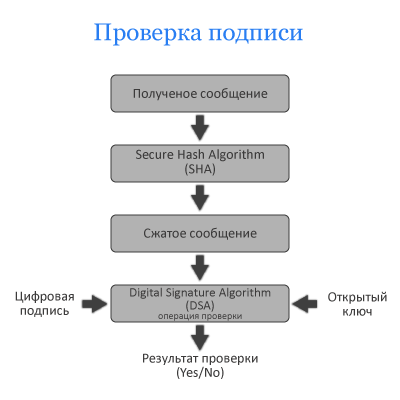
The technical foundation enabling these agents is a permissioned distributed ledger architecture that separates identity from data custody. Agencies do not share databases—they share cryptographic commitments. When the Veterans Affairs system needs to verify a claimant's income for pension eligibility, it does not request a data dump from the IRS; it sends a zero-knowledge proof request to the citizen's credential wallet, which the citizen authorizes, and the wallet returns a signed attestation: "This individual's adjusted gross income for tax year 2025 was below $21,000." The IRS never sees the query, the VA never sees the underlying tax return, and the citizen retains an immutable log of which agency accessed which attribute and when. This architecture satisfies the privacy and data sovereignty requirements of the Privacy Act of 1974, OMB Circular A-130, and the emerging Federal Data Strategy mandates while eliminating the batch file transfers, manual data reconciliations, and duplicative storage that plague legacy interagency data sharing. The General Services Administration's FedRAMP-authorized ledger platform, launched in partnership with Hedera Hashgraph and IBM in November 2025, now anchors 18 federal agencies and 9 state governments. Transaction volume hit 2.1 million verifications in March 2026, with a median latency of 340 milliseconds and a per-transaction cost of $0.0012—three orders of magnitude cheaper than the previous API-based model.
Policy Simulation and Evidence-Based Rulemaking
The third operational shift is the use of agentic systems for policy simulation before rules are codified. Federal rulemaking typically relies on retrospective analysis: agencies propose a rule, solicit public comment, estimate impact using historical data, and publish a final rule. The feedback loop is annual or longer. Agentic simulation inverts this. Agencies instantiate the proposed rule as executable logic within an agent, replay the prior year's benefit applications or procurement actions against the new rule set, and measure differential outcomes—approval rates, processing time, fraud incidence, equity distribution by demographic cohort—within days. The Department of Housing and Urban Development tested this in February 2026 when evaluating changes to the Housing Choice Voucher income verification process. The agency deployed an agent trained on 1.8 million voucher applications from 2023-2025, ran the proposed rule changes against the corpus, and discovered that the new income threshold would disqualify 14,000 households currently receiving assistance, with disproportionate impact in three metropolitan statistical areas. The simulation surfaced this before the Notice of Proposed Rulemaking was published, allowing HUD to adjust the threshold and grandfather existing recipients. The entire simulation cycle took nine days and cost $43,000 in compute and labor, compared to the six-month, $1.2 million impact assessment typical of major rulemaking. This is evidence-based policy at machine speed.
Procurement Modernization and Vendor Accountability
The same ledger and agent infrastructure is beginning to reshape public procurement. Federal procurement fraud and waste cost taxpayers an estimated $50 billion annually, per the GAO's 2025 High-Risk Series update. Contract performance monitoring is manual, infrequent, and siloed across agencies. Agentic procurement systems flip the model: contracts are encoded as smart contracts on a permissioned ledger, deliverables are logged as on-chain events, and AI agents continuously monitor performance against service-level agreements. When a vendor misses a milestone or submits a deliverable that fails automated quality checks, the agent flags it, adjusts payment releases, and escalates to the contracting officer. The Department of Defense's Defense Logistics Agency piloted this with 240 suppliers in Q4 2025, processing $1.9 billion in contract value. The system automatically withheld $14.3 million in payments due to missed delivery windows and quality failures that would have gone undetected under the prior quarterly review cadence. Vendor dispute rates fell by 48% because the ledger provided an immutable, shared record of delivery timestamps and acceptance criteria. The DLA is now scaling the platform to 3,000 suppliers and $22 billion in annual contract value by the end of fiscal 2026.
What to Do Next Quarter
Public sector executives should take three concrete actions in Q2 2026. First, initiate a cross-agency identity cost audit: map every citizen-facing service that requires identity verification, calculate the all-in cost per verification including labor and technology overhead, and identify the top five programs where duplicative checks occur. This baseline will quantify the business case for distributed ledger infrastructure and justify the upfront integration cost, which typically runs $200,000 to $600,000 per agency for federated ledger onboarding. Second, launch a limited agentic adjudication pilot within a single high-volume, rules-based program—unemployment insurance, small business licensing, or vendor registration are good candidates. Partner with an experienced systems integrator who has deployed production AI agents in a FedRAMP environment, and insist on a four-month pilot window with hard metrics: processing time reduction, escalation rate, cost per transaction, and citizen satisfaction. Third, convene legal, privacy, and IT leadership to codify data governance standards for inter-agency credential sharing. This is not a technology problem; it is a policy and trust problem. Establish which attributes can be shared under zero-knowledge proofs, which require explicit citizen consent, and which remain entirely off-limits. Documenting these rules now will prevent compliance paralysis when the ledger infrastructure scales. The window for early-mover advantage in public sector agentic infrastructure is 12 to 18 months—after that, it becomes table stakes and the cost savings compress.