The Settlement Problem No One Discussed at Commodity Week
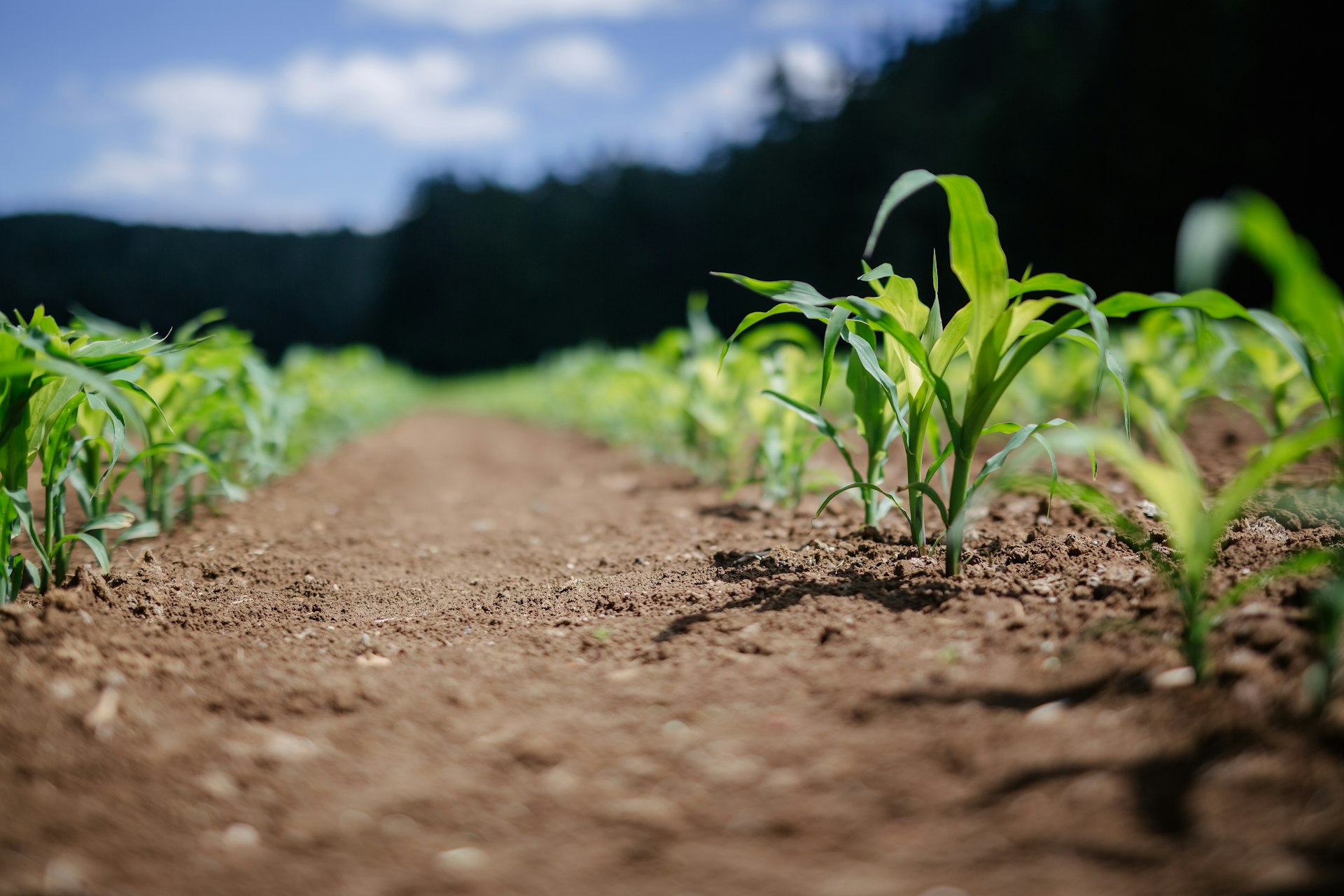
In March 2026, a Midwest corn operation settled a disputed yield claim with its crop insurer in four days using cryptographically signed drone imagery and soil-sensor data written to a permissioned ledger. The traditional process averages 87 days and involves three rounds of manual field inspection. The grower unlocked a working capital line against verified pre-harvest yield 11 weeks earlier than the prior season. This is not a pilot. More than 340,000 acres across Iowa, Illinois, and Nebraska are now operating under ledger-attested crop contracts, and the financial architecture of commercial agriculture is quietly rewriting itself before planting season closes.
The convergence is specific: AI agents running continuous inference on satellite multispectral data and ground-truth sensor arrays generate yield forecasts with 91–94 percent accuracy at 28 days pre-harvest. Those predictions, alongside timestamped environmental telemetry and autonomous verification events, are committed to distributed ledgers that underpin financing agreements, forward contracts, and parametric insurance products. The result is a new operating primitive—programmable, attestable crop performance—that collapses information asymmetry between growers, insurers, lenders, and buyers.
This is not about making spreadsheets faster. It is about replacing the epistemology of agriculture finance. When yield, input application, and environmental compliance become machine-readable and cryptographically verifiable in near real time, the economic relationships that govern 900 million acres of global cropland begin to operate under different rules.
Why Attestation Economics Matter More Than Prediction Accuracy
Precision agriculture has delivered yield prediction models for years. What changed in late 2025 was the pairing of those models with ledger infrastructure capable of making predictions legally and financially binding before harvest. The distinction is not semantic. A prediction has no counterparty. An attestation does.
Consider the mechanics. An AI agent ingests daily satellite passes from Sentinel-2 and Planet Labs, fuses them with soil moisture readings from in-field LoRaWAN sensor meshes, cross-references weather model ensembles, and emits a yield estimate with confidence intervals. In legacy systems, that estimate lives in a dashboard. In ledger-native systems, it is signed by the agent's cryptographic identity, timestamped, and written to a consortium ledger shared by the grower, their lender, their insurer, and their offtake buyer. A smart contract references that attestation to automatically adjust a credit facility's draw limit or trigger a parametric payout if yield falls below a threshold.
The operational benefit is capital velocity. Growers using these systems report a 19–31 percent reduction in the cost of working capital because lenders price risk against real-time, third-party-verified data rather than historical averages and manual audits. One Illinois operation financed its nitrogen application in April 2026 using a credit line collateralized by May yield attestations. The lender's risk model ingested 14 days of sequential AI-agent forecasts, observed narrowing confidence bands, and released funds 12 days faster than the prior year's process.
The underappreciated lever is dispute resolution. Crop insurance claims historically hinge on adjuster site visits, which are expensive, slow, and subjective. When both parties rely on the same ledger-attested sensor data and AI inference logs, the negotiation surface shrinks. The March settlement mentioned earlier succeeded because the insurer's own risk model consumed the same autonomous drone imagery the grower relied on. There was no epistemological gap to argue over. The contract referenced specific data hashes; those hashes matched; the claim cleared.
The Infrastructure Layer Growers Are Actually Deploying
The stack is less exotic than the rhetoric suggests. At the edge, growers install soil moisture and NPK sensors transmitting over LoRaWAN or NB-IoT to a local gateway. These gateways run lightweight agent runtimes—often built on frameworks like LangChain or AutoGPT with agricultural domain extensions—that perform local inference, filter noise, and package telemetry into structured JSON payloads. Those payloads are relayed to regional data aggregators operated by cooperatives, equipment OEMs, or third-party platform providers.
The aggregators run heavier AI workloads: convolutional neural networks trained on multispectral imagery for disease detection, gradient-boosted decision trees for yield forecasting, and reinforcement learning agents that optimize irrigation schedules. Inference outputs are signed and committed to a distributed ledger—typically Hyperledger Fabric or a purpose-built agricultural consortium chain like AgriChain, which launched commercial operations in January 2026 with eight founding members including Corteva, Nutrien, and a consortium of Midwestern credit unions.
The ledger does not store raw imagery or sensor time series. It stores content-addressed hashes of those datasets, attestation signatures, and smart contract state. The raw data lives in decentralized storage layers like IPFS or Filecoin, or in conventional cloud object stores with access controls managed by the ledger. This design keeps transaction costs low—writing a yield attestation costs fractions of a cent—while preserving auditability and non-repudiation.
Autonomous drone fleets add another verification layer. In 2026, drones operated by service providers like Rantizo and Hylio are flying pre-programmed missions over enrolled acreage, capturing NDVI and thermal imagery, and uploading georeferenced datasets that AI agents compare against satellite observations. Discrepancies trigger human review or adaptive resampling. The drones themselves carry hardware security modules that sign flight logs and image metadata, ensuring that verification events are tamper-evident.
The economics work because the cost of sensor hardware, edge compute, and ledger transactions has fallen below the cost of manual compliance and audit. A 1,000-acre operation can deploy a full stack—soil sensors, gateway, agent runtime, ledger participation—for $18,000 to $27,000 in capital expense and $4,000 to $6,500 in annual operating cost. The payback comes from faster capital access, lower insurance premiums due to risk-based pricing, and reduced loss from late disease detection. Operators report ROI periods of 14 to 22 months.
The Regulatory Scaffold That Made This Legal
None of this would be bankable without the USDA's January 2025 release of the Digital Crop Attestation Framework, which established standards for what constitutes a legally sufficient electronic record of crop performance. The framework defines data provenance requirements, acceptable sensor calibration protocols, and the cryptographic primitives necessary for attestations to substitute for physical inspection in federally backed insurance and lending programs.
That regulatory clarity unlocked private capital. By mid-2025, the Farm Credit System—which originates roughly 40 percent of U.S. agricultural debt—began piloting ledger-linked loan products. In February 2026, the Federal Crop Insurance Corporation approved the first parametric insurance policies that settle automatically based on ledger-attested yield data, eliminating the claims process entirely for qualifying events. These are not experimental products. They are being written at commercial scale.
State-level regulations are catching up unevenly. Iowa and Illinois have enacted safe-harbor provisions for smart contracts in agricultural commerce. Nebraska is finalizing standards for autonomous vehicle operation in commercial spraying and monitoring. California's Central Valley is slower, held back by water-rights disputes that complicate the deployment of AI-driven irrigation systems, though progress is expected by Q3 2026 as the state reconciles ledger-based water accounting with existing appropriative rights frameworks.
Internationally, the EU's Common Agricultural Policy is integrating distributed ledger reporting for subsidy compliance, and Brazil's Ministry of Agriculture is piloting tokenized carbon credits tied to verified regenerative practices on soy and cattle operations. The regulatory trajectory is toward programmable compliance: if your operation's environmental and production data is already machine-readable and attested, reporting becomes a query rather than a filing.
What to Do Next Quarter
If you oversee agricultural operations or agribusiness finance, three moves matter in Q2 2026. First, audit your current data infrastructure for ledger-readiness. Identify which datasets—yield monitors, soil sensors, weather stations, application records—are already digital and time-stamped, and which are still locked in PDFs or paper. Engage a systems integrator with agriculture domain expertise to map a path from current state to structured, agent-readable data flows. This is not a 2027 project; contracts are being written now that assume this capability.
Second, initiate a conversation with your primary lender and insurer about ledger-linked financial products. Ask whether they participate in a consortium ledger, what data standards they require, and what pricing advantages they offer for real-time attestation. If they are not yet equipped, that is a signal to diversify your financial relationships toward institutions that are. The spread between traditional and ledger-native financing is already 120 to 200 basis points in some markets.
Third, pilot an AI agent for a single, high-value decision with clear ROI. Disease detection in high-value crops, irrigation scheduling in water-constrained regions, or pre-harvest yield forecasting for forward contracting are proven entry points. Deploy the agent, instrument it to log decisions and outcomes to a local ledger or immutable log, and use that log to build internal confidence in autonomous decision-making. The goal is not to automate everything by July. It is to establish the operational and cultural foundation for a ledger-native operating model before your competitors, suppliers, and customers assume you already have one.
References
- USDA Economic Research Service - Farm Income and Wealth Statistics
- Federal Crop Insurance Corporation - Risk Management Agency
- Farm Credit Administration - Annual Report on the Farm Credit System
- Hyperledger Foundation - Hyperledger Fabric Documentation
- European Commission - Common Agricultural Policy