The average North American containerboard mill generates seventeen distinct waste streams, each with different contamination profiles, moisture content, and downstream buyers. Until recently, most operators treated these as undifferentiated cost centers, selling mixed bales to brokers at commodity spot rates that swung forty percent quarter over quarter. In Q1 2026, three mid-tier integrated mills in the Southeast began issuing cryptographic tokens representing specific waste fractions—OCC fines, polymer-coated reject streams, and de-inked sludge with verified lignin content—and discovered they could command eighteen to twenty-three percent premiums by giving biochemical processors and emerging bioplastic manufacturers authenticated feedstock guarantees. They did not wait for Extended Producer Responsibility mandates or Scope 3 disclosure rules. They moved first because the infrastructure cost had fallen below the option value of waiting.
This is not a vision deck. It is happening in operating mills today, and it reveals a broader pattern: the highest-return applications of AI agents and distributed ledger systems in packaging and paper are not the ones analysts forecasted in 2023. The value is not in marginal energy savings or incremental uptime gains. It is in reorganizing information asymmetries across material flows that were previously too fragmented, too low-margin, or too technically complex to optimize. The firms capturing this value are those that recognized a specific arbitrage window—between the falling cost of cryptographic verification and the rising regulatory and market pressure for provenance—and deployed capital accordingly.
The Production Scheduling Problem That Actually Costs Money
Most packaging and paper executives will tell you their mills run sophisticated production scheduling systems. What they mean is they run deterministic optimization models refreshed every eight to twelve hours, using static parameters for machine constraints, order due dates, and estimated changeover times. These systems were state of the art in 2011. They do not account for real-time variability in fiber quality, ambient humidity affecting coating adhesion, or the downstream ripple effects of a single unplanned stop on a corrugator that supplies just-in-time inventory to an automotive Tier 1 three states away.
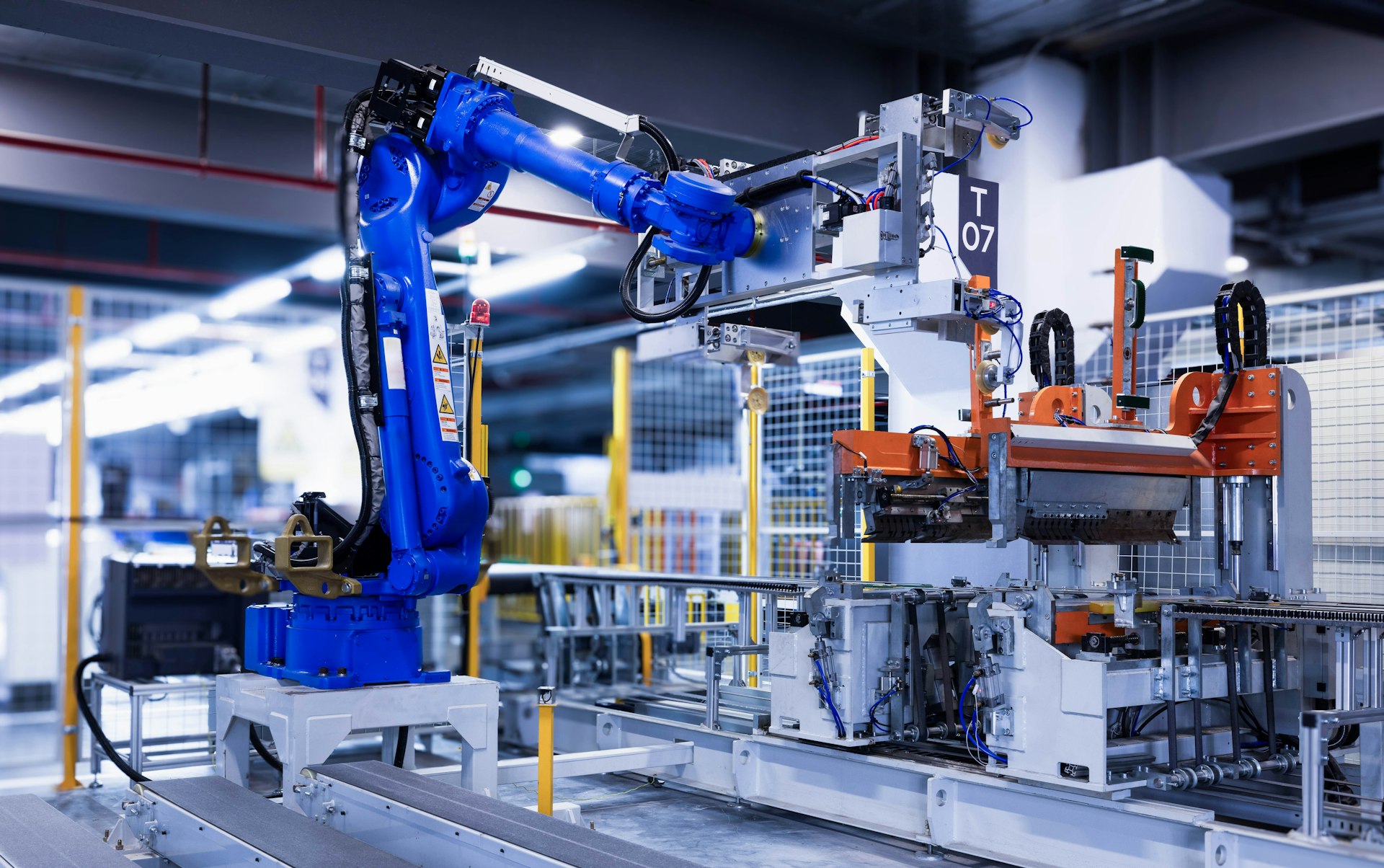
AI agent-based scheduling systems deployed in 2025 and 2026 operate differently. They do not optimize a static objective function. They run continuous Monte Carlo simulations across demand forecasts, inbound railcar arrival windows, and machine health telemetry, then negotiate scheduling conflicts autonomously between production zones. A folding carton plant in the upper Midwest reduced substrate waste by nine percent and late-order penalties by sixty-two percent in the first ninety days after replacing its legacy scheduler with an agentic system that dynamically re-routes orders based on real-time viscosity readings from coating stations and predictive maintenance signals from die-cutting presses. The capital outlay was four hundred thirty thousand dollars. Annualized savings exceeded two point one million, most of it from eliminating rush freight and contractual penalties that never appeared on the production floor's P&L.
The reason this was not possible five years ago is not algorithmic. Reinforcement learning and multi-agent coordination have been academically mature since 2018. The constraint was integration cost. Connecting heterogeneous OT systems—PLCs from four different vendors, SCADA historians in three incompatible formats, ERP batch records that live in a data warehouse updated nightly—required custom middleware that cost more than the optimization value it unlocked. What changed in 2024 and 2025 was the commoditization of edge orchestration platforms and the emergence of vendor-neutral OT connectivity standards backed by major automation suppliers. Integration cost per production line fell from mid-six figures to sixty to eighty thousand dollars. That shift moved agent-based scheduling from science project to IRR-positive investment.
Quality Inspection Economics and the Margin Defense Case
The commodity packaging grades—linerboard, newsback, uncoated freesheet—compete on basis weight tolerance, burst strength, and price. Margin compression in these segments has been structural for a decade. But inspection cost as a percentage of conversion cost has been rising, because manual sampling every forty minutes cannot catch the defects that trigger customer chargebacks: localized caliper variation, coating skips smaller than three millimeters, or adhesive pattern failures that only manifest under humid storage conditions three weeks post-production.
Automated vision systems using hyperspectral cameras and convolutional neural networks have been commercially available since 2021, but adoption was slow until recently. Early implementations required dedicated compute infrastructure at each inspection point, and model retraining for new substrates took four to six weeks of tagged data collection. The operational hassle exceeded the value for most mills. The inflection occurred when edge AI accelerators dropped below three hundred dollars per unit and model fine-tuning workflows became automated. A corrugated sheet plant can now deploy twelve inspection points across two production lines for under two hundred thousand dollars in hardware, with model updates pushed over-the-air in under two hours when a new customer spec arrives.
The financial impact is asymmetric. Preventing a single rejected truckload to a major CPG customer—common when moisture content variability causes downstream converting issues—saves twenty to forty thousand dollars in freight, rework, and relationship cost. Across a network of eight plants, one Southeastern producer documented eight hundred seventy thousand dollars in chargeback avoidance in 2025 attributable directly to AI vision systems catching defects that manual QC missed. The systems also generate time-series data on process drift that feed back into the scheduling agents, creating a closed loop between quality prediction and production planning that legacy systems could not support.
Provenance, Traceability, and the Circular Economy Margin Pool
The packaging industry's circular economy narrative has centered on recycled content percentages and recyclability certifications. That framing misses the actionable opportunity. The margin pool is not in meeting minimum recycled content thresholds. It is in authenticating specific material histories to unlock premium markets and de-risk supply chains against provenance fraud.
Consider the expanding bioplastic and molded fiber segment, projected to represent eleven percent of North American food-contact packaging by volume in 2027. Brands commissioning this packaging need verifiable proof that feedstock is not cross-contaminated with PFAS-treated fibers or agricultural residues exposed to restricted pesticides, because a single failed audit triggers product holds across entire SKU families. Manual chain-of-custody documentation is unreliable and non-portable across borders. Third-party certifications are retrospective and sample-based.
Distributed ledger systems solve this by making material provenance a native attribute of the supply chain, not an after-the-fact compliance artifact. A West Coast producer of molded fiber clamshells now issues a cryptographic token for each batch of virgin bagasse pulp, recording GPS coordinates of the sugarcane source farm, pre- and post-processing contamination test results, and transport timestamps. Downstream converters and brand owners query this ledger in real time during production planning, and the producer captures a four to seven percent price premium because buyers pay for reduced audit risk and faster speed-to-market. The system cost sixty thousand dollars to implement using an open-source permissioned ledger framework, and operating cost is under two thousand dollars monthly.
This model extends to post-consumer recovery. A Midwest recycler of OCC now tokenizes bales with verified contamination profiles, allowing packaging mills to programmatically bid on feedstock that meets specific furnish requirements without physical sampling. The efficiency gain is measurable: procurement cycle time for specialty recovered fiber grades dropped from eleven days to thirty-six hours, and the mill reduced safety stock by fourteen percent because supply uncertainty fell. The recycler, meanwhile, monetizes data it was already collecting for internal quality control, creating a new margin stream with near-zero incremental cost.
Talent, Change Management, and the Deployment Reality
The limiting factor in deploying AI agents and distributed ledger infrastructure is not technology maturity or capital availability. It is the skill gap between existing mill operations teams and the hybrid capabilities required to configure, monitor, and troubleshoot these systems. Most packaging and paper plants employ skilled mechanical and electrical technicians, process engineers with deep knowledge of fiber chemistry and machine dynamics, and IT teams focused on ERP and business intelligence. None of these groups typically understand reinforcement learning hyperparameters, edge compute orchestration, or cryptographic key management.
The operators capturing value in 2026 are not waiting to hire unicorn talent. They are using vendor-managed deployment models and培养internal integrator roles. One Fortune 500 packaging manufacturer established a twelve-person cross-functional team—drawing from process engineering, IT, and continuous improvement—and embedded them with a strategic-intelligence consultancy for four months. The team learned to deploy agent-based scheduling and vision inspection systems across three pilot lines, then codified that workflow into a repeatable playbook. They have since scaled to nineteen lines across seven plants without adding headcount, because the playbook reduces each deployment to a six-week cycle with defined handoff points and pre-validated integration patterns.
The economics work because these systems generate operational leverage. A single AI scheduling agent manages production complexity that previously required two planners and a shift supervisor making manual interventions. The talent does not disappear; it redeploys to higher-value problem-solving and exception handling. The vision inspection system does not eliminate QC technicians; it allows them to focus on root-cause analysis instead of repetitive sampling. This is not workforce reduction. It is workforce reallocation to activities that actually reduce cost and improve margin.
What To Do Next Quarter
Packaging and paper executives should take three specific actions in Q2 2026. First, identify the two production lines or converting assets with the highest penalty cost from late deliveries or quality chargebacks, and run a pilot deployment of an agent-based scheduling system on one of them. Select a vendor with a revenue-share or outcome-based pricing model to limit upfront capital risk, and insist on a ninety-day value-capture milestone tied to measurable reductions in rush freight or customer claims. Second, convene your procurement and sustainability teams to map the three waste streams or by-product flows with the highest volume and price volatility, and evaluate whether tokenizing those streams with verified composition data would create margin through premium pricing or supply chain efficiency. Engage a distributed ledger platform provider that offers permissioned networks with sub-five-thousand-dollar setup costs, and run a three-month proof-of-value with one downstream buyer or supplier. Third, designate a cross-functional integration team of four to six people—spanning operations, IT, and engineering—and give them protected time to complete a structured learning program on AI agent deployment and edge infrastructure. Do not outsource this entirely. Internal capability is the only durable moat.
The firms that move now are not gambling on future technology. They are arbitraging a temporary gap between system cost and operational value, and that gap is closing as more players recognize it. The question is not whether to deploy these systems. It is whether you capture the margin before your competitors do, or before regulation makes it table stakes with no premium attached.
References
- U.S. Environmental Protection Agency – Sustainable Materials Management
- Bureau of Labor Statistics – Industries at a Glance: Paper Manufacturing
- National Institute of Standards and Technology – Blockchain and Distributed Ledger Technologies
- OECD – Extended Producer Responsibility
- McKinsey Global Institute – Research