The Accounting Paradox Nobody Mentions
Every major integrated oil company can close its financial books within seven business days. Yet the same firms take between ninety and one hundred eighty days to finalize Scope 2 and Scope 3 emissions for the same quarter. This is not a data problem—it is an architecture problem. Financial ledgers settled in real time while carbon accounting ran on spreadsheets, manual reconciliations, and third-party auditors working from invoices and estimates. That latency is now a liability. In the first quarter of 2026, Shell and TotalEnergies both disclosed in their sustainability supplements that they are piloting permissioned distributed ledgers to record emissions data at the point of measurement—wellhead, compressor station, refinery stack—with the same immediacy as revenue recognition. The reason is straightforward: carbon is becoming a balance-sheet item, and balance-sheet items require double-entry systems that settle in hours, not months.
The shift is not philosophical. It is operational. European Union Carbon Border Adjustment Mechanism penalties began phasing in at the start of 2026, and the cost of late or inaccurate reporting now exceeds the cost of the technology required to eliminate it. More importantly, the secondary market for carbon credits—estimated at forty-one billion dollars in 2025 by the International Emissions Trading Association—cannot function with quarterly settlement cycles. Buyers need hourly proof of additionality, and sellers need instant liquidity. Distributed ledgers, paired with AI agents that validate sensor streams and trigger settlement contracts, are the only infrastructure capable of meeting both requirements at the scale of a global energy company operating across fifteen jurisdictions.
Reservoir Models That Rewrite Themselves
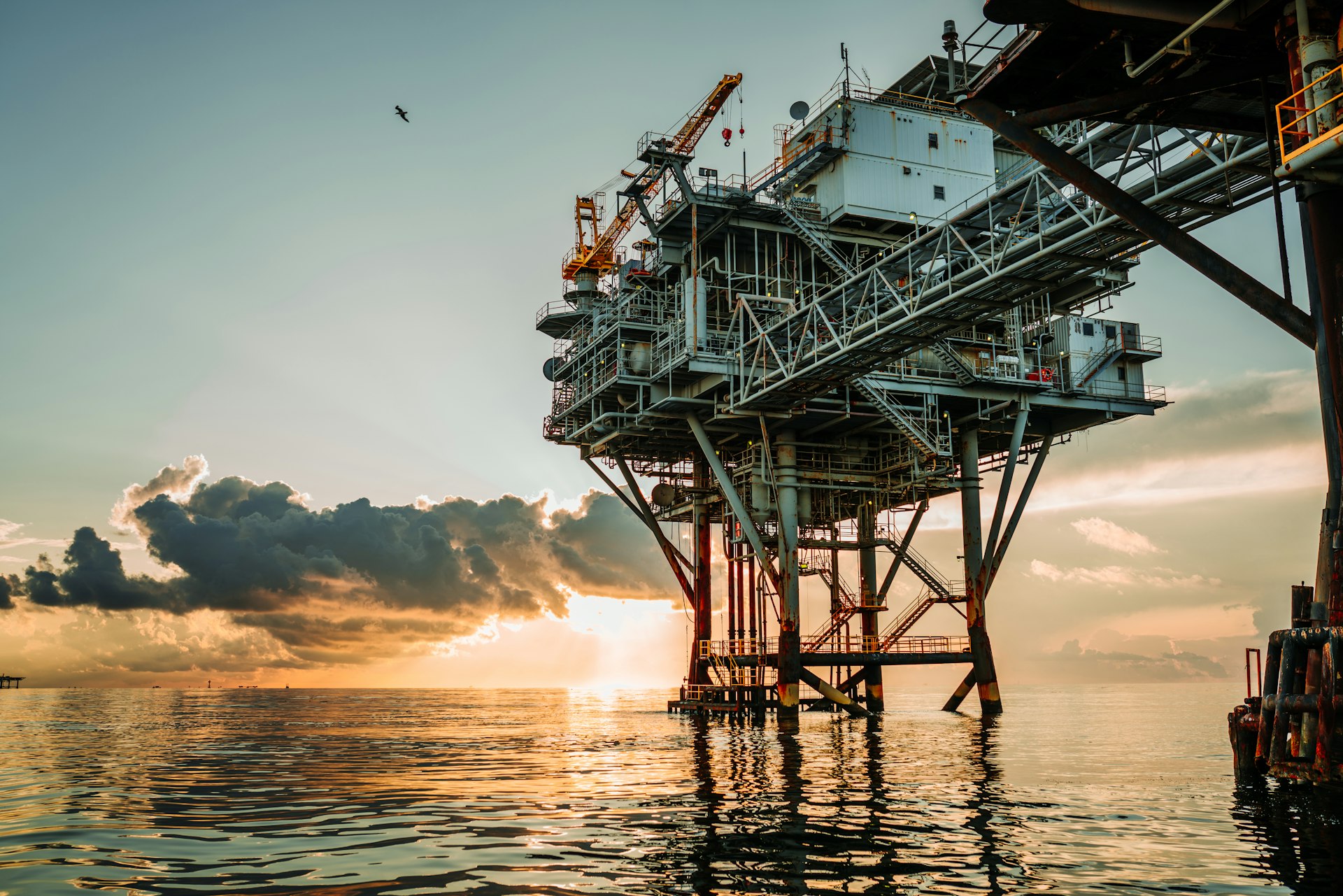
Upstream operations have always been data-rich and decision-sparse. A single offshore platform generates between one and four terabytes of sensor data per day—pressure gradients, flow rates, seismic feedback, drill bit telemetry—but production optimization decisions are still made in weekly engineering meetings, often based on models that were last calibrated months earlier. The latency between measurement and action is where value leaks. In 2026, operators including Equinor and Chevron are deploying agentic AI systems that do not wait for human scheduling. These agents ingest real-time data from downhole sensors, compare it against reservoir simulation models, detect divergence beyond defined thresholds, and autonomously recalibrate the model parameters using Bayesian inference and physics-informed neural networks. The result is a reservoir model that remains continuously aligned with subsurface reality, reducing the error margin on production forecasts from fifteen percent to below four percent.
The economic implication is immediate. A deepwater project with a capital budget of eight billion dollars and a thirty-year production profile can justify an incremental two hundred million dollars in development expenditure if the probabilistic reserves estimate tightens by even three percentage points. That confidence does not come from better geologists—it comes from inference engines that update every six hours instead of every six months. More critically, these systems are not black boxes. They surface the specific assumptions being revised, the sensor anomalies triggering recalibration, and the confidence intervals around each parameter. That transparency is what allows a reservoir engineering team to trust an autonomous recommendation to adjust injection rates or defer a sidetrack well. Trust is not built on accuracy alone; it is built on audibility.
Pipeline Integrity as a Continuous Function
Midstream infrastructure in North America alone comprises more than three million miles of pipeline, much of it installed before 1980. The traditional integrity management program—hydrostatic testing, ultrasonic inspection, scheduled pigging—operates on annual or biennial cycles. But pipeline failures do not. They occur when undetected micro-corrosion intersects with an unanticipated pressure transient, and the warning signs are present in the data days or weeks before rupture. The challenge has never been measurement; it has been synthesis. A single pipeline corridor is monitored by fiber-optic distributed acoustic sensing, inline inspection tools, cathodic protection systems, SCADA historians, and weather feeds. Each system logs data in a different format, at a different cadence, into a different repository. No human operator can correlate them in real time.
AI agents can. In the first quarter of 2026, Enbridge disclosed that it is running an autonomous integrity agent across a twelve-hundred-mile segment of its Mainline system. The agent fuses data from six sensor modalities, applies a transformer-based anomaly detection model trained on twenty years of inspection records, and flags segments where the joint probability of wall-loss progression and pressure variability exceeds a learned threshold. Critically, the system does not generate inspection tickets—it generates prioritized work orders with cost-benefit analyses attached, including estimated consequences of failure, replacement part lead times, and weather windows. The result is a shift from time-based maintenance to condition-based intervention, which Enbridge estimates will reduce unplanned downtime by thirty-two percent and lower annual integrity spend by eighteen million dollars on that segment alone. Scale that across the North American midstream network, and the financial materiality is measured in billions.
Refinery Margins in the Age of Autonomous Optimization
Refining has always been a margins game, and margins are determined by yield optimization: how much high-value product you extract from each barrel of crude. The best human-led optimization teams can adjust process parameters—catalytic cracker temperatures, hydrogen partial pressures, fractionation column reflux ratios—once per shift. But feedstock composition, ambient temperature, and product demand curves change continuously. The gap between optimal and actual operation is where gross refining margins erode. A refinery processing three hundred thousand barrels per day with a five-dollar-per-barrel margin loses one and a half million dollars for every percentage point of suboptimality. Over a year, that compounds to half a billion dollars.
In 2026, Marathon Petroleum and Valero are deploying agentic optimization systems that treat the refinery as a continuous control problem, not a batch process. These agents ingest real-time assay data from incoming crude, monitor product specifications against futures prices, simulate process configurations using digital twins, and issue control setpoints every fifteen minutes. The systems are built on reinforcement learning models pretrained on decades of distributed control system logs and fine-tuned in simulation against process safety constraints. They do not replace process engineers—they propose adjustments that engineers approve or override. But approval rates are running above ninety percent, because the agents learn not only what optimizes yield, but what the engineering team will accept. That cultural calibration is what enables autonomy at scale. Early results show a two-to-four percent improvement in gross margin realization, which for a mid-sized refiner translates to between seventy and one hundred forty million dollars annually.
Emissions Transparency as Competitive Moat
Regulatory compliance used to be a cost center. In 2026, it is becoming a source of competitive differentiation. The reason is liquidity. Carbon credit markets—both voluntary and compliance-driven—are only as liquid as the underlying data is trustworthy. A methane abatement credit generated by a flare monitoring system with quarterly manual readings is worth thirty percent less than an identical credit backed by continuous optical gas imaging and a cryptographically signed ledger entry. The discount reflects counterparty risk, audit cost, and settlement delay. Operators who can produce emissions data with the same granularity and immediacy as production data can access cheaper capital, command premium pricing for low-carbon product streams, and avoid the regulatory penalties that are beginning to bite across OECD jurisdictions.
This is why BP and Occidental are instrumenting facilities with sensor meshes that feed directly into permissioned ledgers where every ton of CO₂ equivalent is recorded with timestamp, geolocation, measurement method, and calibration certificate. The ledger entries are visible to regulators, auditors, and credit buyers in real time, eliminating the reconciliation cycle that used to take months. More importantly, AI agents monitor the sensor network for drift, cross-validate readings against mass balance calculations, and automatically flag anomalies that could indicate either equipment malfunction or measurement fraud. The result is an immutable, auditable, continuously updated emissions inventory that can support same-day credit issuance and settle transactions in minutes, not quarters.
What to Do Next Quarter
If you are responsible for technology strategy or operational performance at an integrated or independent operator, three actions deserve prioritization in Q2 2026. First, audit your emissions data architecture and identify the longest-latency step in your Scope 1 through Scope 3 reporting cycle—almost always it is third-party invoice reconciliation or manual site surveys. Commission a pilot to replace that step with a sensor-to-ledger pipeline on a single asset, measure settlement time and audit cost, and model the scaling economics. Second, select one high-variability process—reservoir model updates, pipeline integrity prioritization, or refinery yield optimization—and deploy an AI agent in advisory mode, where it generates recommendations but does not execute. Track override rates and financial impact for ninety days. If override rates fall below twenty percent and the agent demonstrates positive margin contribution, move to supervised autonomy. Third, convene your finance, operations, and sustainability teams in the same room and ask a single question: if carbon accounting had the same close speed as financial accounting, what decisions would we make differently? The answers will reveal which infrastructure investments actually matter, and which are theater. The companies that act on those answers in 2026 will be the ones that define the operating model for the next decade.
References
- International Energy Agency – Energy Technology Perspectives
- U.S. Department of Energy – Pipeline and Hazardous Materials Safety Administration
- European Commission – Carbon Border Adjustment Mechanism
- International Emissions Trading Association – Reports and Publications
- U.S. Securities and Exchange Commission – EDGAR Database