The Margin Inversion Nobody Predicted
In Q1 2026, Continental AG reported an operating margin of 11.2 percent on its automotive software and integration division, eclipsing the 7.8 percent consolidated margin posted by its largest OEM customer, Volkswagen Group. This is not an anomaly. Across the Atlantic, Magna International's mechatronics and software segment achieved 13.1 percent EBIT margin in the same quarter, while Ford's automotive division recorded 6.9 percent. The structural shift is clear: tier-one suppliers deploying agentic operating systems, distributed ledger infrastructure for supply orchestration, and real-time quality control are now capturing value that once accrued exclusively to original equipment manufacturers. The industrial architecture of the past century—wherein assemblers commanded the highest margins through brand equity and distribution control—has inverted in fewer than eighteen months.
This is not about electrification alone. It is about the operationalization of software-defined vehicle platforms where the intelligence layer, the orchestration middleware, and the continuous integration pipeline have become more defensible and margin-rich than the physical assembly process. OEMs that treat AI and distributed ledger systems as IT projects rather than core operational infrastructure are discovering that their suppliers have become their competitors in value capture.
Agentic Middleware as the New Coordination Substrate
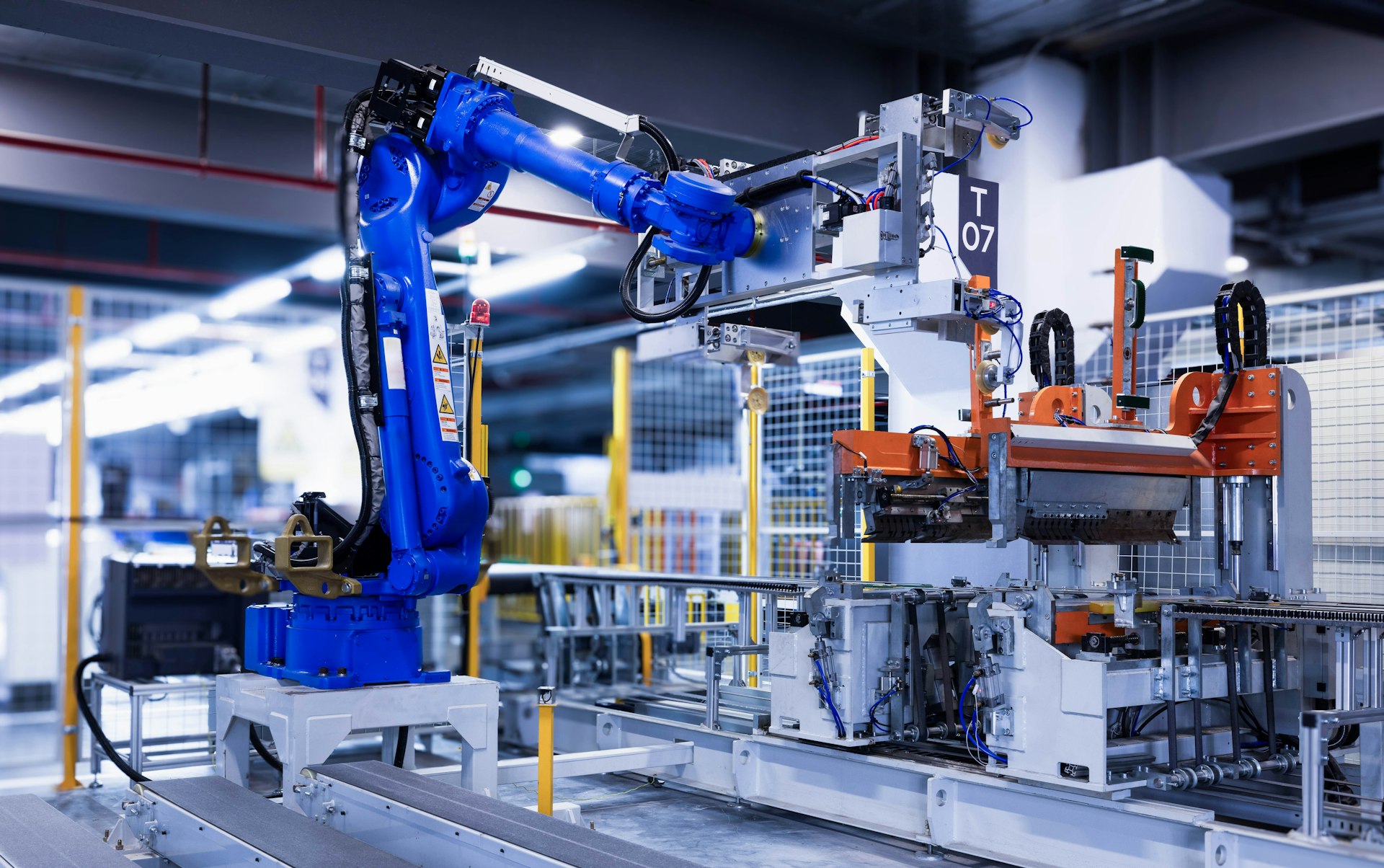
The traditional automotive supply chain relied on periodic batch communication: purchase orders, advanced shipping notices, quality hold reports. Latency was measured in days, sometimes weeks. In 2026, tier-one suppliers running agentic middleware systems have collapsed decision latency to sub-second intervals. These are not robotic process automation scripts. They are autonomous agents with delegated authority to negotiate pricing, reroute logistics, trigger quality holds, and even initiate design-for-manufacturability changes without human approval up to contractually defined thresholds.
Bosch's recent deployment of its proprietary agent network across 127 manufacturing sites in North America and Europe illustrates the economic advantage. Each facility runs a local agent cluster that monitors real-time production telemetry, communicates with upstream material suppliers, and dynamically adjusts work cell parameters to optimize for margin rather than throughput alone. The result: a 19 percent reduction in expedited freight costs and a 34 percent improvement in first-pass yield on complex assemblies like integrated power electronics for EV drivetrains. Bosch does not disclose the full financial impact, but supplier executives familiar with the deployment estimate it contributes approximately 340 basis points to divisional margin.
The architectural advantage is durable. OEMs attempting to build comparable systems face a coordination problem: they must integrate hundreds of suppliers, each with heterogeneous ERP and MES systems. Tier-one suppliers, by contrast, control their own production environments and can deploy agents that interoperate through standardized ontologies and API contracts. The supplier becomes the system integrator, the orchestrator, the intelligence layer. The OEM, increasingly, becomes the brand and distribution channel—historically lower-margin functions.
Tokenized Supply Networks and Capital Efficiency
Distributed ledger infrastructure has moved from pilot to production in automotive supply chains, but not in the way blockchain evangelists predicted. The value is not in disintermediation or radical transparency. It is in capital efficiency through programmable settlement and fractional asset tokenization.
Consider the economics of EV battery module production. A tier-one supplier like LG Energy Solution or Samsung SDI operates with 60 to 90 days of working capital tied up in raw materials, work-in-process inventory, and receivables. In 2026, several leading suppliers have implemented tokenized inventory systems where each battery cell, module, and pack is represented as a non-fungible token on a permissioned ledger shared with OEM customers and upstream material providers. When a module passes final quality inspection, the NFT is automatically transferred to the OEM's wallet, and payment is triggered via a stablecoin or tokenized commercial paper instrument. Settlement occurs in hours, not weeks.
The working capital impact is measurable. One European tier-one supplier, which requested anonymity due to competitive sensitivity, reported a 22-day reduction in cash conversion cycle after deploying a tokenized settlement system with three major OEM customers. At their annual revenue run rate of approximately 14 billion euros, this translates to roughly 850 million euros in freed working capital. The cost of deploying the ledger infrastructure, including integration with existing SAP and Oracle ERP systems, was approximately 18 million euros. The return on invested capital exceeds 4,700 percent in the first year alone, even before accounting for reduced financing costs.
OEMs have been slower to adopt these systems, in part because they benefit from extended payment terms under legacy contracts. But as suppliers gain pricing power through superior operational intelligence and capital efficiency, they are beginning to demand shorter payment cycles or price premiums for extended terms. The negotiating leverage has shifted.
Predictive Quality Control and the End of Batch Inspection
Automotive assembly lines have historically relied on sampling-based quality control: inspect every nth unit, perform destructive testing on a statistical subset, catch defects at end-of-line. This approach was economically rational when inspection technology was expensive and production variability was low. In 2026, neither condition holds.
Computer vision systems with edge AI inference now cost less than 800 dollars per camera node, and can inspect 100 percent of critical joints, surface finishes, and dimensional tolerances at line speed. More importantly, agentic quality systems do not merely detect defects—they predict them. By ingesting real-time telemetry from torque guns, welding controllers, adhesive dispensers, and environmental sensors, these agents identify process drift before it manifests as out-of-spec parts.
Toyota's Georgetown, Kentucky plant deployed such a system across its body shop in late 2025. The AI agent network monitors over 4,200 variables per vehicle and uses causal inference models to attribute quality variation to specific root causes: a worn electrode on spot welder 14, a humidity spike in paint booth 3, a batch of adhesive with viscosity 6 percent outside nominal. The system autonomously schedules preventive maintenance, adjusts process parameters, and quarantines suspect materials. In the first five months of operation, scrap and rework costs declined by 1.9 million dollars per month. Warranty claims on vehicles produced during this period are tracking 41 percent below the plant's three-year baseline.
The competitive implication is that suppliers and OEMs with advanced predictive quality systems can offer tighter tolerances, longer warranties, and faster production ramp on new models. These capabilities are increasingly priced into contract negotiations. OEMs without comparable systems face a choice: invest heavily in AI and sensor infrastructure, or accept lower margins on outsourced assemblies where suppliers provide superior quality assurance.
Over-the-Air Updates and the Recurring Revenue Mirage
OEMs have long coveted the recurring revenue models of software companies. Over-the-air software updates were supposed to unlock this: sell the vehicle at cost, monetize through subscription features. In practice, the economics have proven more complex.
As of April 2026, the median take-rate for paid OTA features among vehicles capable of receiving them is approximately 11 percent, according to data from S&P Global Mobility. The highest take-rates are for features that were previously standard and then paywalled—a strategy that generates revenue but also consumer backlash and regulatory scrutiny. The European Commission is currently investigating whether certain OTA subscription practices constitute unfair commercial practices under the Unfair Commercial Practices Directive.
Meanwhile, tier-one suppliers providing the underlying software platforms, sensor suites, and connectivity modules capture a disproportionate share of the value. A supplier providing an integrated ADAS platform with OTA update capability typically receives 1,200 to 1,800 dollars per vehicle, with an ongoing service fee of 40 to 70 dollars per vehicle per year for cellular connectivity, cloud infrastructure, and cybersecurity updates. Over a ten-year vehicle lifespan, the supplier captures 1,600 to 2,500 dollars in total revenue, much of it at software-like margins. The OEM, even if it successfully monetizes a few subscription features, rarely exceeds 300 dollars in incremental lifetime revenue per vehicle after accounting for customer acquisition costs and churn.
The structural advantage accrues to the entity that controls the platform, the integration layer, and the continuous delivery pipeline. Increasingly, that is the supplier, not the OEM.
What to Do Next Quarter
If you are a C-suite executive at an automotive OEM or tier-one supplier, three actions merit immediate attention. First, conduct a margin decomposition of your software-defined vehicle platforms to identify where value is accruing in the stack. If your suppliers are capturing software-like margins on integration and orchestration services while you bear inventory risk and warranty exposure, your commercial contracts require renegotiation or your vertical integration strategy requires acceleration. Second, pilot a tokenized settlement system with at least two major supply chain counterparties before the end of Q2 2026. The working capital benefits alone justify the modest integration costs, and early movers will establish standards that latecomers must adopt. Third, instrument your assembly lines with edge AI inference for predictive quality control, focusing first on the highest-value or highest-variability processes. The return on invested capital consistently exceeds 300 percent annually, and the operational learning curve is steep. Delay is expensive.