
Geopolitics
ColdAI's geopolitics capability helps leadership teams decide what to do about political, regulatory, trade and security change before it reaches their operations. AI-assisted monitoring provides breadth; analysts supply judgement about likelihood, impact and second-order effects. Every assessment starts from your exposure, meaning where you make, buy, sell, hold assets and employ people, and ends in a recommendation tied to a named decision: an investment, a sourcing change, a compliance control or a market entry.
In depth
Go deeper: methods and regimes
Five method pages, each covering one technique or regime in depth: scenario construction, monitoring architecture, sanctions program design, AI chip export controls and critical minerals exposure.
- 01ProcessGeopolitical scenario planningA practical method for geopolitical scenario planning: frame the decision, find critical uncertainties, build scenarios, set signposts and stress-test strategy.
- 02ArchitectureGeopolitical risk monitoring system architectureThe architecture of an AI-assisted geopolitical risk monitoring system: exposure graph, rated sources, entity resolution, event scoring and analyst review.
- 03ChecklistSanctions compliance program design checklistA design and audit checklist for a sanctions compliance program built on OFAC's five components and extended to EU and UK ownership, screening and trade rules.
- 04Regulation explainerExport controls on AI chips and modelsHow US, EU and UK export controls apply to AI chips, servers, model technology and cloud access, and how to run a compliance process that survives rule changes.
- 05GuideCritical minerals supply chain risk: mapping exposureHow manufacturers map critical minerals supply chain risk: trace bills of materials to refiners, score concentration and substitutability, and choose responses.
How We Help
ColdAI's geopolitics capability combines AI-powered intelligence analysis with deep regional expertise to help organizations understand and respond to geopolitical risks that impact their operations, supply chains, and strategic planning. We monitor regulatory developments, trade policy shifts, and geopolitical tensions across 190+ jurisdictions.
Our Approach
We combine machine learning-driven open source intelligence with human analyst expertise to deliver actionable geopolitical insights that inform strategic decisions.
Intelligence Collection
Deploy AI-powered monitoring across thousands of sources — regulatory filings, legislative proceedings, trade data, diplomatic communications, and media — to identify emerging geopolitical signals.
Analysis & Assessment
Combine automated signal processing with expert human analysis to assess geopolitical risks, evaluate likelihood and impact, and identify second-order effects on client operations.
Scenario Development
Build probability-weighted scenarios for key geopolitical developments, stress-testing client strategies and supply chains against each scenario to identify vulnerabilities.
Strategic Advisory
Deliver actionable recommendations that help leadership teams make informed decisions on market entry, supply chain restructuring, regulatory compliance, and political risk mitigation.
Our Offerings
Geopolitical Risk Intelligence
Continuous monitoring and analysis of geopolitical developments relevant to your industry, markets, and supply chains — delivered as briefings and alerts.
Regulatory Landscape Mapping
Comprehensive mapping of emerging technology regulations across jurisdictions, with impact assessment and compliance roadmaps for AI, data, and digital assets.
Supply Chain Geopolitical Analysis
Assessment of geopolitical vulnerabilities in your supply chain with alternative sourcing strategies and resilience recommendations.
Sanctions & Trade Compliance
Real-time sanctions screening, export control advisory, and compliance program design for organizations operating across complex regulatory environments.
Market Entry Risk Assessment
In-depth political, regulatory, and operational risk analysis for organizations entering new markets or expanding international operations.
Critical Resource Strategy
Analysis of critical mineral dependencies, energy security risks, and resource competition dynamics with strategic sourcing recommendations.
Questions a geopolitical risk advisory engagement should answer
Most companies do not lack geopolitical information. They lack a way to connect it to the decisions in front of them. A board approving a new plant, a procurement team renewing a single-source contract and a compliance team asked whether a new distributor is safe to onboard all need the same things: a view of what could change, how likely it is, what it would cost and what to do now. Advisory is the work of turning that into an answer the decision owner can act on and defend later.
That is different from three adjacent products. A news or alert service reports what happened, not what it means for you. A country risk rating compares countries, not your exposure inside them: a high-risk country where you run one small sales office may matter less than a moderate-risk country that hosts the only refiner behind a critical component. Political risk insurance can transfer some losses after the event, but only for covered perils, and it does not tell you whether to make the investment in the first place.
Our approach follows the four steps set out on this page: intelligence collection, analysis and assessment, scenario development and strategic advisory. The sections below show how those steps connect to your exposure, and where each specialist method fits.
From exposure baseline to a decision, and back again
- Exposure baseline
Sites, suppliers by tier, customers, legal entities, ownership chains and staff travel, mapped before any monitoring starts.
- Intelligence collection
AI-assisted monitoring of official gazettes, legislative records, sanctions lists, trade data and media, filtered to that exposure.
- Analysis and assessment
Analysts judge likelihood, impact and second-order effects, and record their confidence and sources.
- Scenario development
Plausible futures for the developments that matter most, used to stress-test the plan.
- Strategic advisory
A recommendation tied to a named decision and owner: act now, hedge, or set a trigger.
- Decision review
After the decision, compare what happened with the assessment and update the baseline.
Six channels through which geopolitics reaches a company
Classifying risk by channel rather than by country makes it easier to see which team feels the impact first and which signals give warning.
| Channel | Typical trigger | What it hits first | Early signals worth tracking |
|---|---|---|---|
| Regulation and licensing | New rules on data, AI, digital assets or foreign ownership | Product design, licenses to operate, cross-border data flows | Consultations, draft bills, regulator speeches, committee calendars |
| Tariffs and trade remedies | Tariff changes, anti-dumping and countervailing duty cases, new rules of origin | Landed cost, margins and the economics of where you source | Investigations opened, industry petitions filed, retaliation lists published for comment |
| Sanctions | New designations, sectoral restrictions, ownership-based blocking | Counterparties, payments and contracts already in force | Draft packages, official statements, designations of related parties |
| Export controls | New control list entries, end-user listings, changes in license policy | Shipments, technology transfers and foreign-national staff access | Proposed rules, enforcement actions, listings of firms in your sector |
| Supply chain and critical resources | Export licensing on processed materials, chokepoint disruption, industrial policy | Input availability, lead times and production continuity | Licensing announcements by producer countries, changes in shipping insurance and routing |
| Political stability and security | Elections, unrest, conflict, contract or asset interference | People, physical assets and local partners | Protest patterns, official travel advisories, shifts in government rhetoric |
Most real events travel through more than one channel. A conflict can bring sanctions, export controls and shipping disruption at once, which is why assessments start from exposure rather than from a single topic.
Matching the question to the right kind of geopolitical work
- If
You face one decision with a date, such as approving a second production site.
ThenCommission a focused assessment with scenarios built around that decision, following the scenario planning method.
Scenarios built for a named decision produce options and triggers; generic scenarios produce reading material.
- If
Your exposure is spread across many sites, suppliers and routes, and it changes every week.
ThenSet up continuous monitoring joined to an exposure map, as described in our monitoring architecture.
Periodic reports miss changes that land between them, and unfiltered feeds bury the few that matter.
- If
A regulator, bank or customer expects a documented compliance program.
ThenStart with program design for sanctions or for AI chip export controls, working alongside your counsel.
Authorities assess whether controls fit your risk and can be shown to work, not whether a policy exists.
- If
Your products depend on a handful of minerals refined in few places.
ThenMap material-level exposure first with the critical minerals method, then choose sourcing responses.
Component-level supplier lists often hide shared dependence on a single processing country.
- If
You are entering a new country.
ThenUse the market-entry work in geographic expansion, which covers regulatory mapping and entity setup; a geopolitical assessment can feed its risk section.
Entry decisions need licensing, tax and employment answers as well as a political risk view.
- If
You are acquiring or investing in a foreign company.
ThenForeign investment screening sits with our mergers and acquisitions capability; geopolitical analysis informs the deal thesis and integration plan.
Screening regimes are deal-specific, while geopolitical exposure persists long after closing.
How AI-assisted monitoring and analyst judgement divide the work
Machine processing is good at breadth: reading sources in many languages, removing duplicates, matching names to entities in your exposure map and sorting events into a consistent taxonomy. It is poor at the judgements that make an assessment useful, such as whether a ministry's draft is likely to survive, how another government will respond, or what a court ruling means for a contract governed by a different law.
So models do the triage and analysts own the conclusions. Every statement that reaches a client carries its source, and model-written summaries are checked against the source text before they leave the team, because language models can produce fluent claims that no document supports. Where evidence is thin, the assessment says so and states its confidence rather than rounding it into certainty.
The same discipline applies to the future. The output is not a forecast of elections, wars or negotiations. It describes plausible developments, the signals that would show one becoming more likely and what each would mean for your plan, so that leaders can act early without betting the company on a single outcome.
Where corporate geopolitical analysis goes wrong
Country scores without exposure
Early signalThe risk register ranks countries by an index, with no link to sites, suppliers or revenue.
MitigationAssess events against your own exposure and use indices as one input among several.
Headline chasing
Early signalBriefings follow whatever dominated the news that week, and recurring themes never reach a decision.
MitigationTie monitoring to a short list of decisions and scenario signposts agreed with their owners.
False precision
Early signalProbabilities quoted to the percentage point for events with no comparable history.
MitigationUse ordered likelihood bands or ranges, and state confidence separately from likelihood.
Unsourced machine summaries
Early signalAlerts paraphrase events with no link to the underlying documents.
MitigationRequire a citation for every claim and analyst sign-off before anything reaches a decision owner.
Compliance and strategy working apart
Early signalSanctions and export control teams hear about a new market or supplier after contracts are signed.
MitigationRoute sourcing, sales and investment decisions through one shared screening and assessment step.
Information that speeds up a first assessment
None of this needs to be complete or tidy; gaps are findings in their own right.
Frequently asked questions
What does geopolitical risk advisory cover for a company?
It covers the external political, regulatory, trade, sanctions, export control and resource developments that could affect a company's operations, supply chain or strategy. The work assesses how likely and how damaging each development would be for that company's specific exposure, builds scenarios for the most important ones and recommends actions tied to real decisions, such as where to source, whether to invest or which compliance controls to strengthen.
Is geopolitical advisory a substitute for political risk insurance?
No. Insurance can compensate for certain covered losses, such as expropriation or political violence, after they happen. Advisory helps you decide whether to take the exposure at all, how to structure it and which early signals should change your plan. Many companies use both: the assessment informs which risks are worth insuring and which are better reduced by changing sourcing, structure or timing.
Does ColdAI give legal advice on sanctions and export controls?
No. We assess risk, design compliance programs and monitor changes, but determinations such as an export classification, a license application or a voluntary disclosure should be made with qualified counsel. We work alongside your legal team and external advisers, and we write our outputs so that counsel can check the sources behind every conclusion.
How do you check the accuracy of AI-generated intelligence?
Every claim in an alert or brief must cite a source a reader can open, and analysts review machine-written summaries against that source before anything is published. Entity matches with low confidence go to a person rather than straight into an alert. Where sources conflict or evidence is thin, the assessment states its confidence explicitly instead of presenting a single confident answer.
Which team should own geopolitical risk inside a company?
Ownership varies, but it works best with one accountable owner, often in strategy or enterprise risk, and a regular forum that includes procurement, compliance, security, finance and the business units. The owner keeps the exposure map current and makes sure assessments reach the people making decisions. Splitting the topic between teams with no shared view is a common reason warnings arrive too late.
Can geopolitical monitoring use the risk data we already license?
Usually, yes. Feeds you already pay for, such as screening lists, supplier risk data or news services, can sit in the source registry alongside official sources, each rated for reliability. The first question is which decisions the data must support. Duplicated feeds add noise, while gaps in official sources and local-language media are more common than gaps in headline news.
Our Insights
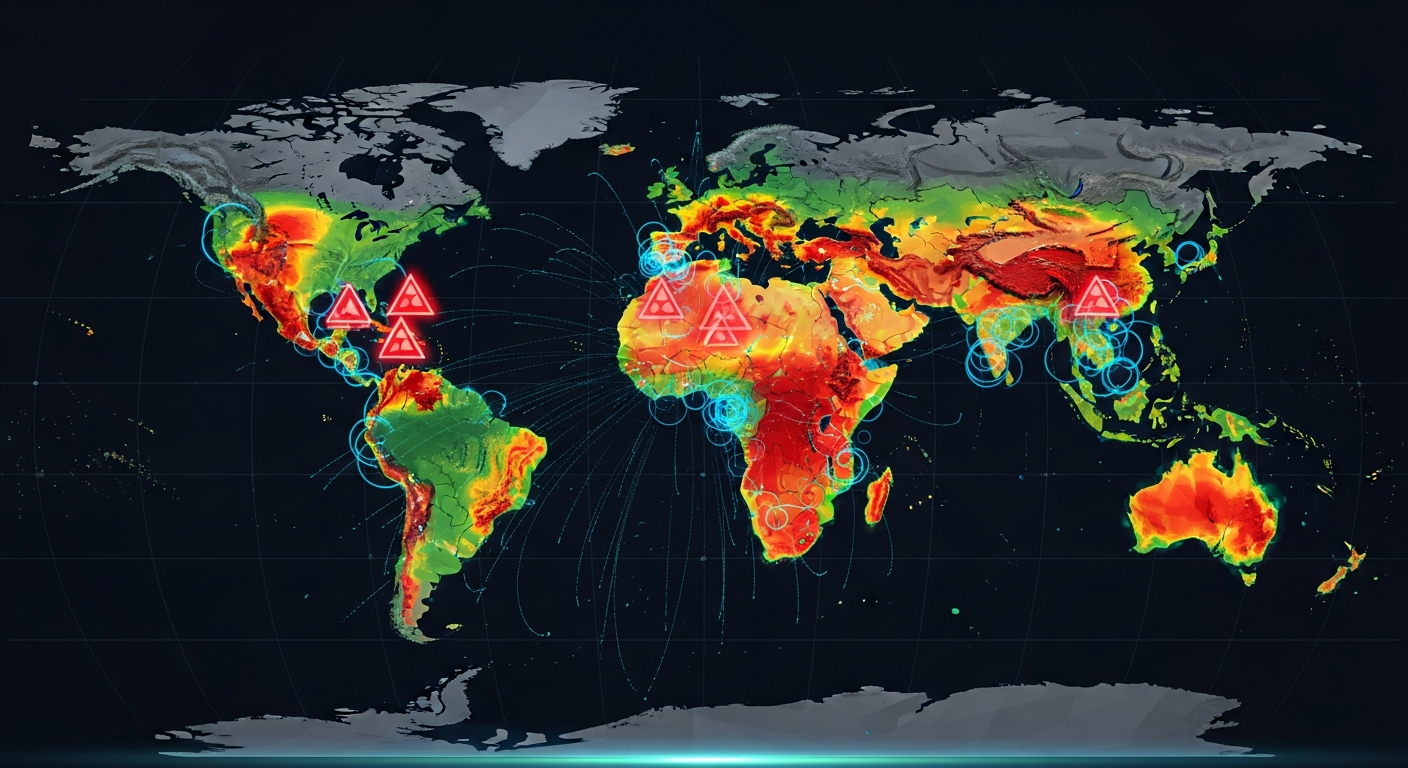
The Geopolitics of AI Regulation
How divergent AI regulatory frameworks across the US, EU, and China are creating a fragmented global landscape — and what it means for organizations deploying AI internationally.
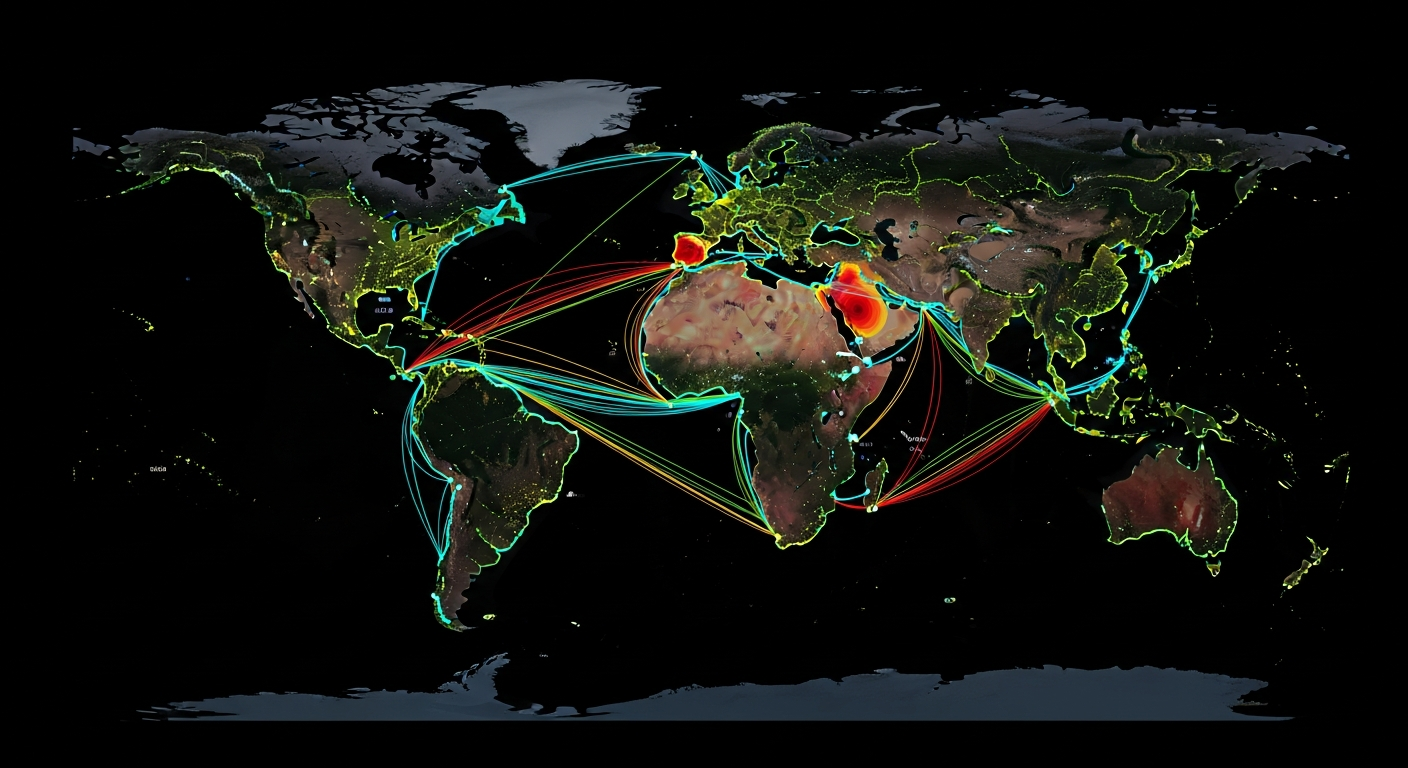
Supply Chain Fragmentation in a Multipolar World
Why traditional supply chain optimization is giving way to resilience-first design — and how geopolitical tensions are reshaping global manufacturing and logistics networks.

Digital Sovereignty and the Battle for Data Control
How nations are asserting control over data flows, cloud infrastructure, and digital services — and the implications for global technology companies.