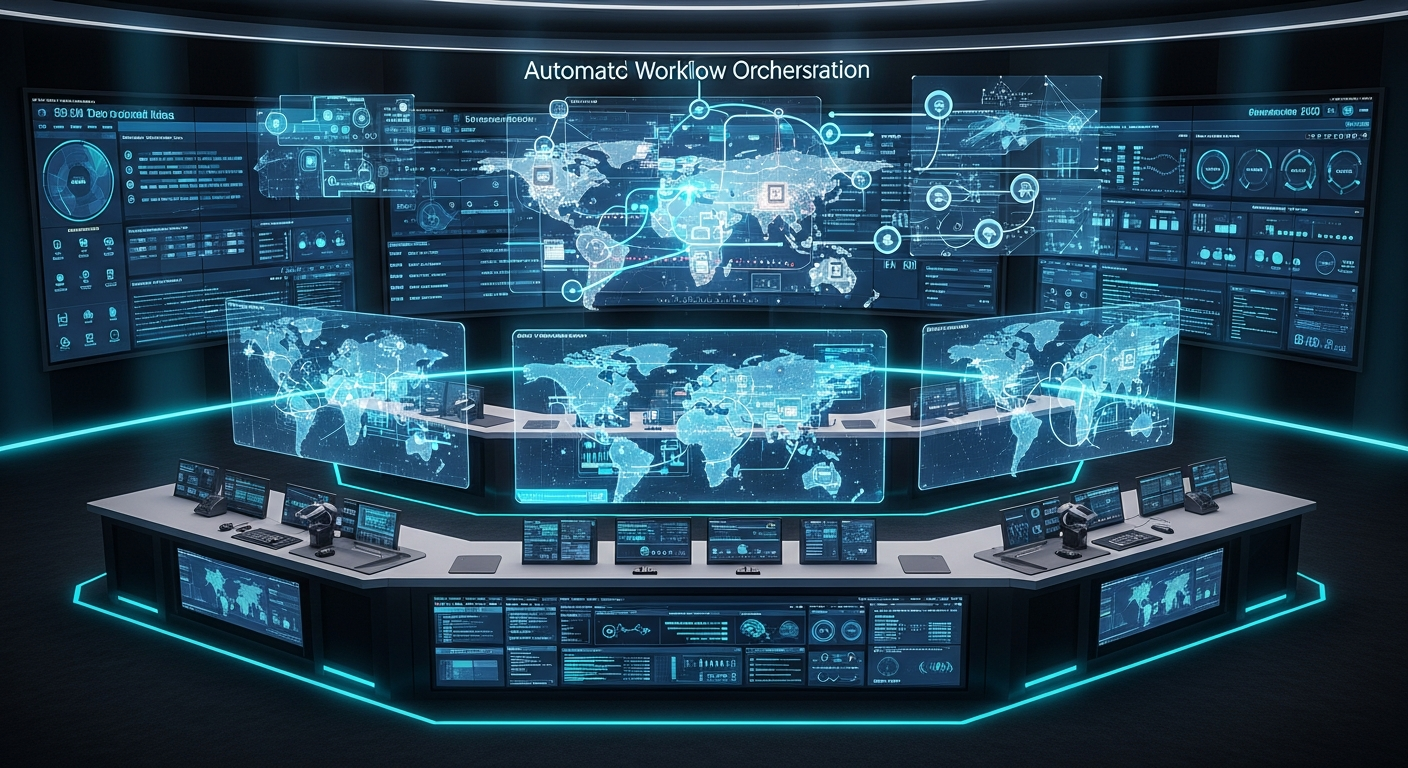
Operations
ColdAI's operations practice helps companies decide where AI and automation belong in supply chain, procurement, manufacturing and service operations, and then makes the change stick. Work runs through four phases: a diagnostic built on operational data, a target design, implementation alongside the teams who run the process, and the routines that stop gains from fading. The method pages below go deeper into specific analyses.
In depth
Go deeper into operations methods
Method pages for the analyses operations diagnostics rely on most, written so your own team can apply them.
- 01ProcessProcess mining for automationHow to use process mining to decide what to automate: build the event log, find variants and waiting time, rank candidates and match each one to the right tool.
- 02ArchitectureStraight-through processing: raising your STP rateWhy items fall out of automated back-office flows and how to raise the straight-through processing rate: define it properly, classify causes and fix at source.
- 03ComparisonSafety stock calculation methods comparedFive ways to calculate safety stock compared on data, accuracy and effort, with a worked example showing when lead-time variability outweighs a better forecast.
- 04GuideSpend analysis: building a spend cube and taxonomyHow to build a spend cube: consolidate AP and PO data, normalize suppliers, choose UNSPSC, ECLASS or a custom taxonomy, and classify spend with rules and AI.
- 05Deep diveShould-cost modeling: building a cleansheet cost modelHow to build a should-cost model for purchased parts: cost layers, inputs, routing and cycle times, validation, sensitivity, index clauses and fair negotiation.
How We Help
ColdAI's operations capability helps organizations fundamentally reimagine how work gets done. We combine deep process expertise with advanced AI and automation technologies to redesign operations for speed, quality, and cost efficiency — while building the organizational capabilities needed to sustain continuous improvement.
Our Approach
We take a data-driven approach to operations transformation — baselining current performance, identifying high-impact improvement opportunities, and implementing changes that deliver measurable results.
Diagnostic
Comprehensive operational diagnostic that maps processes, quantifies performance gaps, and identifies the highest-value improvement opportunities across the value chain.
Design
Design target operating models that leverage AI, automation, and modern technology to achieve step-change improvements in cost, quality, and speed.
Implement
Deploy new processes, technologies, and organizational structures through disciplined change management — ensuring adoption and sustainable performance improvement.
Sustain
Build the organizational capabilities, governance structures, and continuous improvement processes needed to maintain and extend operational gains over time.
Our Offerings
Supply Chain Optimization
End-to-end supply chain transformation including demand forecasting, inventory optimization, logistics, and supplier management — powered by AI and digital twins.
Intelligent Automation
Design and deployment of intelligent automation combining RPA, AI, and workflow orchestration to automate complex business processes at scale.
Procurement Transformation
Strategic procurement redesign including AI-powered sourcing, spend analytics, supplier risk management, and contract optimization.
Manufacturing Excellence
Manufacturing operations optimization through IoT, digital twins, predictive maintenance, and AI-driven quality management.
Service Operations
Customer service operations redesign with AI-powered routing, automated resolution, and omnichannel experience optimization.
Operational Resilience
Business continuity planning, crisis management frameworks, and operational resilience programs that ensure sustained performance through disruption.
What each phase of an operations program must prove
The four phases are familiar. What makes them useful is that each ends at a gate with evidence, not at a presentation.
| Phase | Question it answers | Evidence it relies on | Exit gate |
|---|---|---|---|
| Diagnostic | Where is performance lost, and what is each fix worth? | Event logs, inventory and service records, spend extracts, interviews with the people doing the work | A baseline per process and a ranked list of opportunities with owners |
| Design | What should the process, roles and technology look like after the change? | Variant and root-cause analysis, policy constraints, system capabilities, cost of each option | An approved target design, the controls it keeps and the measures it will be judged on |
| Implement | Does the new way of working perform in production? | Pilot results against the baseline, exception data, user feedback | Measured improvement in the pilot scope and a rollout plan the business accepts |
| Sustain | Will the gains hold once the project team leaves? | Performance against baseline over time, exception trends, audit findings | Named owners, a review cadence and a routine for continuous improvement |
A phase that cannot pass its gate goes back a step rather than forward on optimism.
Five operational domains, one diagnostic discipline
- Operations diagnostic
One method for every domain: set a baseline, find the loss, design the fix, measure the result.
- Supply chain planning
Forecasts, inventory positions and lead times show where buffers and service drift.
- Intelligent automation
Event logs and exception queues show which steps to automate and why items fall out.
- Procurement
Spend data and contracts show where money goes and what it should cost.
- Manufacturing
Machine, quality and maintenance data show losses in availability, speed and yield.
- Service operations
Ticket and contact data show demand drivers, routing failures and repeat contacts.
Choosing where an operations diagnostic should start
Start with the symptom that costs the most, then pick the analysis that explains it.
- If
Service levels slip even though inventory keeps rising.
ThenStart with item segmentation and how buffers are sized; see safety stock calculation methods.
Rising stock with falling service usually means buffers sit in the wrong places, not that they are too small.
- If
An automation program is live but manual workload has barely fallen.
ThenMeasure the straight-through rate by segment and classify fall-outs; see raising the STP rate.
The work has moved to the exception queue, and that queue has causes you can fix.
- If
Nobody can agree which processes to automate next.
ThenMine the event logs before choosing; see process mining for automation.
Data on volume, variation and waiting time settles debates that workshops cannot.
- If
Procurement savings are claimed but hard to find in the ledger.
ThenBuild a classified, reconciled spend cube first; see building a spend cube.
Without a reconciled view of spend, savings cannot be traced to the accounts.
- If
A few engineered parts dominate spend and their prices keep rising.
ThenBuild bottom-up cost models; see should-cost analysis.
Where competition is thin, a cost model replaces market pressure as the basis for negotiation.
Where AI changes operations work, and where it does not
AI earns its place in operations in a few specific ways. Forecasting models can use more signals than classical statistical methods, which changes the input to inventory decisions. Language and vision models read documents, emails and tickets that rules cannot, moving unstructured intake into automated flows. Agents can assemble evidence and send an exception to the person who can resolve it, instead of returning the whole item to a queue.
It changes much less elsewhere. A badly designed process runs badly faster once automated, master data errors spread faster, and controls that exist for good reasons, such as payment approvals, still need a person. ColdAI's intelligent automation offering combines AI with RPA and workflow orchestration1 for this reason: the right tool for a step is often not a model at all.
That is why the diagnostic comes first in the approach1. The useful question is not whether to use AI, but which steps in which process have the volume, data and decision structure to benefit, and what has to be fixed around them first.
Why operational gains fade after go-live
No baseline
Early signalBenefits are quoted from vendor estimates rather than measured against pre-change performance.
MitigationBaseline each process during the diagnostic and measure the same way afterwards.
Exceptions become the new manual work
Early signalThe automated share rises while the team working exception queues grows.
MitigationTrack fall-out reasons and treat the exception queue as a process to improve, not a backlog.
Local optimization
Early signalOne function's measure improves while another's worsens, such as lower inventory with more expediting.
MitigationSet measures across the end-to-end process and review them together.
Ownership leaves with the project
Early signalModels, rules and thresholds are unchanged months after go-live while the business has moved on.
MitigationHand over named owners, a review cadence and the skills to change rules and retrain models.
Data to pull before an operations diagnostic starts
How operations work hands over to implementation and managed services
Diagnostics and designs only matter if someone builds and runs them. Where a target design needs new systems or integrations, ColdAI's implementation capability carries it through delivery. Where a company prefers to have the redesigned operation run for it, managed services covers supply chain, procurement, manufacturing and customer service operations. For operational resilience and business continuity, the practice works with the risk and resilience team.
Frequently asked questions
How is operations transformation different from an automation project?
An automation project starts from a chosen tool and a list of tasks. Operations transformation starts from performance: where time, cost and quality are lost across the end-to-end process, and what would fix it. The fix may be automation, but it may equally be a process change, better master data or a different inventory policy. The diagnostic decides, not the tool.
Which operations areas does the practice cover?
Supply chain optimization, intelligent automation, procurement transformation, manufacturing excellence, service operations and operational resilience. The diagnostic method is shared, while the data differs: inventory and lead-time data for supply chain, event logs for automation, spend data for procurement, machine and quality data for manufacturing, and contact data for service.
Do we need clean data before an operations diagnostic?
No. Most diagnostics start with incomplete or inconsistent data, and finding the gaps is part of the work. What helps is access: someone who can extract event logs, inventory records or spend data, and process owners who can explain what the fields mean. Gaps are recorded and either worked around for the analysis or added to the design as fixes.
How do you measure whether an operations program worked?
Against the baseline set during the diagnostic, using the same definitions before and after. Typical measures are cycle time, cost per transaction, service level, inventory, first-pass yield and the share of work completed without a manual touch, chosen per process. Benefits claimed without a baseline, or measured differently after the change, should not be counted.
Will AI-enabled operations reduce headcount?
That depends on the company's choices, not on the technology alone. Many programs use released capacity to absorb growth, clear backlogs or move people into exception handling, supplier management and analysis. Whatever the intent, plan the workforce impact during design with HR and, where they exist, employee representatives, rather than discovering it at rollout.
Can our own team run parts of the work?
Yes. Many of the analyses described here, such as process mining, spend classification or safety stock reviews, can be run by internal teams with the right data access. Outside support is most useful for setting up the method, challenging assumptions across functions and carrying the design through implementation.
Sources
Our Insights

AI-Powered Supply Chain: From Reactive to Predictive
How AI and digital twins are transforming supply chain management from reactive firefighting to predictive, autonomous optimization.
Intelligent Automation: Beyond RPA to Autonomous Operations
Why RPA alone delivers diminishing returns — and how combining it with AI, process mining, and orchestration creates truly intelligent automation.
Reimagining Service Operations with AI
How AI-powered service operations are reducing resolution times by 60% while improving customer satisfaction — and the organizational changes required to get there.