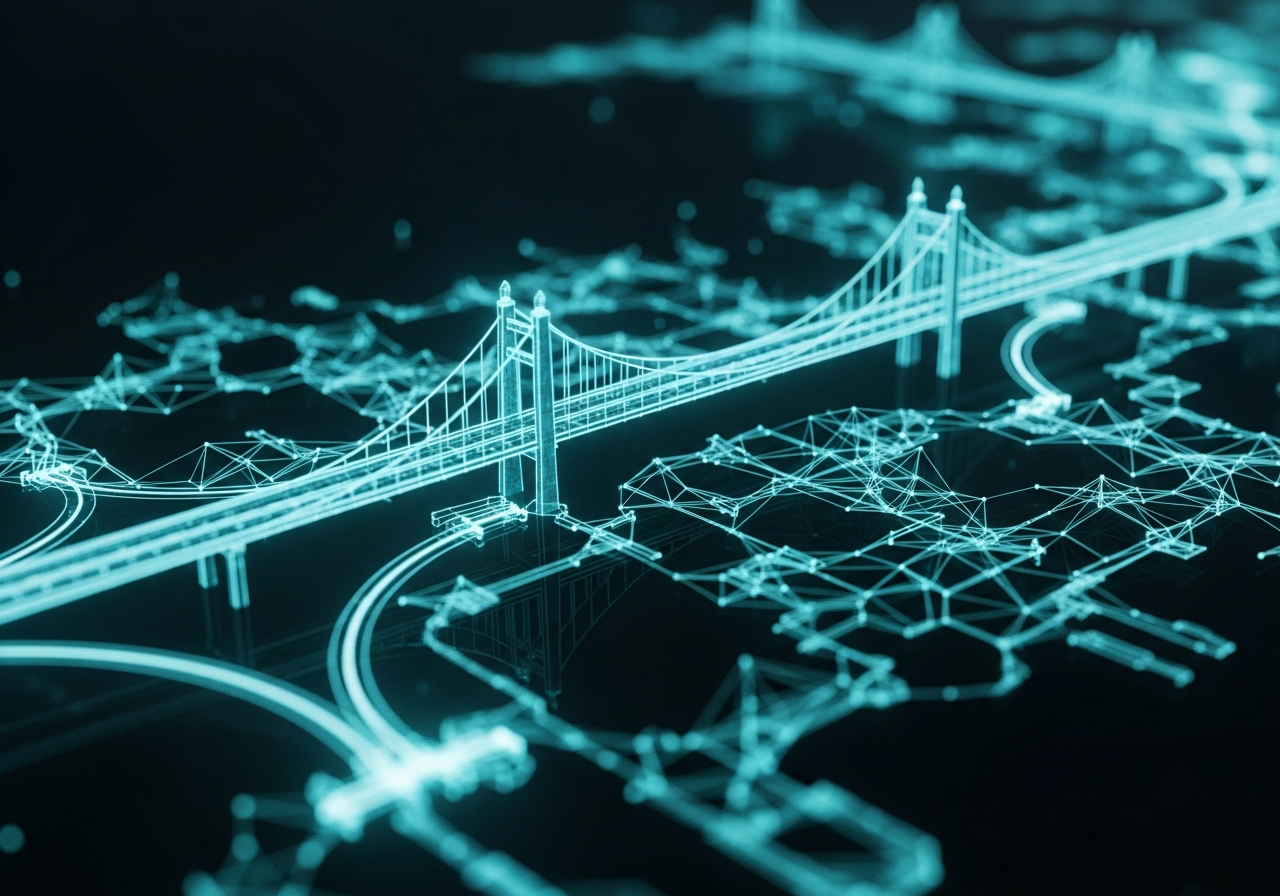
Infrastructure
Updated
Asset-AI
Condition monitoring across roads, rail, water, and ports
Whole-life
Capex-to-opex modelling across 30+ year asset lifecycles
Resilience
Climate and demand stress-testing built into planning
What does ColdAI do for Infrastructure?
ColdAI builds AI and data systems for the owners and operators of bridges, roads, rail, water networks and public facilities: structural monitoring, degradation modeling, digital twins, operational technology security and capital planning. The work starts from the asset register and the inspection record, because infrastructure decisions are made asset by asset over decades, and every model has to explain itself to engineers, auditors and elected officials.
“Public infrastructure is, structurally, a thirty-year asset managed on quarterly thinking. AI lets operators close that gap by making whole-life cost legible in real time.”
In depth
Go deeper into infrastructure asset management
Three working guides for the decisions infrastructure owners face most often: where capital goes, which structures to monitor and how to find leaks.
- 01ProcessRisk-based capital planning for infrastructure assetsA six-stage process for risk-based infrastructure capital planning: asset register, deterioration models, risk of failure, whole-life cost and optimization.
- 02ComparisonBridge structural health monitoring vs inspectionWhen continuous bridge structural health monitoring beats visual and drone inspection alone, what each sensor measures and why it never replaces NBIS checks.
- 03Deep diveWater network leak detection: acoustic, flow and AIHow utilities find water leaks: district night flow analysis, acoustic loggers, pressure transients and satellites, and how AI anomaly detection combines them.
Intelligent Infrastructure Management
Critical infrastructure — bridges, roads, water systems, telecommunications networks, and utilities — represents trillions of dollars in assets that are aging, underfunded, and increasingly vulnerable to climate change and cyber threats. AI-powered monitoring, predictive maintenance, and digital twin technology enable infrastructure operators to extend asset life, prioritize capital investments, and prevent catastrophic failures. ColdAI builds the technology platforms that keep critical infrastructure safe, efficient, and resilient.
Use Cases We Deliver
Structural Health Monitoring
IoT sensor networks and AI analytics that continuously monitor bridges, dams, tunnels, and buildings for structural degradation, settlement, and fatigue cracking.
Infrastructure Digital Twins
Virtual replicas of infrastructure assets that simulate aging, load scenarios, climate impacts, and maintenance interventions to optimize capital planning.
Predictive Degradation Modeling
ML models that forecast infrastructure deterioration rates based on material properties, usage patterns, environmental conditions, and maintenance history.
Water System Intelligence
AI-powered leak detection, water quality monitoring, and distribution optimization for municipal water networks using acoustic sensors and flow analytics.
Critical Infrastructure Cybersecurity
OT/IT security for SCADA systems, industrial control networks, and smart infrastructure with AI-powered threat detection and automated response.
Capital Planning Optimization
AI-driven prioritization of infrastructure investments based on risk, condition, usage, and economic impact — helping governments allocate limited budgets effectively.
How We Help Across Infrastructure
| Segment | Challenge | ColdAI Solution |
|---|---|---|
| Transportation | Bridge and road condition management | Structural monitoring, degradation prediction, capital prioritization |
| Water & Wastewater | Leak detection and treatment optimization | Acoustic monitoring, water quality AI, network optimization |
| Telecommunications | Network reliability and expansion | Predictive maintenance, capacity planning, outage prevention |
| Public Facilities | Energy efficiency and maintenance costs | Smart building AI, energy optimization, asset management |
Our Infrastructure Technology Delivery Process
Asset Inventory & Condition Survey
Catalog infrastructure assets, current condition assessments, monitoring systems, and maintenance histories to establish a digital baseline.
Sensor Network Design
Design and deploy IoT sensor networks optimized for the specific infrastructure type — bridges, water systems, tunnels, or utilities.
Digital Twin Development
Build virtual replicas that integrate sensor data, inspection records, and engineering models for condition assessment and scenario planning.
Operational Deployment
Deploy monitoring and decision support systems with integration into existing asset management platforms and maintenance workflows.
Why Infrastructure Organizations Choose ColdAI
- Sensor integration expertise spanning vibration, strain, acoustic, and environmental monitoring across diverse infrastructure types.
- Digital twin platforms that enable scenario modeling for climate resilience, load capacity, and maintenance planning.
- Experience with government procurement processes, security requirements, and public infrastructure governance frameworks.
- AI models that translate raw sensor data into actionable maintenance recommendations with confidence scoring.
What AI can realistically do for each infrastructure asset class
Each asset class fails differently and leaves different evidence behind. Matching the method to that evidence keeps first projects small enough to validate.
| Asset class | How it typically deteriorates or fails | Evidence owners usually hold | Where models help first |
|---|---|---|---|
| Bridges and structures | Corrosion, fatigue cracking, scour, bearing and joint failure | Element condition ratings, inspection photos, load ratings | Deterioration forecasts and targeted monitoring of known defects |
| Roads and pavements | Cracking, rutting, potholes and loss of ride quality | Survey-vehicle data, roughness indices, treatment history | Defect detection from imagery and treatment timing |
| Rail track and earthworks | Track geometry faults, rail defects, slope and drainage failure | Track recording runs, ultrasonic tests, earthwork inspections | Geometry trend analysis and earthwork risk ranking after heavy rain |
| Water and wastewater networks | Bursts, background leakage, blockages and sewer collapse | District meter flows, CCTV sewer surveys, repair records | Leak detection and main replacement prioritization |
| Tunnels and culverts | Lining cracks, water ingress, siltation and blockage | Periodic inspections, drainage records, limited sensor data | Defect classification from survey imagery and inspection triage |
| Public buildings and facilities | Plant failure, roof and envelope defects, energy waste | Building management system data, maintenance tickets | Fault detection on mechanical plant and maintenance scheduling |
Project design and delivery belong to our engineering and construction work; transmission and distribution grid assets to electric power and natural gas.
The asset information stack an infrastructure model stands on
- Decisions
Capital programs, work orders, load postings and closures, each with a named approver.
- Models
Deterioration forecasts, anomaly scores and program optimization, versioned with their training data.
- Asset data layer
Register, hierarchy and GIS that tie every record to one physical asset.
- Condition evidence
Inspections, survey imagery, sensor history, failures and work history.
- Field and OT systems
SCADA, telemetry, monitoring gateways and the networks that carry their data.
Degradation modeling when evidence is sparse and subjective
Infrastructure deterioration data is unlike factory sensor data. Condition is often recorded as an ordinal rating by an inspector every year or two, different inspectors rate the same defect differently, and many assets have never failed, so their true life is unknown. A model that treats ratings as precise measurements will be confidently wrong.
Methods that respect those limits work better. Markov and other stochastic models describe the probability of moving between condition states; survival models handle assets still in service; machine learning adds covariates such as traffic loading, soil, climate exposure and material where the history supports them. The test of any model is a back-test: train on older inspection cycles and check whether it predicted the ratings the next cycle recorded.
The output that matters is uncertainty, not a single curve. An asset whose forecast spans two condition states needs either more evidence or a more cautious plan, and that judgment feeds directly into risk-based capital planning. A digital twin can hold these forecasts alongside the engineering model so scenarios such as heavier loads or climate stress can be tested before money is committed.
Securing the operational technology behind water and transport networks
Water treatment, pumping, tunnel ventilation, traffic signals and movable bridges are run by control systems that were rarely designed to share data. The ISA/IEC 62443 series organizes them into security zones joined by controlled conduits2, and NIST SP 800-82 Rev. 3 extends guidance from industrial control systems to building automation, transportation and physical access systems3.
Three design rules follow for any AI that reads from these systems. Data leaves the control network through one-way or tightly brokered paths, so analytics never needs inbound access. Models run outside the control zone and advise operators rather than writing setpoints, unless a write path has passed the owner's change control and hazard review. Vendor remote access is time-limited and logged. Our NERC CIP guide for power utilities shows the same principles under a stricter regime.
Resilience and security rules that reach infrastructure data systems
Directive (EU) 2022/2555 (NIS2 Directive)
EUApplies whenAn entity in a covered sector, including transport, drinking water and wastewater, meets the size or designation criteria4.
- Cybersecurity risk-management measures covering network and information systems, including suppliers
- Reporting of significant incidents to the national authority or CSIRT
Directive (EU) 2022/2557 on the resilience of critical entities
EUApplies whenA member state identifies the operator as a critical entity in sectors such as transport, drinking water or wastewater5.
- Risk assessments covering natural hazards and human threats
- Resilience measures and incident notification
The Network and Information Systems Regulations 2018[^6]
UKApplies whenThe organization is an operator of essential services in sectors such as drinking water supply or transport6.
- Appropriate and proportionate security measures for the systems behind the essential service
- Notification of incidents with a significant impact on continuity of the service
America's Water Infrastructure Act of 2018, Section 2013 (Safe Drinking Water Act Section 1433)[^7]
USApplies whenA community water system serves more than 3,300 people7.
- Risk and resilience assessment that includes automated and computer systems
- Emergency response plan, both reviewed and recertified every five years
23 CFR Part 515, Asset Management Plans
USApplies whenA state department of transportation manages National Highway System pavements and bridges8.
- Risk-based asset management plan with life-cycle planning and risk analysis
- Financial plan and investment strategies over a minimum period of ten years
Choosing a first infrastructure AI project by situation
- If
Your capital program is challenged every budget round and the register is reasonably complete.
ThenStart with deterioration forecasts and funding scenarios for one asset class.
A defensible scenario pack changes the budget conversation quickly and reuses data you already hold.
- If
One or two structures carry a known defect and a long wait for repair.
ThenScope targeted monitoring of that defect with written alert responses.
A narrow question gives a clear answer and a natural end date.
- If
A water network has district meters but leakage has plateaued.
ThenBegin with zone-level anomaly detection on existing flows and a disciplined field feedback loop.
It needs no new hardware and shows which sensors would add value.
- If
Inspection records live in PDFs and spreadsheets with no common asset identifiers.
ThenFund the asset data layer first, often as a minimum viable digital twin.
Every later model depends on records tied to the right physical asset.
Failure modes particular to long-lived public assets
Platform lock-in that outlives its vendor
Early signalAsset data can be exported only in a proprietary format, or models cannot be moved.
MitigationRequire open data models, documented interfaces and an exit plan in the contract, because assets last far longer than software contracts.
Models that learn one inspector's habits
Early signalPredicted condition jumps when an inspection contract changes hands.
MitigationTrack inspector or contractor as a variable, calibrate ratings with photo review, and re-test after any change.
Sensor networks abandoned after grant funding ends
Early signalGateways go offline and nobody is budgeted to replace batteries or modems.
MitigationPut maintenance and analysis costs into the operating budget before installation, with an agreed review point.
Decisions that cannot be explained to the public
Early signalA community asks why its bridge or main was deferred and the answer is a model score.
MitigationKeep per-asset explanations and the policy weights behind them in a form that can be published.
Frequently asked questions
Where should an infrastructure owner start with AI if data is poor?
With the asset register and the inspection record. Tie every inspection, work order and sensor feed to one asset identifier, record what is missing, and check whether past ratings can be back-tested. That work is useful on its own for audits and capital plans, and it is the base every later model needs.
Does infrastructure AI replace inspectors or asset engineers?
No. Models can triage survey imagery, flag changes in sensor data and search through capital program options faster than people, but inspections required by regulation remain the job of qualified inspectors, and engineers decide on repairs, postings and closures. The useful role for AI is pointing scarce engineering time at the assets that need it.
How do digital twins fit into infrastructure asset management?
A digital twin joins the asset register, condition evidence, sensor data and engineering models for an asset or network so that scenarios can be tested on it, such as a heavier design vehicle, a flood or a funding cut. For most owners it starts small, covering one asset class and the decisions it supports, and grows as data and use justify it.
Can infrastructure AI run inside our own environment?
Yes. Many owners keep models and data in their own cloud tenancy or data center because of security rules, public records obligations or OT constraints. Monitoring analytics can also run on gateways at the asset. The architecture is chosen around where the data must stay and who operates the system after delivery.
How does ColdAI typically run an infrastructure engagement?
It usually follows four stages: an asset inventory and condition baseline, sensor network design where monitoring is justified, development of the digital twin and models, and operational deployment integrated with existing asset management platforms and maintenance workflows1. Scope is set by the decision the owner needs to make, not by the technology.
Sources
- Infrastructure: use cases and delivery process — ColdAI
- ISA/IEC 62443 Series of Standards — International Society of Automation
- NIST SP 800-82 Rev. 3, Guide to Operational Technology (OT) Security — National Institute of Standards and Technology
- Directive (EU) 2022/2555 on measures for a high common level of cybersecurity across the Union (NIS2 Directive) — EUR-Lex
- Directive (EU) 2022/2557 on the resilience of critical entities — EUR-Lex
- The Network and Information Systems Regulations 2018 — legislation.gov.uk
- AWIA Section 2013 / SDWA Section 1433: Risk and Resilience Assessments and Emergency Response Plans — US Environmental Protection Agency
- 23 CFR Part 515 — Asset Management Plans — Legal Information Institute, Cornell Law School
Latest analysis from this industry
Asset Owners Are Replacing Engineers With Autonomous Maintenance Agents — and what comes next
Distributed ledger audit trails and agentic scheduling systems are cutting infrastructure operating budgets by 18-23% while reducing structural failures.
Infrastructure Owners Are Replacing Third-Party Condition Ratings With Ledger-Verified Sensor Networks: the new playbook
Manual inspection regimes and consultant-driven assessments are giving way to autonomous agent systems that write immutable degradation records directly to distributed ledgers.