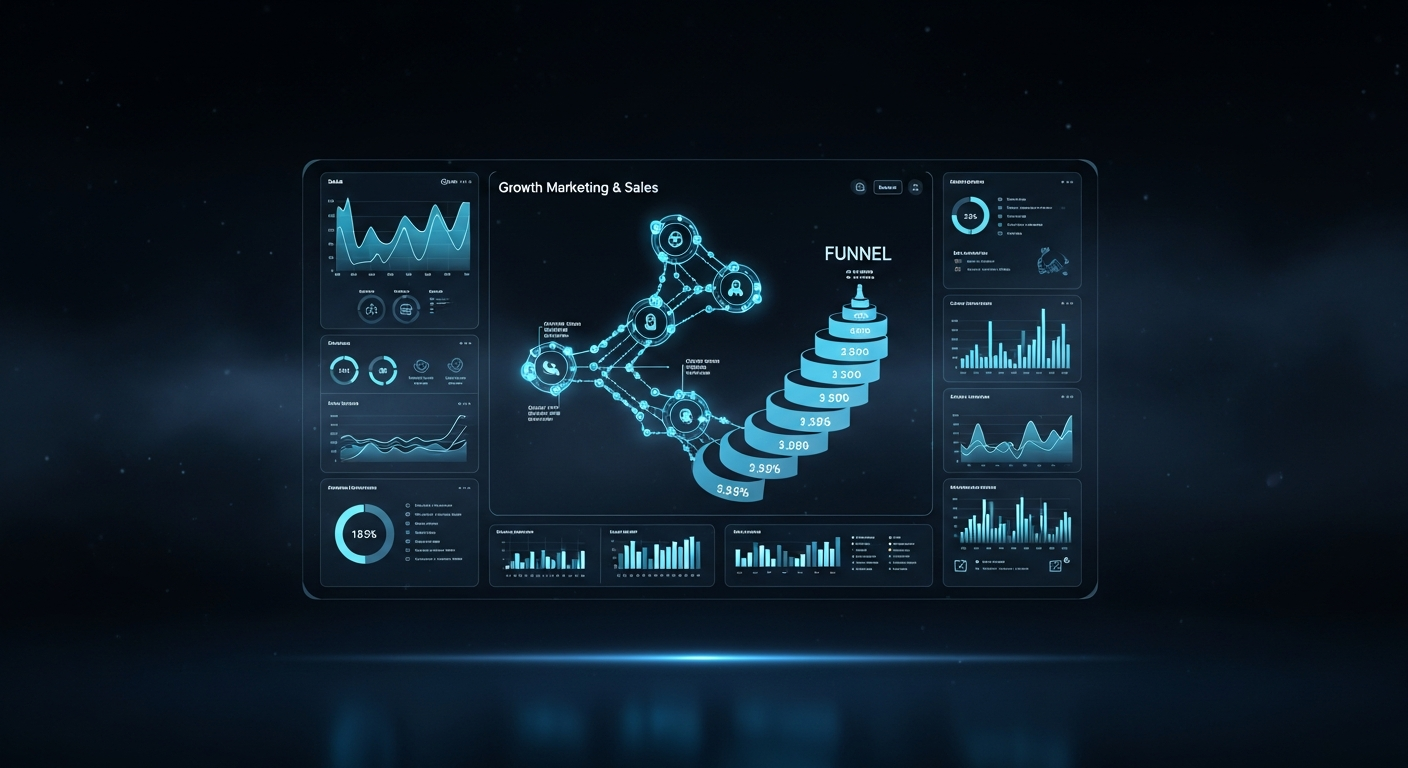
Growth, Marketing & Sales
ColdAI's growth, marketing and sales capability designs one growth system where most companies run three. Marketing, sales and customer success share customer data, stage definitions and targets, so an account's history travels with it from first visit to renewal. Engagements move from a growth audit to strategy, a technology build and continuous optimization, applying AI where the data and the process can support it.
In depth
Go deeper into growth measurement and operations
Five practical guides cover the parts of a growth system teams ask about most: standing up revenue operations, measuring what marketing causes, scoring customer health, choosing a customer data platform and clearing AI-generated marketing for publication.
- 01ProcessHow to set up revenue operationsA seven-step plan for standing up revenue operations: funnel definitions, one account model, systems of record, handoff SLAs, a metrics tree and forecast rules.
- 02ComparisonMarketing attribution models comparedCompare rule-based and multi-touch attribution, marketing mix modeling and incrementality tests by the question each answers, and how to combine all three.
- 03GuideCustomer health score and churn predictionBuild a customer health score that predicts churn: define the outcome, choose signals, validate a rules-based score, then decide when a churn model pays off.
- 04Buyer's guideCustomer data platform buyer's guideA vendor-neutral guide to choosing a customer data platform: whether you need one, packaged or composable architecture, identity, consent, cost and RFPs.
- 05Regulation explainerGenerative AI in marketing: disclosure and compliance rulesWhich disclosure, consumer-protection and copyright rules apply to AI-generated ads, influencers and reviews in the EU, US and UK, plus a pre-publish checklist.
How We Help
ColdAI's growth capability combines strategic marketing expertise with advanced AI and data engineering to build growth systems that compound. We design full-funnel architectures — from brand awareness through customer lifetime value optimization — powered by real-time data, predictive analytics, and automated execution.
Our Approach
We build growth systems that learn and improve continuously — combining strategic thinking with engineering rigor to create sustainable competitive advantage in customer acquisition and retention.
Growth Audit
Comprehensive analysis of your current growth engine — funnel metrics, channel performance, technology stack, and organizational capabilities — identifying gaps and highest-leverage opportunities.
Strategy Design
Design integrated growth strategies that align brand, marketing, sales, and customer success around unified objectives, with clear metrics and accountability at each stage.
Technology Build
Architect and implement the marketing and sales technology infrastructure — CRM, marketing automation, analytics, attribution, and AI-powered optimization tools.
Optimize & Scale
Deploy continuous optimization through A/B testing, predictive modeling, and automated campaign management — scaling what works while systematically improving conversion at every stage.
Our Offerings
Growth Strategy
Comprehensive growth strategy development including market positioning, channel strategy, pricing optimization, and go-to-market planning for new products and markets.
AI-Powered Marketing
Deploy AI across marketing operations — from content generation and personalization to predictive audience targeting and automated campaign optimization.
Sales Transformation
Redesign sales processes with AI-powered lead scoring, deal intelligence, coaching analytics, and pipeline management tools that increase win rates.
Revenue Operations
Unify marketing, sales, and customer success data into a single revenue operations platform with shared metrics, processes, and accountability.
Brand & Positioning
Strategic brand development for technology companies — from positioning and messaging architecture to visual identity and content strategy.
Customer Analytics
Advanced customer analytics including segmentation, lifetime value modeling, churn prediction, and personalization engines that drive retention and expansion.
One customer record, five stages working from it
Most growth problems surface at the joins: a lead that marketing counted and sales never touched, or a renewal risk that support saw months before account management did. A growth system is designed around those joins rather than around each team's tools.
- Shared data and definitions
One account and contact model, written stage definitions and a metrics tree that every team reports from.
- Demand creation
Positioning, channels and campaigns, judged on the pipeline and revenue they influence rather than on clicks alone.
- Pipeline and deals
Scoring, routing, deal reviews and forecasting that reuse the account history marketing already collected.
- Onboarding and adoption
The first months after signature, when product usage shows whether the promised value is arriving.
- Retention and expansion
Health scoring, renewal planning and expansion offers driven by usage, billing and support signals.
- Measurement and planning
Attribution, experiments and budget allocation that feed the next planning cycle.
What each phase of a growth engagement examines and produces
These are the four phases ColdAI uses for growth work. Each one ends in something a team can act on, and each builds on the evidence gathered in the phase before.
Growth audit
Conversion is traced stage by stage and by cohort, channel spending is set against the pipeline and revenue each channel can credibly claim, and the CRM, marketing automation, billing and support tools are inventoried along with the data moving between them. Interviews with marketing, sales, customer success and finance leads expose where definitions quietly differ.
Strategy design
Segments, channels, offers, pricing and packaging are chosen together, and every funnel stage gets a target owned by a named team. Trade-offs such as growth rate against payback period are written down instead of assumed, along with the handoff rules between marketing, sales and customer success.
Technology build
The stack is shaped to serve the plan: CRM configuration, marketing automation, analytics and attribution, pipelines into a data warehouse, and whichever AI components the plan calls for. Integration and data-quality rules come before dashboards, because a dashboard built on unreconciled data only moves the argument to a new screen.
Optimize and scale
Changes are tested rather than declared: A/B tests on pages and messages, holdout groups for lifecycle programs, and monitoring for every score and forecast in production. Whatever works is extended to further segments, whatever does not is retired, and the metrics tree itself is revisited each planning cycle.
The six offerings and the growth problem each one answers
Read across a row to see the symptom that usually prompts each offering and the first thing it delivers.
| Offering | Problem it answers | First thing delivered |
|---|---|---|
| Growth Strategy | Growth has stalled, or a new product or market needs a go-to-market plan | Segment and channel priorities, with pricing and packaging options to test |
| AI-Powered Marketing | Content, targeting and campaign tuning need more hours than the team has | A shortlist of AI uses tied to campaign outcomes, plus a review workflow for generated content |
| Sales Transformation | Reps spend time on the wrong deals and forecasts slip late in the quarter | Lead scoring and deal-review design built on agreed stage exit criteria |
| Revenue Operations | Marketing, sales and finance report different numbers for the same quarter | Written funnel definitions and one account model, as set out in the revenue operations setup guide |
| Brand & Positioning | Buyers cannot tell the company apart from its competitors | A positioning statement and messaging architecture tested in real sales conversations |
| Customer Analytics | Churn arrives as a surprise and expansion depends on who remembers to ask | Segmentation, lifetime value modeling and a validated customer health score |
Offerings can run together; the table shows where each one starts, not a fixed package.
Where to start when several parts of the funnel look weak
Fixing everything at once spreads effort thin. These rules of thumb put foundations ahead of optimization.
- If
Marketing, sales and finance each quote a different pipeline or bookings figure.
ThenStart with revenue operations: written definitions, one account model and a single system of record for each object.
Budget, territory and compensation decisions all depend on numbers people accept.
- If
Acquisition costs keep rising and nobody can say which channels deserve the budget.
ThenCombine a mix model, incrementality tests and in-channel attribution, as compared in the attribution models guide.
Conversions reported by ad platforms credit themselves, while budget calls need causal evidence.
- If
Renewals fail without warning, or customer success works through accounts in no particular order.
ThenBuild a rules-based health score validated against past renewals before commissioning a predictive model.
A simple score that account managers trust changes behavior sooner than an opaque one.
- If
Customer data sits in a dozen tools and the team is asking for real-time personalization.
ThenDecide whether you need a customer data platform at all, and which architecture, with the CDP buyer's guide.
Buying a platform before agreeing identity and consent rules recreates the mess in a new place.
- If
Win rates are falling against the same competitors and every rep describes the product differently.
ThenDo the positioning work before adding sales tooling.
Better tools spread an unclear message faster.
Where AI earns a place in marketing and sales operations
AI pays its way in growth work when three conditions hold: a decision repeats often enough to be worth automating, historical data records how that decision turned out, and someone is committed to acting on the output. Account scoring, churn risk, forecast adjustment, offer and send-time selection, and drafting copy variations for human review meet that test in many organizations.
It is a poor fit where outcomes are rare or slow to observe, where nobody owns the resulting action, or where the training data reflects a process the company is trying to change. A scoring model trained on the leads sales chose to work in the past will learn the old prioritization, blind spots included, so historical CRM data should be questioned before it becomes a training label.
Agents add another layer: software that researches accounts, drafts outreach or updates records by itself. The sales agent and marketing agent pages describe those patterns. Inside a growth system they are managed like any other channel, with targets, review rules and the same customer data the human team uses.
Failure patterns that stall growth programs
Automating a funnel nobody has defined
Early signalRouting rules depend on fields that half the team fills in differently.
MitigationAgree stage definitions and required fields before building automation, then audit how consistently those fields are completed.
Optimizing a proxy that drifts away from revenue
Early signalMarketing-qualified lead volume climbs while pipeline from those leads stays flat.
MitigationTie each team's target to a metric one step closer to revenue and review conversion between stages, not volume at a single stage.
Personalization that outruns consent
Early signalAudiences are built from data whose consent basis nobody can trace.
MitigationStore consent and purpose with the profile and enforce them at the point of activation.
Models nobody acts on
Early signalScores appear in the CRM, yet reps and account managers work their books exactly as before.
MitigationDesign the playbook and the owner of each action before the model, and track adoption alongside accuracy.
Tool sprawl
Early signalSeveral tools hold overlapping contact lists and each team trusts a different one.
MitigationName one system of record per object and integrate or retire the rest.
Frequently asked questions
What does ColdAI need from us before a growth audit starts?
Read access to the CRM and marketing automation platform, exports of recent opportunities and closed deals, channel spend by month, renewal or billing data, and time with the leaders of marketing, sales, customer success and finance. Existing dashboards and board reporting help too, because the audit compares what each team believes with what the systems record. The data does not need to be clean; finding where it is not is part of the audit.
Do you keep our existing CRM and marketing tools or replace them?
Keeping what works is usually the better starting point. Many growth problems come from configuration, data quality and unclear definitions rather than from the product chosen, and replacing a CRM disrupts every team at once. Where a tool genuinely blocks the plan, for example because it cannot hold the account model or connect to billing, the audit says so and compares the options, including the full cost of migrating.
Does this work for consumer businesses as well as B2B?
The methods apply to both, but the emphasis changes. B2B growth systems deal with buying committees, long sales cycles and account-level data, so revenue operations and pipeline forecasting carry more weight. Consumer businesses usually have far more transactions, shorter cycles and heavier marketing automation, so measurement, consent management and lifecycle programs matter more. The audit establishes which pattern applies before design starts.
How do you judge whether a growth program has worked?
Against the metrics tree agreed during strategy design, which links stage conversion and sales velocity to bookings, retention and net revenue retention. Where possible, each change is tested against a control or holdout group so its effect can be separated from seasonality and market movement. Raw lead volume and similar activity measures are tracked as inputs, never as the result.
Will AI tools replace our marketing or sales team?
That is not the aim of this work. AI takes on repeated, data-rich tasks such as scoring, drafting variations for review and flagging risk, while people keep positioning, relationships, negotiation and the judgment calls the data cannot make. Where an agent does handle a task end to end, such as a first reply to an inbound lead, the design states what it may do and when a person takes over.
How does this capability relate to ColdAI's consulting and development services?
This capability is the growth-specific expertise. Work can be scoped as advisory through strategic consulting, as an implementation through development, or as both, depending on whether your own teams will build the design. The growth audit is usually the point where that choice becomes clear.
Our Insights

AI Is Rewriting the Marketing Playbook
How generative AI, predictive analytics, and autonomous optimization are fundamentally changing marketing strategy, execution, and measurement.
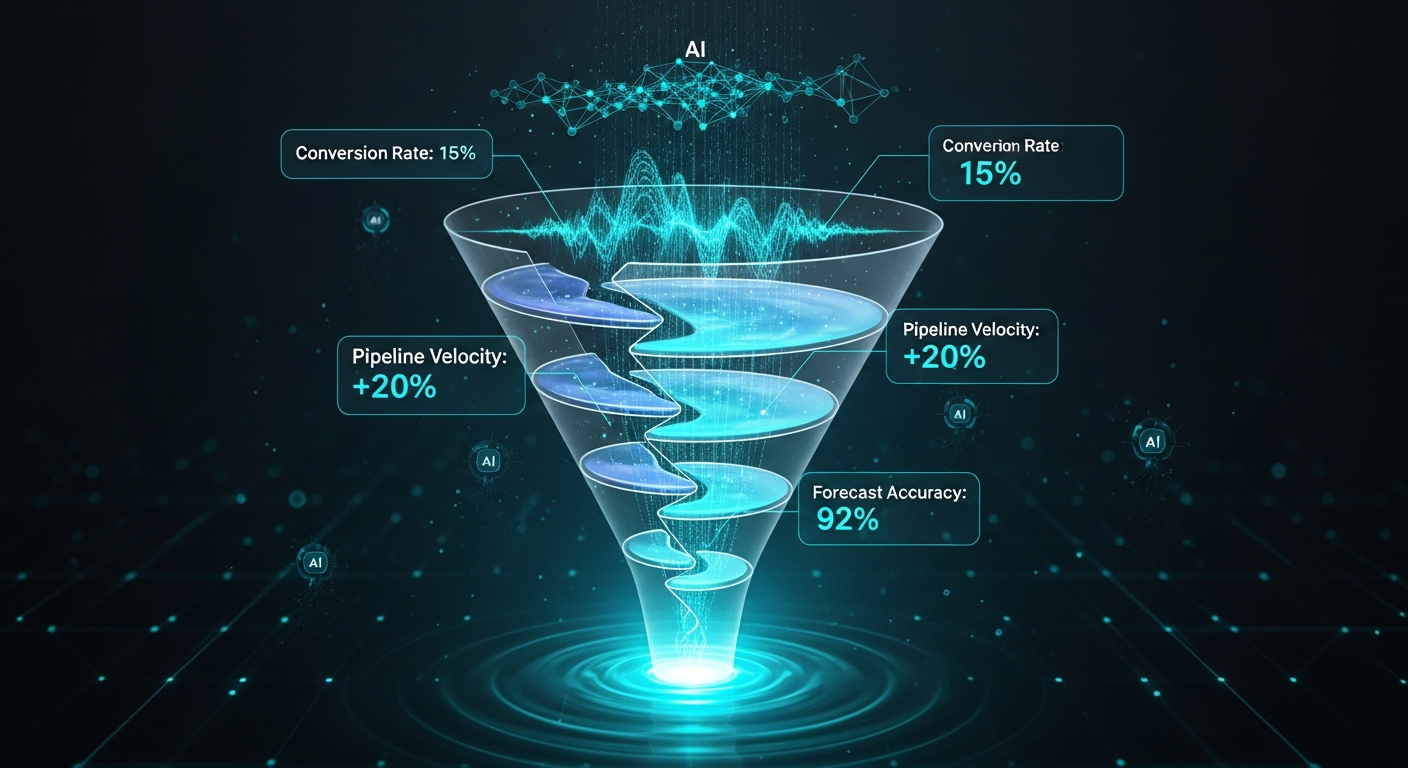
The Future of B2B Sales: Intelligence-Driven Revenue
Why the best B2B sales organizations are becoming intelligence operations — and how AI-powered deal intelligence is reshaping complex enterprise sales.

Brand Building in the Age of AI
Why brand has become more important than ever in a world of AI-generated content — and how technology companies can build enduring brand equity.