
Implementation
ColdAI's implementation teams take an approved plan and turn it into systems people use every day: migrated workloads, modernized platforms, AI services in production and integrations that hold up at period-end. Delivery runs through four phases, from discovery and planning to stabilization and transition, with two-week iterations in between. This page sets out what each phase should leave behind and where risk sits in each kind of implementation.
In depth
Go deeper into implementation delivery
Working guides for the moments that decide whether a go-live holds: modernization architecture, migration evidence, acceptance, cutover and hypercare.
- 01ArchitectureStrangler fig pattern: incremental legacy modernizationHow to apply the strangler fig pattern: finding seams, intercepting traffic, anti-corruption layers, moving data ownership, shadow traffic and decommissioning.
- 02Deep diveData migration validation and reconciliationHow to prove a data migration is complete and correct: source profiling, mapping specifications, four levels of reconciliation, reject handling and evidence.
- 03ChecklistUser acceptance testing checklist for enterprise systemsA user acceptance testing checklist for ERP, CRM and platform rollouts: entry criteria, scenarios, test data, roles, defect triage, AI features and sign-off.
- 04ProcessCutover planning: go-live runbook and rollback criteriaHow to build a cutover plan for a system go-live: choosing a strategy, a task-level runbook, mock cutovers, go/no-go criteria and a rollback you have tested.
- 05GuideHypercare period: running support after go-liveHow to run the hypercare period after go-live: whom to staff, how to triage issues, which stabilization metrics to review daily and when it is safe to exit.
How We Help
ColdAI's implementation capability bridges the gap between strategic vision and operational reality. We deploy experienced engineering teams that specialize in complex, large-scale technology implementations — from cloud migrations and platform modernizations to AI system deployments and enterprise-wide digital transformations.
Our Approach
We combine agile delivery methodology with enterprise-grade rigor — delivering incremental value while maintaining the architectural coherence and quality standards that complex systems require.
Discovery & Planning
Deep technical discovery to understand current state, define target architecture, identify risks, and build a realistic implementation plan with clear milestones and dependencies.
Foundation & Architecture
Establish core infrastructure, CI/CD pipelines, security frameworks, and architectural patterns that will support the full implementation and beyond.
Iterative Delivery
Execute in two-week sprints with continuous integration, automated testing, and regular stakeholder demos — delivering working software at the end of every cycle.
Stabilize & Transition
Comprehensive testing, performance optimization, security hardening, and knowledge transfer to ensure successful transition to operations and sustained performance.
Our Offerings
Cloud Migration
End-to-end cloud migration including assessment, architecture design, workload migration, and optimization — minimizing risk and downtime.
Platform Modernization
Transform legacy systems into modern, cloud-native architectures while maintaining business continuity and preserving critical business logic.
AI System Deployment
Production deployment of AI and ML systems including infrastructure setup, model serving, monitoring, and integration with enterprise workflows.
Enterprise Integration
Complex multi-system integration using APIs, event-driven architecture, and middleware to create unified data flows across the enterprise.
DevOps & Automation
Implement CI/CD pipelines, infrastructure-as-code, automated testing, and observability frameworks that accelerate delivery and improve reliability.
Quality Engineering
Comprehensive quality programs including test automation, performance testing, security testing, and quality governance frameworks.
What each implementation phase should leave behind
The four phases are a sequence of evidence rather than of calendar months. Each should end with artifacts that the next phase depends on, so a steering group can see progress without relying on percentage-complete reports.
Discovery and planning
Current-state findings drawn from systems, data and interviews; a target architecture; a dependency map that includes neighboring programs and suppliers; and milestones tied to things that can be demonstrated. Data profiling starts here, because migration surprises found late are the most expensive kind.
Foundation and architecture
Environments defined in code, a delivery pipeline that runs tests and security scans on every change, identity and secrets management, and the patterns teams will reuse. For migrations, the first rehearsal of data movement belongs here, long before cutover.
Iterative delivery
Two-week sprints, each closing with software that runs and a demonstration to stakeholders1. Performance tests, migration scripts and operational runbooks are part of the definition of done for each increment rather than a separate phase at the end.
Stabilize and transition
Testing, performance tuning, security hardening and knowledge transfer1, together with the business acceptance, cutover and hypercare work around go-live. The phase ends when an operations team owns the system, its runbooks and its open issues.
Where delivery risk concentrates in each kind of implementation
ColdAI's implementation work spans six offerings1. They share the same phases, but the place where things go wrong differs, and so does the evidence that shows the work is finished.
| Implementation type | Where risk concentrates | Evidence that it is done | Technique that carries most weight |
|---|---|---|---|
| Cloud migration | Undocumented dependencies between workloads and the data that must move with them. | Workloads running on the target with performance and recovery tested, and old hosting retired. | Rehearsed migration waves under a cutover plan. |
| Platform modernization | Business rules buried in legacy code and data that nobody has written down. | Capabilities retired from the legacy platform, not just new services built. | Incremental replacement with the strangler fig pattern. |
| AI system deployment | Model behavior on real inputs, and the workflow around the model. | Results against thresholds agreed beforehand, with monitoring live. | Evaluation sets used during user acceptance testing. |
| Enterprise integration | Error handling, retries and ownership of data passing between systems. | Every interface monitored, owned and given a tested failure path. | Contract tests plus end-to-end business scenarios. |
| DevOps and automation | Pipelines that teams bypass under deadline pressure. | Every production change, emergency fixes included, flows through the pipeline. | Infrastructure as code and delivery metrics reviewed by the teams themselves. |
| Quality engineering | Tests that prove the build but not the business process. | Test evidence the business owner accepts and signs. | Risk-based test design and data migration validation. |
Most programs combine several rows. Use the table to decide where senior attention goes, not as a sequence.
What has to exist before the first sprint starts
Some prerequisites cannot be added halfway through without stalling delivery. These conditions call for specific work in the foundation phase.
- If
The system will hold personal or otherwise regulated data.
ThenBuild masked or synthetic test data pipelines during the foundation phase.
Teams that wait for realistic data until acceptance testing find data defects when there is least time to fix them.
- If
Several vendors or internal teams own connected systems.
ThenAgree interface contracts and stand up test instances of each partner system before feature work begins.
- If
The release includes AI features.
ThenAssemble a labeled evaluation set from real cases and agree acceptance thresholds with the business owner.
Without thresholds set in advance, acceptance turns into a debate about impressions.
- If
The go-live date is fixed by a contract, a regulation or a trading season.
ThenPlace the cutover window and rehearsal dates first and work backwards, treating scope as the variable.
- If
A different team or provider will run the system afterwards.
ThenName the operations owner now and invite them to sprint reviews.
Running two-week iterations against a fixed go-live date
Iterative delivery produces working software continuously, yet a cutover happens once. The two fit together when each sprint deploys to a production-like environment, migration scripts and cutover tasks sit in the backlog as ordinary work items, and the cutover is rehearsed several times as the system grows. A separate readiness backlog, covering runbooks, monitoring, training and data, keeps go-live work visible next to features.
When the date cannot move, scope has to. Agree early which capabilities the business needs on day one and which can follow, and record the decision so nobody reopens it in the final weeks. Cutting testing to protect scope only moves the problem into hypercare.
Change management runs alongside, not after. ColdAI's implementation capability includes change management and adoption programs1; in practice that means super-users trained during delivery, process owners writing acceptance scenarios, and adoption measured after go-live alongside incidents.
Hypothetical example: how the delivery techniques fit together in one program
Frequently asked questions
What does discovery involve at the start of an implementation?
Technical discovery examines the current systems, data and integrations, defines the target architecture, identifies risks and builds a plan with milestones and dependencies. In practice that means interviews with system owners, reading code and configuration, profiling samples of the data that will move and mapping which other programs or suppliers the work depends on.
How is quality built into delivery rather than tested at the end?
Continuous integration runs automated tests on every change, and each sprint ends in working software shown to stakeholders. Performance, security and migration checks are part of each increment's definition of done. Business acceptance testing then confirms complete processes on migrated data before go-live, and the quality engineering offering covers test automation, performance and security testing and quality governance.
Who runs the system after go-live?
That is decided before delivery starts. Systems are handed to your own operations team with runbooks, dashboards and documentation, or, under a separate agreement, ColdAI can continue operating and extending them2. Either way, hypercare comes first, and the handover is signed only when operations has handled live incidents on its own.
Can AI systems be implemented with the same delivery method?
Yes, with additions. AI system deployment covers infrastructure, model serving, monitoring and integration with the workflows people use. The extra discipline is evaluation: a labeled set of real cases and thresholds agreed in advance, used at acceptance and again on sampled live outputs during hypercare, so model behavior is measured rather than assumed.
How are implementation risks reported to sponsors?
Through evidence rather than percentages. Sponsors see sprint demonstrations, a risk register kept current by delivery teams, rehearsal results for migration and cutover, and reconciliation reports. Phase transitions are tied to artifacts, such as a working pipeline or a signed acceptance, so a sponsor can tell whether the program is ready to move on.
Sources
Our Insights
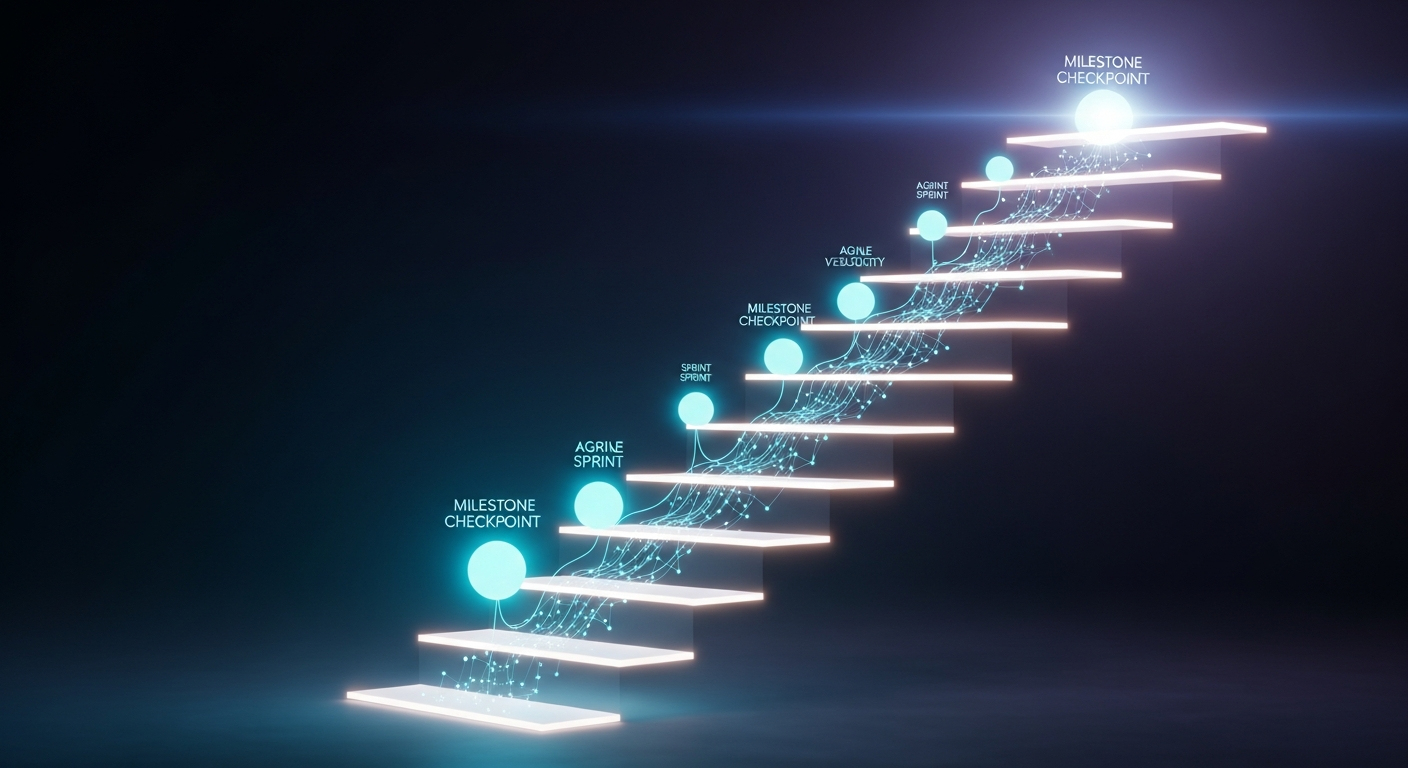
The Art of Implementation Excellence
Why the best technology strategies fail in implementation — and the engineering practices and organizational patterns that distinguish successful large-scale deployments.
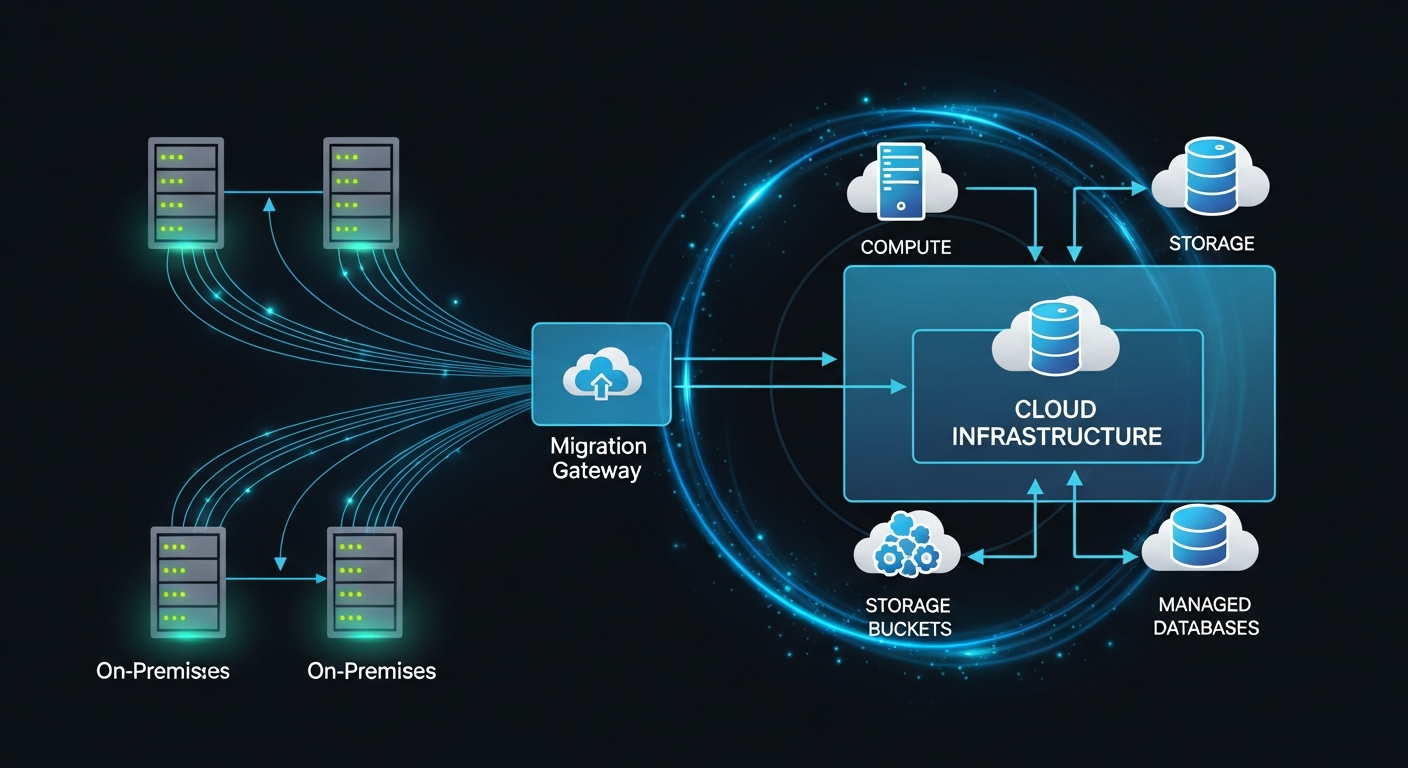
Cloud Migration Patterns for Enterprise Resilience
Proven architectural patterns and migration strategies for moving mission-critical workloads to the cloud while maintaining performance, security, and compliance.
Modern Systems Integration: APIs, Events, and Intelligent Middleware
How event-driven architectures and API-first design are replacing traditional middleware — creating more flexible, scalable, and intelligent enterprise integration.