
Sustainability
ColdAI's sustainability capability joins four pieces of work that are often bought separately: deciding what matters through materiality, setting targets and a roadmap, measuring and reporting with data an assurer can test, and changing operations, supply chains and products. Reporting rules have moved a long way recently, so this page also sets out what is required now, where technology does the heavy lifting and where judgment has to stay with your people.
In depth
Go deeper into sustainability methods and standards
Five working guides to the calculations, assessments, standards and data design behind a sustainability program, each usable by an in-house team.
- 01GuideHow to calculate Scope 3 emissionsA practical method for calculating Scope 3 emissions: screening categories, choosing spend-based or supplier data, scoring quality and avoiding common errors.
- 02ProcessDouble materiality assessment under ESRSHow to run a double materiality assessment under ESRS: from value-chain mapping to scored impacts, risks and opportunities, thresholds and an assurable record.
- 03ComparisonISSB vs ESRS vs GRI: which reporting standards applyHow IFRS S1 and S2, the ESRS and the GRI Standards differ on audience, materiality and legal status, and which of them a company must or should report against.
- 04Deep diveClimate scenario analysis: physical and transition riskHow climate scenario analysis works: physical and transition risk terms, choosing NGFS, IEA or IPCC scenarios, and turning narratives into financial effects.
- 05ArchitectureAudit-ready ESG data architectureA reference design for sustainability reporting data: source systems, AI-assisted ingestion, a versioned factor library, lineage, controls and assurance.
How We Help
ColdAI's sustainability capability helps organizations navigate the transition to a low-carbon, sustainable economy. We combine strategic advisory with technology-powered measurement and reporting to help organizations set credible targets, track progress, meet regulatory requirements, and create business value through sustainability.
Our Approach
We approach sustainability as a strategic opportunity — helping organizations identify where environmental and social performance creates business value and building the capabilities to capture that value.
Materiality Assessment
Identify the sustainability issues most material to your business and stakeholders, establishing priorities that align environmental impact with business strategy.
Strategy & Targets
Develop sustainability strategy with credible, science-aligned targets and a clear roadmap of initiatives to achieve them — balancing ambition with feasibility.
Measurement & Reporting
Implement technology-powered measurement systems for emissions, resource use, and social impact — supporting regulatory reporting and stakeholder communication.
Transformation
Execute sustainability initiatives across operations, supply chain, and product portfolio — driving both environmental impact reduction and business value creation.
Our Offerings
Sustainability Strategy
End-to-end sustainability strategy development including materiality assessment, target setting, roadmap development, and governance design.
Carbon Management
Comprehensive carbon accounting, reduction strategy, and offset management across Scope 1, 2, and 3 emissions — with technology-powered tracking.
ESG Reporting
Regulatory compliance for CSRD, ISSB, SEC climate disclosure, and voluntary frameworks including GRI and SASB — with automated data collection and reporting.
Circular Economy
Business model and supply chain transformation for circularity — designing products for longevity, reuse, and recycling while creating new revenue streams.
Climate Risk
Physical and transition risk assessment using climate scenario analysis, with adaptation strategies and financial impact quantification.
Sustainable Finance
Green bond frameworks, sustainability-linked financing, and ESG investment strategy that aligns capital allocation with sustainability objectives.
What changed in sustainability regulation, and what did not
In the EU, Directive (EU) 2026/470, the Omnibus I directive, narrows the CSRD from financial years starting on or after 1 January 2027 to undertakings that exceed a net turnover of EUR 450 million and an average of 1,000 employees1. The Commission adopted a delegated act revising the European Sustainability Reporting Standards on 3 July 20262. Companies that remain in scope still report under the ESRS, built on a double materiality assessment, but many that were preparing will no longer be obliged to report.
Elsewhere the direction is toward the ISSB baseline. The UK government has published UK SRS S1 and S2 for voluntary use while the Financial Conduct Authority considers requirements for listed companies3, and other jurisdictions are adopting the ISSB standards on their own timetables4. In the US, the SEC voted on 27 March 2025 to end its defense of its climate disclosure rules, which were already stayed during litigation5. Our ESG reporting offering names SEC climate disclosure among the regimes it covers; we now treat it as background, not as an operative requirement.
What did not change is the commercial pressure. Large customers still need supplier emissions for their own inventories, lenders still price sustainability-linked facilities on measured performance, and floods, heat and water stress affect operations whatever the reporting rules say. For most companies the question has shifted from compliance by a deadline to building data and decisions that serve several audiences at once.
Materiality, targets, measurement and transformation as one operating loop
- Materiality
Decide which impacts, risks and opportunities deserve management attention and disclosure.
- Strategy and targets
Set baselines, targets and a funded roadmap for the material matters.
- Measurement and reporting
Collect, calculate and control the data that shows progress, and publish it.
- Transformation
Change sites, suppliers, products and business models to deliver the targets.
- Annual review
Compare results with targets, refresh the assessment and reallocate effort.
Where to begin, depending on what is driving the work
- If
A regulator requires you to report, or will soon.
ThenStart with the double materiality assessment and the data architecture behind the disclosures it triggers.
Materiality fixes the scope of reporting, and data systems take longer to build than the report takes to write.
- If
A major customer asks for supplier or product-level emissions.
ThenPrioritize the Scope 3 categories and product data that customer needs, using definitions that match their reporting standard.
Answering one large customer well usually covers the next ones, and it is where revenue is at stake.
- If
Lenders or investors are pushing for targets or sustainability-linked finance.
ThenEstablish a defensible baseline, set targets with a credible delivery plan, and choose financing KPIs you can measure every year.
Sustainability-linked terms depend on measured performance, so weak baselines turn into disputes.
- If
Physical climate events have already disrupted operations or supply.
ThenRun a climate scenario analysis on the affected sites and suppliers before revising strategy or capital plans.
It separates exposures that need action in every future from those that matter only in some.
- If
Material costs, waste or product regulation are squeezing margins.
ThenLook at circular options such as design for repair and reuse, take-back and remanufacturing, starting with the highest-value product lines.
Circular changes pay back fastest where material value is high and products return predictably.
Where technology carries the load and where judgment stays human
Much of the effort in sustainability work is data handling, and that is where technology earns its place. Document extraction can read utility bills, fuel invoices and supplier questionnaires; pipelines can pull activity data from ERP, procurement and meter systems; a calculation layer can apply versioned emission factors consistently across years. Our ESG data architecture guide sets out how those pieces fit together so an assurer can trace every figure.
Some problems need records that several organizations trust. For environmental assets, ColdAI deploys and operates Hedera's open-source Guardian platform for issuers, registries and corporate buyers, covered on our Sustainability Studio page6. Lifecycle tracking for certificates and carbon credits sits under Certificates and Carbon Credits, and product-level material and footprint data is the subject of our digital product passport use case. This page does not repeat that material; it is where those tools connect to strategy and reporting.
Technology does not decide what is material, how ambitious a target should be or which trade-off between cost and impact a board should accept. Those judgments need evidence, stakeholder input and accountable owners. Our role is to give the people making them better data and clearer options, not to automate the decisions away.
What makes a sustainability target credible to investors and customers
A credible target starts from a baseline that has been calculated with documented methods and will survive restatement. It covers the emissions that actually dominate the footprint, which for many companies means value-chain emissions rather than their own sites, and it comes with a plan that names projects, owners, budgets and dates, so that the target is a management commitment rather than a communications line.
Many companies use the Science Based Targets initiative to validate climate targets. The SBTi has published Version 2.0 of its Corporate Net-Zero Standard; Version 1.3.1 remains the framework for validation throughout 2026, and companies may submit under either version from the first quarter of 20277. If you are setting or renewing targets now, decide which version to work toward before modeling pathways, because the choice affects boundaries and timing.
Credibility also depends on how targets connect to money. Our sustainable finance work covers green bond frameworks and sustainability-linked financing8; both require use-of-proceeds or KPI definitions that match how you measure performance internally, which is one more reason to fix the data model early.
Sustainability work where another firm should lead
Frequently asked questions
Do we need a sustainability strategy if we are outside the narrowed CSRD scope?
Usually yes, for commercial rather than legal reasons. Customers in scope will ask for your data, lenders increasingly link pricing to sustainability performance, and physical climate risks affect operations regardless of reporting rules. A focused strategy on the few matters that drive cost, revenue and risk is often more useful than a full reporting program.
Does ColdAI provide assurance on sustainability reports?
No. The assurance opinion has to come from an independent assurance provider. We help companies get ready for it: designing the data flows, controls, documentation and calculation methods an assurer will test, and fixing the gaps they are likely to raise, so the assurance engagement itself runs with fewer surprises.
How should carbon credits be treated alongside our emissions figures?
Keep them separate. The GHG Protocol Corporate Standard has companies report their inventory emissions and any offsets separately, so purchased credits never reduce the reported inventory9. Disclose credits on their own, with their type and quality, and check how the target framework you use treats them before relying on credits in any claim.
What does a circular economy engagement typically involve?
It usually starts by finding the product lines where material value, return rates and customer appetite make a circular model viable. Work then covers redesign for durability and disassembly, collection and reverse logistics, refurbishment or remanufacturing operations, and the product tracking data needed to run several use cycles and prove recycled or reused content.
How long does it take to put measurement and reporting in place?
It depends on how dispersed your data is and how many standards you report against, so we scope it after mapping your sources rather than quoting a standard duration. A phased approach is common: energy and direct emissions first, then the largest value-chain categories and other material topics in later cycles.
Sources
- Directive (EU) 2026/470 on certain corporate sustainability reporting and due diligence requirements (Omnibus I) — EUR-Lex
- Corporate sustainability reporting — European Commission
- UK Sustainability Reporting Standards — UK Department for Business and Trade
- IFRS Sustainability Disclosure Standards around the world — IFRS Foundation
- SEC Votes to End Defense of Climate Disclosure Rules (Press Release 2025-58) — US Securities and Exchange Commission
- Sustainability Studio (Guardian) — ColdAI
- The Corporate Net-Zero Standard — Science Based Targets initiative
- Sustainability capability: approach and offerings — ColdAI
- GHG Protocol Corporate Accounting and Reporting Standard — GHG Protocol
Our Insights
Strategic Positioning for the Energy Transition
How organizations across industries can position themselves to capture value from the multi-trillion-dollar energy transition — and the risks of being too slow.

The Evolution of ESG Reporting: From Voluntary to Mandatory
How the shift from voluntary ESG disclosure to mandatory reporting under CSRD, ISSB, and SEC rules is transforming corporate sustainability programs.
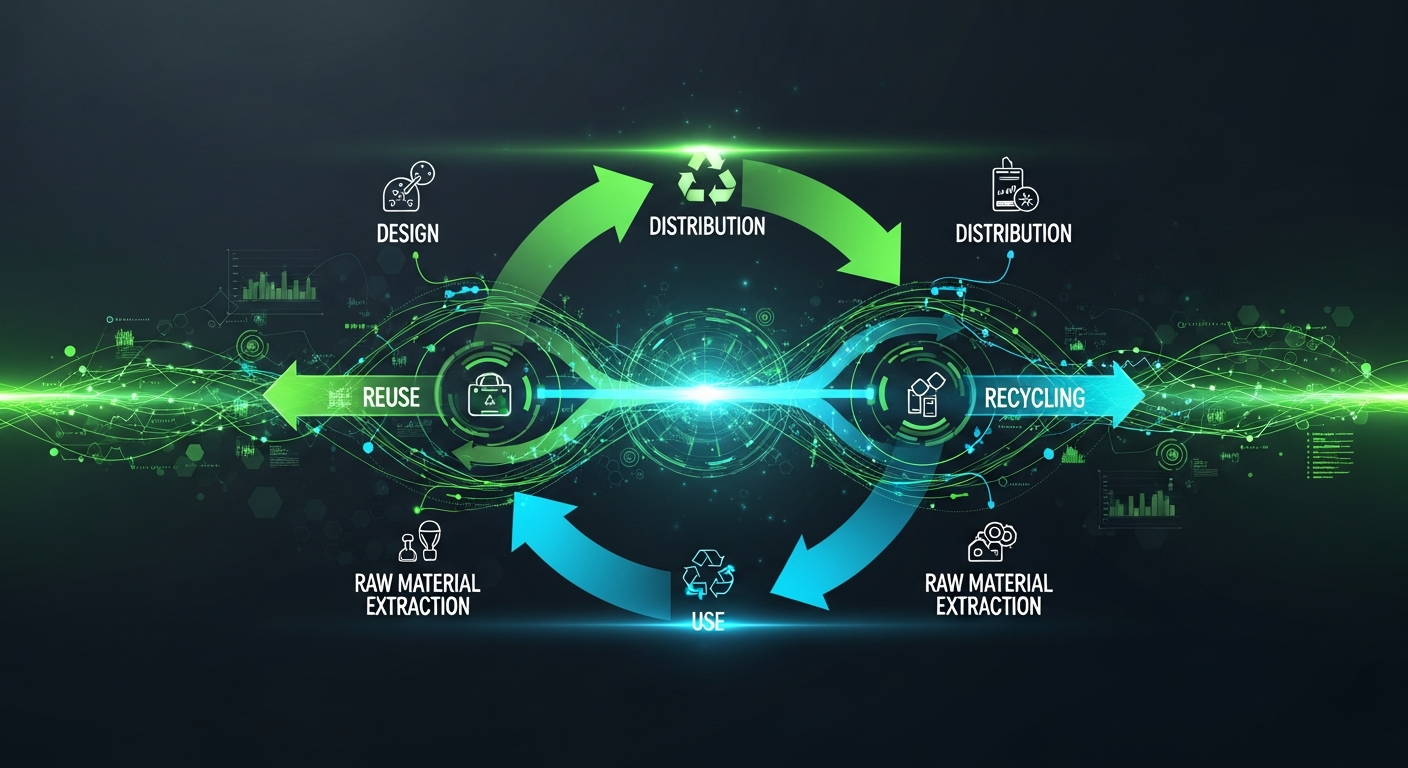
Circular Economy: New Business Models for Sustainable Growth
How leading organizations are creating new revenue streams and competitive advantage through circular economy business models — from product-as-a-service to industrial symbiosis.