Aerospace & Defense
Updated
$200B+
Global defense AI and autonomous systems spend by 2026
Source: Industry indicator
Zero-trust
Default architecture for ColdAI defense engagements
Multi-domain
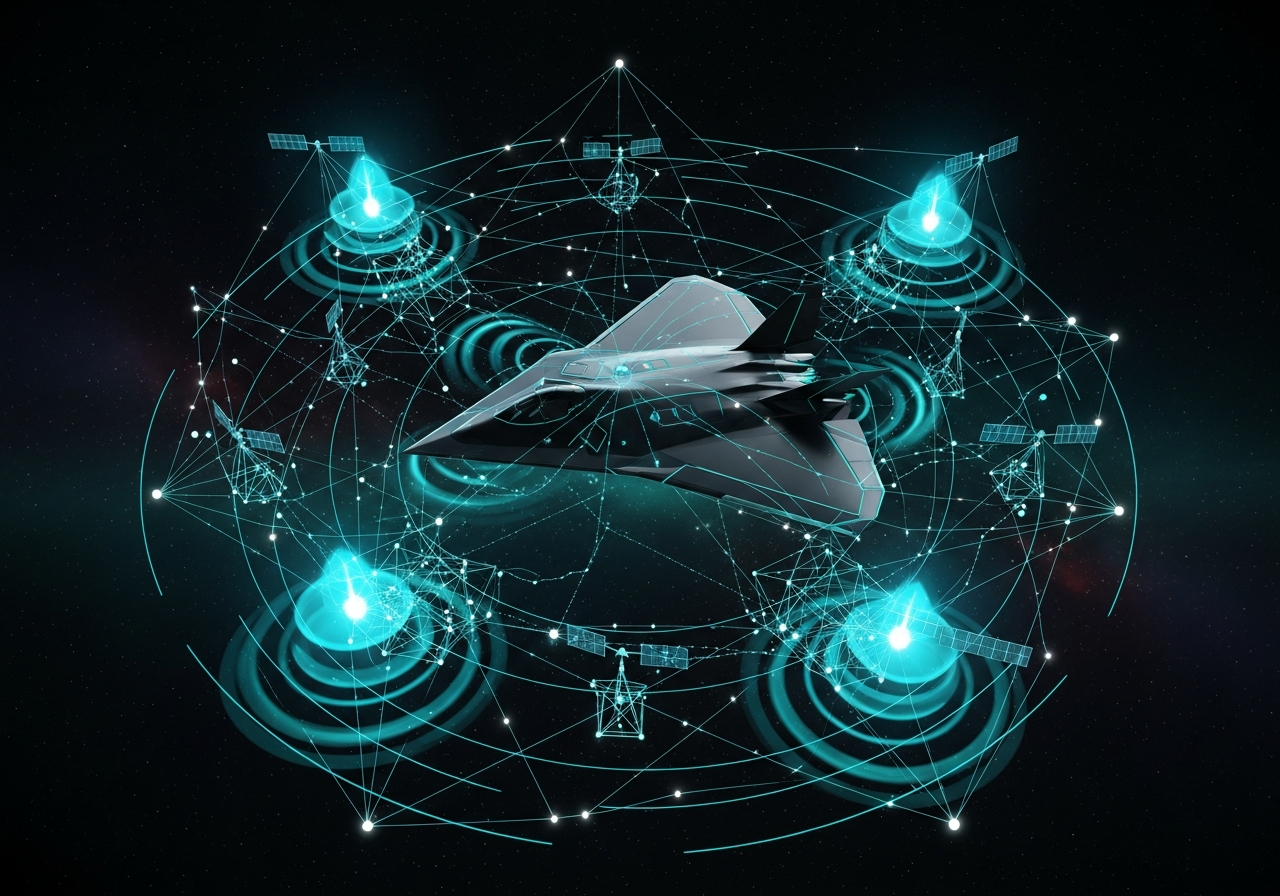
Air, land, sea, space, cyber — single command-and-control fabric
What does ColdAI do for Aerospace & Defense?
ColdAI builds AI and secure software for defense and aerospace organizations: decision support for multi-domain command and control, perception for autonomous systems, fusion of intelligence, surveillance and reconnaissance (ISR) data, satellite tasking and fleet sustainment. The work is designed for the conditions these systems actually meet: zero-trust networks, classified enclaves and contested links, where a model has to fail safely as well as perform.
“Defense AI fails when it is procured like enterprise software. Contested-environment systems have to be designed for graceful degradation under jamming, kinetic loss, and adversarial deception — not for steady-state demos.”
In depth
Go deeper: export controls, the tactical edge and authorization
Three working guides for the questions that decide whether a defense AI system can be built, fielded and trusted.
- 01Regulation explainerITAR and EAR export controls for defense AI softwareHow ITAR and EAR apply to machine-learning work: training data, model weights, prompts, cloud hosting and foreign-national staff, mapped to pipeline controls.
- 02ArchitectureEdge AI for DDIL environments: architecture guideA reference architecture for AI at the tactical edge when links are denied or intermittent: what runs where, sync priorities, degradation states and testing.
- 03ProcessGetting an ATO for an AI system: RMF step by stepHow to get an Authority to Operate for a system with machine-learning components: each RMF step, the AI evidence assessors expect, and the route to cATO.
Mission-Critical Technology for Aerospace & Defense
Aerospace and defense organizations operate under extreme constraints — contested environments, classified data, real-time decision requirements, and zero tolerance for failure. The convergence of AI, autonomous systems, and secure communications is reshaping military operations, space exploration, and defense logistics. ColdAI builds the technology infrastructure that enables next-generation command and control, autonomous platforms, and intelligence systems designed for the most demanding operational theatres.
Use Cases We Deliver
Multi-Domain Command & Control
AI-powered C2 systems that integrate air, land, sea, space, and cyber domains into a unified operational picture with autonomous decision support and real-time threat assessment.
Autonomous Systems & Drones
Autonomous navigation, target recognition, and swarm coordination for unmanned aerial, ground, and maritime vehicles operating in GPS-denied and contested environments.
Zero-Trust Security Architecture
Classified-grade security infrastructure with zero-trust access controls, post-quantum encryption, and continuous threat monitoring across distributed military networks.
Satellite Constellation Management
AI-optimized satellite tasking, orbit management, and data fusion from multi-sensor space assets for intelligence, surveillance, and reconnaissance operations.
Predictive Maintenance for Defense Assets
ML-driven maintenance scheduling for aircraft, naval vessels, and ground vehicles that maximizes operational readiness while reducing lifecycle costs.
Intelligence Fusion & Analysis
Multi-source intelligence processing combining SIGINT, HUMINT, IMINT, and open-source data with AI-powered pattern recognition and threat forecasting.
How We Help Across Defense Sectors
| Sector | Challenge | ColdAI Solution |
|---|---|---|
| Air Force & Space | Multi-domain operations and space awareness | AI-powered C2, satellite management, autonomous UAV coordination |
| Navy & Maritime | Undersea warfare and fleet readiness | Predictive maintenance, autonomous underwater vehicles, sonar analytics |
| Army & Ground | Logistics optimization and force protection | Supply chain AI, route optimization, perimeter security systems |
| Intelligence Community | Data overload and threat identification | Multi-source intelligence fusion, NLP analysis, anomaly detection |
| Defense Industry | Development timelines and cost overruns | Digital twin simulation, AI-driven design, supply chain visibility |
Our Defense Technology Delivery Process
Threat & Mission Analysis
Deep analysis of operational requirements, threat landscapes, and mission parameters to define technology needs and success criteria.
Secure Architecture Design
Architecture design meeting ITAR, classified, and zero-trust requirements with full compliance documentation and security accreditation planning.
Agile Development with Security
Iterative development cycles with continuous security testing, code review, and compliance validation at every stage.
Operational Deployment & Support
Deployment into operational environments with training, maintenance support, and continuous threat updates.
Why Defense Organizations Choose ColdAI
- Engineering teams with security clearance experience and understanding of classified environment requirements.
- Zero-trust architecture expertise spanning air-gapped, hybrid, and cloud-native defense environments.
- AI systems designed for edge deployment in bandwidth-constrained and contested operational theatres.
- Full lifecycle support from concept through deployment, including ongoing maintenance and threat updates.
Five mission areas and what each asks of the AI
The same model techniques appear across defense programs, but each mission area has a different binding constraint and a different burden of proof before fielding.
| Mission area | Typical AI task | Binding constraint | Evidence to demand before fielding |
|---|---|---|---|
| Multi-domain command and control | Summarizing the operational picture across air, land, sea, space and cyber; flagging conflicts; drafting courses of action | The commander's authority and the time available to decide | Operator trials showing recommendations are understood, can be rejected and arrive in time under load |
| Autonomous systems | Navigation without satellite positioning, perception, and coordination of several uncrewed vehicles | Size, weight and power on the platform, and what the vehicle may do without supervision | Behavior on link loss and under spoofed inputs, tested in realistic conditions |
| ISR fusion | Correlating detections and reports from many sensors and sources; triaging imagery and signals for analysts | Provenance and classification of every source, and deliberate deception by an adversary | Traceability from each fused output back to its sources, and results on decoy inputs |
| Satellite tasking | Ranking collection requests, scheduling passes and cueing one sensor from another | Orbital access windows, downlink capacity and competing priorities | Schedules compared with experienced planners on past requests, with a reason for every dropped request |
| Sustainment and logistics | Predicting component removals, parts demand and fleet readiness | Incomplete maintenance records and airworthiness rules that a model cannot override | Back-testing on historical maintenance data and a maintainer review step before schedules change |
Most first projects sit in sustainment or ISR triage, where a person reviews every output and historical data exists to test against.
A delivery stack for zero-trust, classified and contested settings
- Mission application
The operator's view: recommendations with their confidence, sources and the current system state.
- Model and decision services
Versioned, signed models plus the rules that decide what needs human approval.
- Data with provenance
Every record carries its source, classification and handling caveats from ingestion onward.
- Zero-trust identity
Each request is checked against user, device, clearance attributes and need to know.
- Deployment enclave
Government cloud, on-premise or air-gapped enclave, or the tactical edge, chosen per mission.
Decision support first, autonomy by exception
Most of the value AI brings to defense organizations comes from helping people decide faster and with better evidence: sorting what an analyst should look at first, showing a commander which assets can reach a task, warning a maintainer that a part is likely to fail. These systems keep a person in the decision and make it easy to see why a recommendation was made and to reject it.
Autonomy is the exception, used where a human cannot act in time or cannot be connected, and it carries a much heavier burden of proof. ColdAI's position, stated by its founder, is that contested-environment systems have to be designed for graceful degradation under jamming, kinetic loss and adversarial deception, not for steady-state demonstrations1. In practice, that means testing the bad day first: degraded sensors, missing links, deliberately misleading inputs and operators under time pressure.
The same discipline carries into civil aerospace work such as satellite operations. Regulators and threat models differ from military programs, but traceable data, explicit failure states and human authority over consequential decisions still apply.
Three questions that shape a defense AI project before any model is trained
Each of these has its own in-depth guide; here is how they change the plan.
- If
The data, models or know-how relate to a defense article, or foreign nationals will work on the project.
ThenClassify each pipeline artifact for export control before engineers are given access; see ITAR and EAR export controls for AI software.
Access granted before classification can itself be an unlicensed export.
- If
The system must keep working when networks are jammed, intermittent or silent.
ThenDesign the disconnected case first and treat connectivity as a bonus; see edge AI for DDIL environments.
Retrofitting local inference and sync onto a cloud-first design usually means rebuilding it.
- If
The system will run on government networks or process government data.
ThenPlan the Authority to Operate evidence from the design stage; see getting an ATO for an AI system.
Data provenance and audit trails are cheap to build in and very hard to reconstruct.
- If
The data is classified.
ThenBring the models to the data: run training and inference inside the accredited enclave, on a self-hosted model stack, and rule out external model APIs.
Moving classified data to a model is rarely permissible; moving a model into an enclave can be.
Why defense AI pilots stall before fielding
A demonstration built for steady state
Early signalThe pilot has only been shown on clean data with a reliable network.
MitigationAgree degraded-condition test cases at the start and judge the pilot on them.
Unclear data rights and labeling ownership
Early signalNobody can say who owns the training data, the labels or the resulting model.
MitigationSettle government and contractor rights in data and models in the contract, not after delivery.
Security authorization left until the end
Early signalThe assessor first sees the system when development is complete.
MitigationDraw the boundary and start the evidence pack during architecture design.
Integration with existing mission systems underestimated
Early signalThe pilot runs as a standalone screen that operators must check separately.
MitigationDeliver outputs into the tools and message formats operators already use.
Lock-in to a proprietary data format
Early signalFused data or labels can only be read through one vendor's software.
MitigationRequire open, documented formats for data, labels and model artifacts.
A satellite operator tests AI tasking against its planners
Frequently asked questions
Can ColdAI work inside air-gapped or classified environments?
Our designs cover air-gapped, hybrid and cloud-native defense environments, with models brought to the data rather than data sent to external services. Access to a specific classified facility or network is governed by the customer's security arrangements and the clearances they require, so we agree how the team will work within those rules during scoping.
Which defense AI projects make good first steps?
Projects where a person reviews every output and history exists to test against: predicting component removals for a fleet, triaging imagery or reports for analysts, or drafting summaries of operational data. They build the data pipelines, evidence and trust that later, higher-consequence systems depend on, without asking anyone to accept autonomy before it has been proven.
Do commercial AI models have a place in defense programs?
Sometimes, with care. A commercial or open-weight model can be a starting point when it runs in an approved environment, its license allows the use, and export and data-handling rules permit the data it will see. Hosted public APIs are usually ruled out for controlled or classified data, so programs often fine-tune and host models inside their own enclave.
How do you keep humans in control of AI recommendations?
By design rather than by policy alone. Operators see the evidence and confidence behind each recommendation, consequential actions require explicit approval, and overrides are recorded and fed back into evaluation. When connectivity or data quality degrades, the system says so on screen instead of quietly producing weaker output, so people know how far to trust it.
Do you work on civil aerospace as well as defense?
Yes. ColdAI's aerospace work covers military and civilian applications, including satellite constellation management. Civil programs answer to different regulators and threat models, but they benefit from the same discipline: traceable data, tested failure states and people retaining authority over safety-relevant decisions.
How does post-quantum cryptography fit into defense AI work?
Defense data often has to stay confidential for many years, which makes it a target for collection now and decryption later. Systems we design treat cryptography as replaceable: algorithms are inventoried, keys and protocols can be swapped without rebuilding the application, and migration to post-quantum algorithms is planned with the quantum computing practice.
Sources
Latest analysis from this industry

Defense Primes Are Replacing Program Offices With Distributed Consensus Nodes — here’s why
Multi-domain command architectures now require tamper-proof audit trails that human bureaucracies cannot deliver at machine speed.
Inside: Defense Primes Are Rewriting Software Faster Than Hardware Acquisition Cycles Allow
Agentic systems now iterate in weeks while platform lifecycles stretch across decades, forcing a fundamental rupture in how DoD manages technology refresh.
Defense Primes Are Replacing Program Managers With Agentic Orchestration Layers. Here’s what changed
The collapse of cost-plus certainty is forcing aerospace integrators to re-architect delivery around autonomous resource allocation, not human hierarchy.