
Transformation
ColdAI leads enterprise transformations that change how an organization operates, not only which systems it runs. Programs move through four phases, from Vision & Case to Embed & Sustain, and are governed by a transformation office that tracks value as well as delivery. This page sets out what each phase has to decide, where target operating model design fits, how the transformation office keeps many initiatives coherent, and when a transformation is the wrong answer.
In depth
Go deeper into transformation methods
Five method pages, each covering one discipline a transformation program depends on, from assessing change impact to banking benefits with finance.
- 01GuideChange impact assessmentHow to run a change impact assessment: rate each stakeholder group on seven dimensions, check change saturation and turn the heat map into rollout plans.
- 02Deep diveBenefits realization managementHow benefits realization management works: dependency maps, baselines, a stage-gated value pipeline, attribution rules and finance sign-off for banked value.
- 03ComparisonSAFe vs LeSS vs Scrum@Scale vs Disciplined AgileAn even-handed comparison of SAFe, LeSS, Scrum@Scale, Disciplined Agile and Nexus, why the Spotify model is not a framework, and how to choose or skip one.
- 04ProcessService blueprintingHow to build a service blueprint: map customer actions, frontstage, backstage and support processes, find failure points and decide where automation belongs.
- 05ChecklistAnalytics maturity assessmentA decision-first analytics maturity assessment: checklists for decisions, data foundations, metric definitions, self-service, skills and decision culture.
How We Help
ColdAI's transformation capability helps organizations execute large-scale change programs that span strategy, technology, operations, and culture. We provide the leadership, methodology, and execution capability needed to deliver transformations that stick — not just achieve go-live but deliver sustained performance improvement.
Our Approach
We approach transformation as a discipline that requires equal attention to strategy, technology, process, and people — because sustainable change requires all four dimensions to move together.
Vision & Case
Define the transformation vision, build a compelling case for change grounded in competitive necessity and value creation potential, and secure leadership commitment.
Design & Plan
Design the target state across strategy, operating model, technology, and organization — with a phased roadmap that sequences initiatives for maximum value and manageable risk.
Execute & Adapt
Lead execution through agile delivery, continuous stakeholder engagement, and adaptive management that adjusts plans based on what's working and what's not.
Embed & Sustain
Embed new capabilities, behaviors, and operating rhythms into the organization so that transformation outcomes are sustained and continuously improved after the formal program ends.
Our Offerings
Digital Transformation
Enterprise-wide digital transformation covering strategy, technology modernization, process digitization, and organizational change management.
Operating Model Design
Design of future-state operating models that optimize for agility, customer-centricity, and the effective integration of AI and automation.
Agile at Scale
Enterprise agile transformation including framework selection, organizational design, coaching, and the cultural change needed for agility to take hold.
Customer Experience
End-to-end customer experience transformation redesigning all touchpoints for digital-first engagement while maintaining human connection where it matters.
Data & Analytics
Organization-wide analytics maturity development — from data infrastructure through analytics capability building to data-driven decision culture.
Transformation Office
Design and operation of transformation management offices that provide governance, resource management, and performance tracking for complex programs.
What each transformation phase has to decide before the next begins
The four phases are ColdAI's published approach to transformation1. The table adds what each phase must settle, the evidence that it has, and the warning sign that it has not.
| Phase | Decision it must settle | Evidence it is settled | Warning sign |
|---|---|---|---|
| Vision & Case | Why change, by how much, and what the organization will stop doing. | A case for change the executive team will defend in public, with value ranges and named owners. | The case lists initiatives but no outcomes or trade-offs. |
| Design & Plan | The target state across strategy, operating model, technology and organization, and the order of moves. | A sequenced roadmap with dependencies, a change impact assessment and benefit baselines. | Every initiative starts at once. |
| Execute & Adapt | Which initiatives to accelerate, fix or stop as results come in. | Portfolio reviews that actually move money and people between initiatives. | Status is reported as activity, never as outcomes. |
| Embed & Sustain | Who owns each new capability and benefit once the program ends. | Benefits handed to business owners; new routines running in the normal management calendar. | The program closes and results drift back. |
Target operating model design inside a transformation program
Most transformations need a target operating model: a description of how the organization will work once the change is complete. A useful one answers a small number of questions concretely. Which capabilities does the organization need? Where does each sit: at the center, in regions, in business units or with partners? Who decides what? Which processes and systems support each capability, and how is performance measured? This work belongs in Design & Plan and frames everything sequenced after it.
Two cautions apply. An operating model is not an org chart: structure follows from decision rights and capabilities, and redrawing boxes first tends to lock the old work in under new names. Where structure is in question, spans and layers analysis provides the evidence base. AI also changes the model more than earlier technology did, because agents take on tasks and some decisions. For the narrower choice of how to organize AI capability itself, see AI operating models; the general concept is defined under operating model design.
Where the transformation office sits between leadership and initiatives
The transformation office is a coordination and evidence function, not a second layer of management. These are the relationships it has to maintain.
- Transformation office
Holds the portfolio view, the benefits register and the decision calendar.
- Executive steering
Decides on funding, priorities and stopping initiatives, using the office's evidence.
- Initiative teams
Deliver the work and report outcomes and risks rather than activity.
- Finance
Validates baselines and banks benefits into budgets and targets.
- HR and change
Owns impact assessment and watches capacity and saturation across initiatives.
- Technology and data
Manages architectural dependencies and shared platforms.
Setting governance intensity initiative by initiative
Effective transformation offices adapt governance to the maturity and risk of each initiative. In practice that means a few explicit tiers rather than one reporting regime for everything.
- If
An initiative is large, cross-functional and on the critical path of the case for change.
ThenGovern it closely: review by the transformation office every two weeks, monthly at steering, and benefits validated by finance before launch.
Delay or scope drift here moves the whole program.
- If
An initiative sits inside one function and has a proven delivery team.
ThenGovern by exception: milestone and benefit reporting only, with escalation on thresholds agreed in advance.
Heavy oversight here costs time without reducing risk.
- If
An initiative is exploratory, such as an AI pilot testing a new way of working.
ThenGovern it by learning goals and a fixed budget, with a date for the stop-or-scale decision.
Demanding a full business case before the test produces fiction.
- If
An initiative misses its outcomes at two reviews in a row.
ThenBring it to steering with a recommendation to fix, re-scope or stop it.
Active portfolio management depends on stopping work, not only adding it.
When an enterprise transformation is the wrong frame
Not every performance problem needs a transformation. If the issue sits in one function or one process, a focused improvement effort will move faster and cost less, and the operations or implementation capabilities are the better starting point. If the open question is whether AI is worth pursuing at all, begin with an AI readiness assessment rather than a program.
A transformation is also the wrong frame when leadership is not prepared to change decision rights, budgets or structure. Programs launched without that commitment tend to produce activity, reports and fatigue. In that situation our advice is to keep working on the case for change until the executive team is ready, or to scope down to changes that do not depend on its agreement.
Frequently asked questions
How long does an enterprise transformation take?
It depends on scope, and a fixed duration quoted before anyone understands the starting point is a guess. It helps to separate the program, which has an end date, from the change, which continues through Embed & Sustain. Most programs are planned in waves, so the first results arrive well before the last initiative finishes. The roadmap agreed in Design & Plan should show when each benefit is expected, and the transformation office tracks progress against it.
What is the difference between a transformation office and a PMO?
A PMO typically tracks delivery across projects: milestones, budgets, risks and resources. A transformation office does that and also manages value and the portfolio. It holds the benefits register, decides with steering which initiatives to accelerate or stop, and coordinates change across initiatives so no group is overloaded. ColdAI's view is that it should be staffed by experienced transformation leaders rather than only administrators, with authority to reallocate resources based on performance.
How do you know whether a transformation is working?
Track three things separately. Delivery: are initiatives producing what they promised, when planned? Adoption: are people working the new way, measured through leading indicators such as system use and process compliance? Value: are benefits moving from validated to banked, with finance agreement? Reporting delivery alone is the most common failure. Benefits realization management covers the value side in detail.
Does ColdAI run the transformation or advise on it?
Both are possible. The capability covers leadership, methodology and execution capability for change programs spanning strategy, technology, operations and culture, and the transformation office offering includes both designing and operating the office. The right split depends on how much transformation experience your own leaders have. Results tend to last longer when internal leaders own the outcomes and outside support strengthens the method, the evidence and delivery capacity.
How does an AI-native transformation differ from earlier digital programs?
Earlier digital programs mostly digitized existing processes. An AI-native approach redesigns processes on the assumption that AI handles routine tasks and some decisions while people concentrate on judgment and relationships. That changes more than technology: roles gain review duties, measures shift from activity to outcomes, and accountability must be explicit when an agent prepares a decision a person approves. Impact assessment and operating model design therefore carry more weight than before.
Which agile scaling framework does ColdAI recommend?
None by default. The agile at scale offering covers framework selection, organizational design, coaching and cultural change, and the right choice depends on the number of teams, the mix of delivery methods and how much structural change leadership will accept. Often the first step is reducing dependencies between teams rather than adopting a framework. The comparison of SAFe, LeSS, Scrum@Scale, Disciplined Agile and Nexus sets out the trade-offs.
Sources
Our Insights

Digital Transformation 2.0: AI-Native Operating Models
Why first-generation digital transformations fell short — and how AI-native operating models represent a fundamentally different approach to enterprise transformation.
Agile at Enterprise Scale: Beyond Frameworks to Culture
Why enterprise agile transformations fail when they focus on framework adoption rather than cultural change — and the leadership behaviors that actually drive agility.
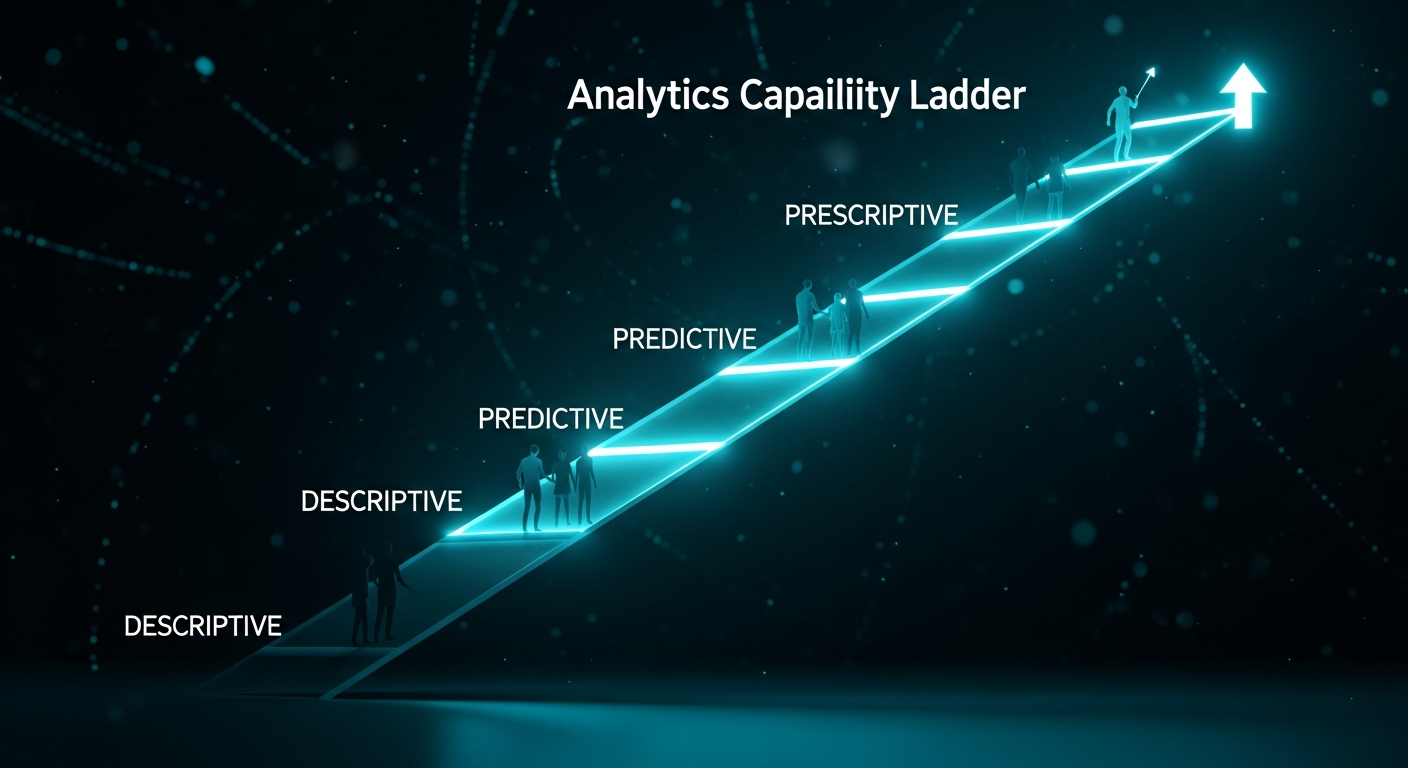
Governing Complex Transformations: The Transformation Office
How effective transformation offices balance governance with agility — providing the oversight and coordination that complex programs need without creating bureaucracy.