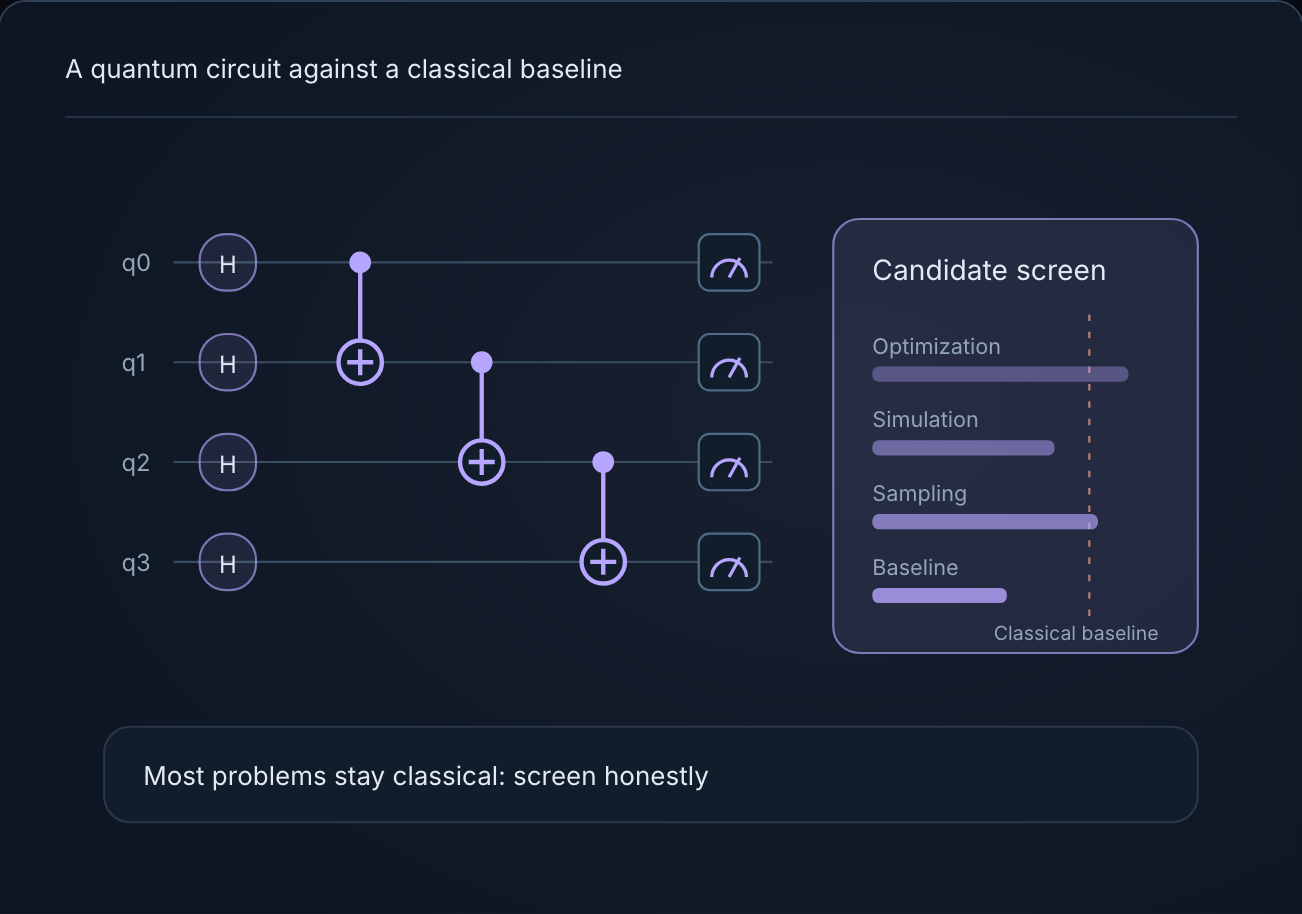
Vulnerability prioritization works best when you combine four signals: whether a flaw is known to be exploited (CISA's KEV catalog), how likely exploitation is soon (EPSS), what the flaw would do and how exposed the asset is (SSVC-style decisions), and how severe it is in your environment (CVSS v4.0). CISA's June 2026 directive BOD 26-04 now sets federal deadlines from these kinds of inputs, and the same model works for any organization.
What changed in June 2026
On June 10, 2026, CISA issued Binding Operational Directive 26-04, Prioritizing Security Updates Based on Risk. It supersedes and revokes BOD 19-02 and BOD 22-01. The older BOD 22-01, issued in November 2021, required remediation of known exploited vulnerabilities within six months for CVEs assigned before 2021 and within two weeks for all others.
BOD 26-04 replaces that single clock with a table. Its background section says threat actors' use of AI may further narrow the time defenders have between patch release and possible exploitation. The table uses four variables: whether the asset is publicly exposed, whether the CVE is in KEV, whether exploitation is automatable by an adversary, and whether the technical impact is partial or total control. CISA publishes KEV status, automatable and technical impact through its Vulnrichment program, and says the table is informed by the SSVC system.
Here are five of the sixteen rows, as read from the directive:
- Publicly exposed, in KEV, automatable, total technical impact: 3 days, plus forensic triage.
- Publicly exposed, in KEV, not automatable, partial impact: 14 days.
- Publicly exposed, not in KEV, automatable, total impact: 3 days.
- Publicly exposed, not in KEV, not automatable, partial impact: 60 days.
- Not exposed, not in KEV, not automatable: fix on system upgrade.
Two details matter for your own program. The clock starts at the earlier of the KEV addition or the date the agency identifies the vulnerability on one of its assets. And the timelines are dynamic: removing a system from the internet changes its exposure value, and with it the deadline. Agencies have 180 days from issuance to remediate within the new timelines, and CISA says it will reassess the timelines annually and consider further reductions.
Use KEV as the floor, not the whole list
The KEV catalog lists vulnerabilities for which CISA has evidence of exploitation. A count of the catalog's JSON feed released November 18, 2026 (version 2026.11.18) shows 1,786 entries, of which 361 are flagged as used in ransomware campaigns.
The same feed shows the deadlines tightening. Of 618 entries added from 2023 through 2025, 578 carried a 21-day due date. Of 169 entries added since June 10, 2026, 131 carry 3 days and 38 carry 14 days. The catalog added 245 entries in 2025 and 302 so far in 2026.
KEV is the right first filter because it is a confirmed signal. It is also a lagging one. An entry means exploitation has already been observed, so a KEV-only program patches after attackers have started. Use KEV to set your fastest tier, then add signals that predict. The table above shows that CISA itself does not stop at KEV: an exposed, automatable, total-control flaw gets 3 days whether or not it is listed.
Add EPSS for the long tail
The Exploit Prediction Scoring System, maintained by FIRST, estimates the probability that a CVE will be exploited in the wild in the next 30 days. It gives every CVE a score between 0 and 1, updated daily, generated by Empirical Security and published free.
FIRST's FAQ states the limits clearly. EPSS is not a complete risk score, because it does not measure impact or your environment. The percentile is relative, and scores skew toward zero: a probability of 0.10 sits around the 95th percentile. There is no universal threshold. The FAQ notes that 0.10 is commonly cited but carries no special authority.
So treat EPSS as a ranking input. Use it to order the work inside a tier and to flag CVEs that are not yet in KEV but are climbing. Review your own cutoff against what you actually see exploited, rather than adopting a number from a blog post.
Add SSVC decisions for context
SSVC, the Stakeholder-Specific Vulnerability Categorization, was created by Carnegie Mellon's Software Engineering Institute with CISA in 2019, and CISA customized its decision tree in 2020. It asks five questions: exploitation status, technical impact, whether exploitation is automatable, mission prevalence and public well-being impact. It returns one of four decisions: Track, Track*, Attend or Act.
SSVC adds what scores leave out. It names a decision, not a number, and it asks about your mission, which no feed can answer for you. BOD 26-04's table is informed by SSVC, and you can build your own the same way, keeping the questions your asset inventory can answer and dropping the ones it cannot.
Consider a hypothetical flaw in a VPN gateway. It is on the internet, it is not yet in KEV, a public proof of concept exists, and exploitation needs no authentication and gives full control. Under the BOD 26-04 table that combination lands in the 3-day row even without a KEV entry. A CVSS Base score alone would not have told you that, and a KEV-only filter would have missed it.
Use CVSS v4.0 for what it measures
The CVSS v4.0 specification from FIRST (document version 1.2) defines four metric groups: Base, Threat, Environmental and Supplemental. It also defines nomenclature: CVSS-B for Base alone, then CVSS-BE, CVSS-BT and CVSS-BTE as groups are added. The specification says scores should be labeled with the metrics used.
That labeling is the practical lesson. A Base score describes the intrinsic severity of a flaw. When Threat and Environmental metrics are not supplied, the specification assumes the values that give the highest severity. A CVSS-B number is therefore a worst-case reading, and sorting a backlog by it alone sorts by a worst-case guess.
The Threat group includes Exploit Maturity, which is where KEV and EPSS can feed in. The Environmental group lets you adjust for the controls around the asset. Supplemental metrics do not affect the score. Compute a CVSS-BTE score locally where you can, and stop treating a vendor's Base score as a priority.
Why volume breaks old triage
The finding volume is rising, and AI-assisted discovery is part of the reason. NIST's April 15, 2026 announcement on NVD operations reports that CVE submissions rose 263% between 2020 and 2025, and that first-quarter 2026 submissions were nearly one-third higher than the first quarter of 2025. NIST enriched nearly 42,000 CVEs in 2025.
NIST responded by changing what it enriches. From April 15, 2026, it prioritizes CVEs in KEV (with a goal of one business day), CVEs for software used in the federal government, and CVEs for critical software under Executive Order 14028. Everything else is lowest priority. NIST also no longer routinely provides its own severity score where the CNA has supplied one. If your triage waits for NVD enrichment, plan for gaps.
FIRST's June 15, 2026 forecast update, by Jerry Gamblin and Eireann Leverett, reports actual CVE counts 46.3% above its February forecast, an excess of 6,420, for a revised 2026 projection of about 66,000. It cites AI-assisted discovery, including a 164% rise in Mozilla's first-quarter disclosures, with 271 bugs fixed in Firefox 150. It also warns that some counts, such as GitHub Security Advisories and VulnCheck entries, rose partly for structural reasons like backfills.
The authors write that the constraint is no longer discovery but the human capacity to verify, coordinate and patch. They find that filtering for KEV or EPSS above 10% leaves the actionable patching burden flat, which they describe as rain versus flood. They also caution that raw volume is not the same as crisis. The conclusion for triage is that more findings should change how you sort, not how many people you assume can read them.
Where to start
Start with the decision table, not the tooling. These steps build it:
- Inventory exposure. For every asset, record whether it is reachable from the internet. Without that field, no table works.
- Ingest the KEV feed and EPSS scores daily, and join them to your findings automatically.
- Write a decision table modeled on BOD 26-04: exposure, KEV status, automatable and technical impact in, deadline out. Set your own deadlines, and ask whether you can meet CISA's 3-day and 14-day tiers for exposed assets.
- Record when each clock starts, using the earlier of the KEV addition and your own detection, as BOD 26-04 does.
- Recalculate deadlines when exposure changes, so that isolating a system or moving it behind a gateway visibly changes its priority.
- Measure time to remediate by tier, and review the deadlines once a year, as CISA says it will.
Build these tables with the asset owners in the room, because the exposure and impact answers sit with them and not in a scanner. Run the new table beside your current process for a month and compare what each puts first.
Ask one more question of every tier: who owns the fix? A deadline with no named owner is a wish. Write the owner into the table, and escalate automatically when a clock reaches half its allowance.
References
- CISA: BOD 26-04, Prioritizing Security Updates Based on Risk
- CISA: BOD 22-01, Reducing the Significant Risk of Known Exploited Vulnerabilities (revoked)
- CISA: Known Exploited Vulnerabilities Catalog
- FIRST: EPSS Frequently Asked Questions
- FIRST: Common Vulnerability Scoring System v4.0 Specification Document
- CISA: Stakeholder-Specific Vulnerability Categorization (SSVC)
- FIRST: The 2026 Vulnerability Forecast Update, Navigating the AI Epoch
- NIST: NIST Updates NVD Operations to Address Record CVE Growth